



Q: Could you explain the mandate of the Sri Lanka National Mine Action Centre and how it fits into the broader post-conflict recovery and development framework of the country?
A: Demining activity in Sri Lanka started in 2002 during the conflict period. After the war ended in 2009, the immediate attention of the government was to resettle people to their places of origin. Humanitarian demining was therefore one of the important factors. In 2010, the cabinet approved the establishment of the Sri Lanka Mine Action Centre. Its mandate is very clear: to implement mine action strategies.
Q: What role does NMAC play in coordinating international and national demining organisations?
A: NMAC plays a major role in coordinating humanitarian demining activities with all demining agencies. Every month, we meet and discuss technical and operational matters. In the field, we review the work and progress of all five operators. We also discuss difficulties and other important operational issues. Many government agencies are involved in the demining process, such as health, defence, wildlife, and forestry. Therefore, we have to coordinate with all these agencies to solve issues.
Q: How do you ensure that national mine action policy aligns with international obligations, such as the Anti-Personnel Mine Ban Convention (Ottawa Treaty)?
A: Discussions to join the treaty started in 2015. In 2017, Sri Lanka decided to sign the treaty, thus becoming a state party to the Ottawa Treaty. Implementation began in 2018. Initially, there were around 1,300 square kilometres of contaminated area, with a confirmed hazardous area of 256 square kilometres. Under the treaty, we are implementing all obligations to become a landmine-free country.
Q: From NMAC’s most recent assessments, what is the current scale of landmine and ERW contamination in Sri Lanka?
A: According to our records, a total of 22.8 square kilometres of contaminated area remain as of August 2025. There are two types of contaminated areas: Confirmed Hazardous Area (CHA) and Suspected Hazardous Area (SHA). 22.8 square kilometres does not seem like a large number, but demining is a humongous task, and these areas are the most difficult parts to clear of landmines.
Q: Which districts remain the most affected, and why? Are there updated statistics or official maps that illustrate the scale and distribution of hazardous areas?
A: Contamination exists in almost all districts of the north and east, and border districts such as Anuradhapura, Polonnaruwa, and Puttalam. The most contaminated district remaining now is Mullaitivu. Of the 22.8 square kilometres, 14 are in Mullaitivu, and the rest are divided among other districts.
This year, we will most probably clear Puttalam, Anuradhapura, and Polonnaruwa districts. Next year, we will concentrate on clearing Ampara and Trincomalee districts. In 2027, we aim to clear Jaffna and Batticaloa districts.
Q: Sri Lanka has publicly declared a goal of being a mine-free country by 2028. Could you outline the official roadmap to achieving this?
A: As I said, Sri Lanka became a state party in 2018, and when you become a state party, there is an obligation. The Article 5 obligation is to clear all landmines within ten years. According to that, the deadline for completion is June 2028. The Geneva International Centre for Humanitarian Demining (GICHD) is a development partner of Sri Lanka’s Mine Action Program. Under the leadership of GICHD, we had a review, and according to that review, 2028 is a very difficult target, and it is almost impossible to complete the Mine Action Program in Sri Lanka by 2028. The reason is funding fatigue and the discovery of new hazardous areas.
Q: What benchmarks or milestones has NMAC set to measure progress year by year?
A: We have Standard Operating Procedures for each activity. Apart from that, we are abiding by the advanced Information Management System for Mine Action (IMSMA), an IT platform. This is a very transparent platform. Every donor has access to see the progress. Everything is mapped with the Geographic Information System (GIS). Whenever a mine is found, that is recorded. Whenever the mine area is cleared, that is also recorded. Therefore, you can get real-time data through the IMSMA archive.
Q: Do you believe the 2028 deadline is realistic given the current pace of operations and available resources?
A: No, we have only two and a half years left. This is going to be a difficult task based on the current scenario. Therefore, we have decided to submit for an extension in 2027. Again, that mostly depends on funding and donors. If everything goes right, we will be able to finish it by the end of 2030.
Q: What systems are in place for accreditation, quality assurance, and post-clearance verification before land is officially handed back to communities?
A: We have a very good system from the grassroots level up to district collectors. At the grassroots level, there are Grama Niladharis, the village officers, who are involved in the land-releasing process. We have a system of quality assurance. Whenever a mine is cleared by the agencies, they inform us, and we send our quality assurance team. The team will go and inspect, and they have a system to take samples.
After that, we ensure that this area is mine-free, and that message goes from the Grama Niladhari to the government agency, and the district secretary of that area will sign off.
Q: What is the current funding situation for mine action in Sri Lanka? Which international donors and partners are contributing, and how sustainable is this support?
A: From the inception, we received funds from 11 donor countries, and the US is our major donor. Australia, Canada, Switzerland, Germany, and Japan also contribute. The European Union and the UK are also supporting us with funding. So far, we have received around 250 million US dollars from 2010 onward as a grant.
Apart from that, even the Sri Lankan government, from time to time, allocates money. This year, we received around 70 million rupees. But from next year onward, the government has decided to increase the funding. We have requested 150 million rupees for next year. I hope that will be approved by the government for the 2026 budget.
Q: Is the USAID cut by the new US administration affecting mine clearance in Sri Lanka?
A: Initially, there were some suspensions, but after NMAC, through our foreign ministry, started communicating with the US embassy, there were good results, and now it is continuing.
Q: How does NMAC prioritise the allocation of resources — deciding, for example, which districts, villages, or types of land (agricultural, residential, infrastructure) should be cleared first?
A: Actually, there are multiple approaches to that. We recently reviewed the strategy and decided that rather than working in all the districts, geographically, we have to reduce the area. Mullaitivu, Kilinochchi, Mannar, and Vavuniya will remain, and that is one strategy. Geographically, we have to prioritise. Also, when it comes to residential areas, we give priority because we have to settle people in their places of origin. That is the important task. At the same time, we have to concentrate on economic activities also. So, agriculture and commercial activities, even in some areas coming under the purview of forestry and wildlife, are being cleared.
Q: How does NMAC measure the broader humanitarian impact of mine clearance? For instance, resettlement of displaced families, revival of agriculture, or restoration of transport routes.
A: We have so far released around 1,300 square kilometres, and it is a great task. With that, people can go back and settle in their places of origin. They can start their economic activities, agriculture, and fisheries. Children can go to school, hospitals are operating, and people can start normal activities when the land is mine-free.
Q: Could you share examples of how clearance has directly supported livelihoods or development projects in affected districts?
A: Whenever there is construction, people excavate the ground for laying the foundation. Previously, in some contaminated areas, when they started excavation, we assisted by giving clearance for construction. The north and east are basically agricultural districts. They need to plough the land from time to time. Mine clearance is a very important task that makes these activities easy and danger-free, thus uplifting the economic condition of those people.
Q: Beyond clearance, does NMAC have a role in victim assistance or risk education, and if so, how are those integrated into the national strategy?
A: The National Mine Action Centre works on the internationally accepted five pillars of mine action. Demining is only one pillar, apart from mine risk education, victim assistance, stockpile destruction, and advocacy.
Therefore, victim assistance is another important pillar, and we work on it. Internationally, Sri Lanka is, in Geneva, one of the committee members for victim assistance under the Disability Convention, along with Burkina Faso and the Netherlands. We have a separate committee for victim assistance with all the relevant agencies.
When it comes to victim assistance, you have to work with health authorities and social services. Victim assistance comes under the overarching policy of disability. Therefore, disability is handled by social services, and NMAC is also involved in it.
There is a programme to provide housing and sanitary facilities for those who are affected by the internal conflict. Mine victims are also considered for housing programmes and other benefits the government provides.
We have recently started a survey on victim assistance, creating a database of who the people are, where they are living, their living conditions, what type of disability they have, what type of assistance they want, and any health issues. All this data is captured by this survey. We want to design, in the future, a separate programme for victim assistance.
Risk education happens in schools. There are different methods, sometimes lectures, sometimes interviews, sometimes street dramas. This initiative is giving very good results.
Q: What role do district-level mine action offices or local government bodies play in prioritising areas for clearance?
A: Development priorities are coordinated by the district coordinating committee. In these district coordinating committees, NMAC’s regional officials are also represented. According to the priority, we prioritise demining activities in that area.
Q: How do you address tensions between the urgency of humanitarian needs and bureaucratic or technical procedures?
A: Demining is technical work. You cannot take shortcuts because it is dangerous. We never compromise on standards, especially international standards, for any type of pressure. "Safety first" is our motto.
Q: What are the greatest challenges currently facing the mine action programme — technical, financial, political, or environmental?
A: When it comes to political matters, there is total coordination and the blessing of the government. Our Prime Minister participated in the completion review strategy that was held recently. Ambassadors, high commissioners, and donors also participated in that event.
When it comes to technical matters, we have well-trained demining teams, both international and national. We conduct a lot of technical training for NMAC staff, too.
When it comes to financial matters, it is a challenge because the financial assistance we receive year by year is going down. The reason is that worldwide priorities are changing. Still, we are receiving funds from donors, but we have to fight for our share.
The environment is a big issue. Around 30 per cent of the country is covered by either forest or environmentally protected areas. Therefore, it is a challenge for us to go into forest areas for clearing. We have established a national steering committee where the Ministry of Environment and the Forest Department also participate. It is a good forum to coordinate and solve issues related to the environment.
Q: Are there areas where access is still restricted, either due to terrain, land disputes, or security concerns?
A: We have restrictions in areas where demining activities are still ongoing in the 22.8 square kilometres of land. We have installed signboards in all these places. Nobody other than authorised persons can enter these areas because it is dangerous.
Q: How does NMAC deal with residual contamination in areas already declared cleared?
A: We do quality assurance inspections in cleared areas. Sometimes they report contamination, and we immediately attend to those issues. Post-completion, residual contamination will be handed over to the Sri Lanka Army’s humanitarian demining unit.
Worldwide, there is residual contamination from the First World War and Second World War. Though you declare a country mine-free, old mortars are still discovered while excavating for work. The Army’s demining unit is a well-trained unit with good equipment. In the future, they will get more funds from the government to address those issues.
Q: How does Sri Lanka’s mine action programme compare to those in other post-conflict countries in Asia or globally?
A: The Sri Lanka Mine Action Program has a very good reputation worldwide. Recently, I attended the National Directors’ Meeting in Geneva, where I represented the government in both meetings. I had the opportunity to deliver speeches and presentations at the main forums, and I had a number of discussions with other state parties and the demining community worldwide. Everybody appreciated Sri Lanka’s Mine Action Program. We concentrate on the five pillars of the mine action strategy.
Q: Are there lessons Sri Lanka can share internationally — or lessons learnt from elsewhere that you are trying to apply here?
A: If a country is going to be mine-free, first of all, you need to have a very good database. That is very important and should be transparent. In some countries, there are a number of demining agencies, with a lot of duplications and overlaps, but in Sri Lanka, everything is identified and mapped, so countries can take our mine action as an example.
Q: What role does NMAC play in keeping Sri Lanka visible in the international mine action community?
A: Sri Lanka’s Mine Action Program is well-known and also well-reputed worldwide. In National Directors’ Meetings and state party meetings, everybody appreciates the Sri Lanka Mine Action Program, how we work, and how our system is very transparent. Some countries want to come here and study the system and how it really works.
Q: If Sri Lanka meets its 2028 mine-free target, what will be the focus of NMAC’s work thereafter? Will its mandate shift towards long-term monitoring, residual risk management, or broader humanitarian disarmament?
A: The first priority is creating alternative livelihoods for deminers. Therefore, staff transition is one of our objectives. We have already started training deminers in new skills by giving financial management training.
Sri Lanka has skilled deminers because they have been doing this since 2002. Countries that are facing contamination issues can deploy Sri Lankan deminers.
Q: In your personal view, what would it mean for Sri Lanka’s people to finally declare the country mine-free?
A: First of all, peace and a peaceful mind. This is very important because recently I visited some minefields. On the border, I saw houses and children playing. This is really risky when there is a minefield nearby. When we clear these areas, the fear will go, and people will have peace of mind. When these lands can be utilised for livelihoods and economic activities, that will give moral support to the people when landmines are cleared. It is going to remove the legacy of war.
Even internationally, when we announce that Sri Lanka is mine-free, it will give a very good reputation to the country, and even the tourism sector will get a boost when we finally announce that Sri Lanka is mine-free.
Q: Is there a role of India in demining, or in victim housing assistance, or in some other way India is assisting your programme?
A: India assisted us previously in demining as two demining organisations also worked here. When it comes to housing and other livelihood activities, the Indian government is helping a lot, especially in the north and east and also in other border villages.
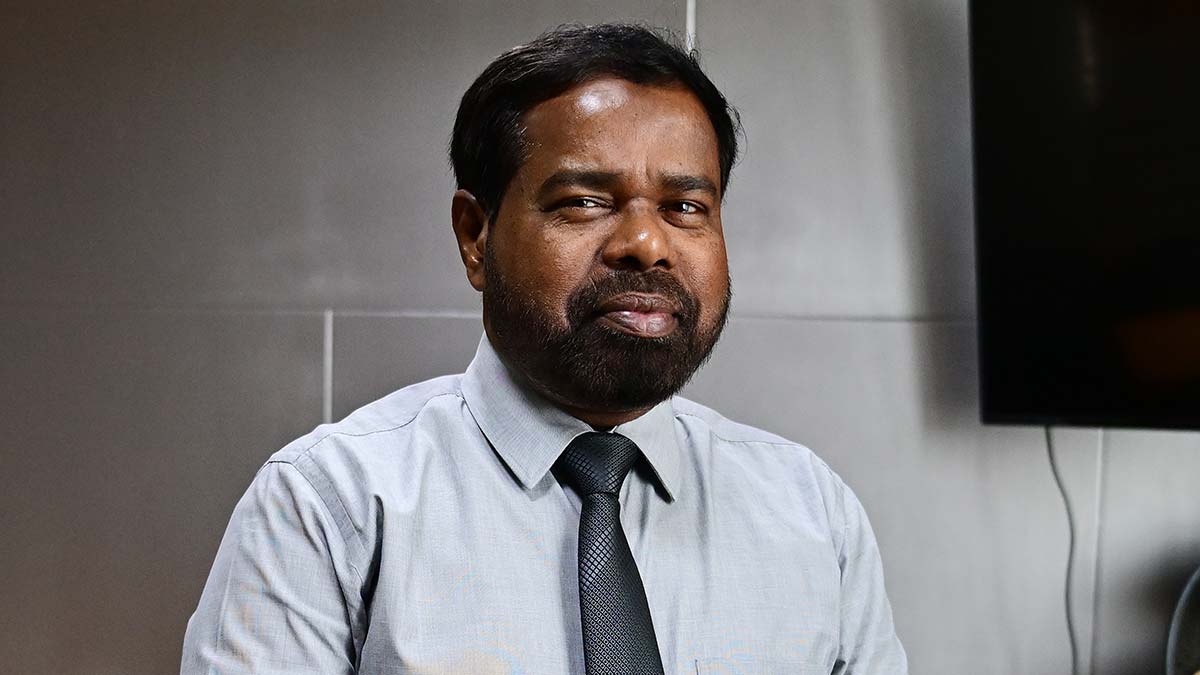
Nayeemudeen is National Director, National Mine Action Centre (NMAC), Sri Lanka.
