



Mysuru, which is called the cultural capital of Karnataka, is known for its rich history, attractive architecture, booming festivals, and toothsome cuisine. The city’s palaces, temples, gardens and food leave a lasting impression on each and every visitor.
Our journey began with a 15-hour train ride from Kochi to Bengaluru. We were greeted with the sounds of honking horns and bustling traffic in the city. But, as we moved further into Karnataka’s countryside, the terrain changed completely. In villages like Mandya, we saw traditional bullock carts and hard-working farmers looking after their fields. The simplicity and greenery of rural Karnataka were refreshing.
After travelling for some more hours, we arrived in Mysuru, eager to explore its beauty. Thankfully, we had a friend who spoke Kannada, which made things easier for us.
Our first stop was the iconic Mysore Palace. Its grandeur was bewitching, with its intricate carvings and stained-glass ceilings to the regal halls embellished with paintings of the Wadiyar kings. The architectural style of the palace is a combination of Hindu, Muslim, Rajput and Gothic influences, which I thought were really interesting.

The palace had a wonderful collection of souvenirs, gifts, and artefacts, including ornamental headrests and anklets used for elephants during the Dussehra festival. One thing we observed was the huge difference in entry fees: while Indian visitors were charged Rs 120, foreign tourists had to pay up to Rs 1,000.
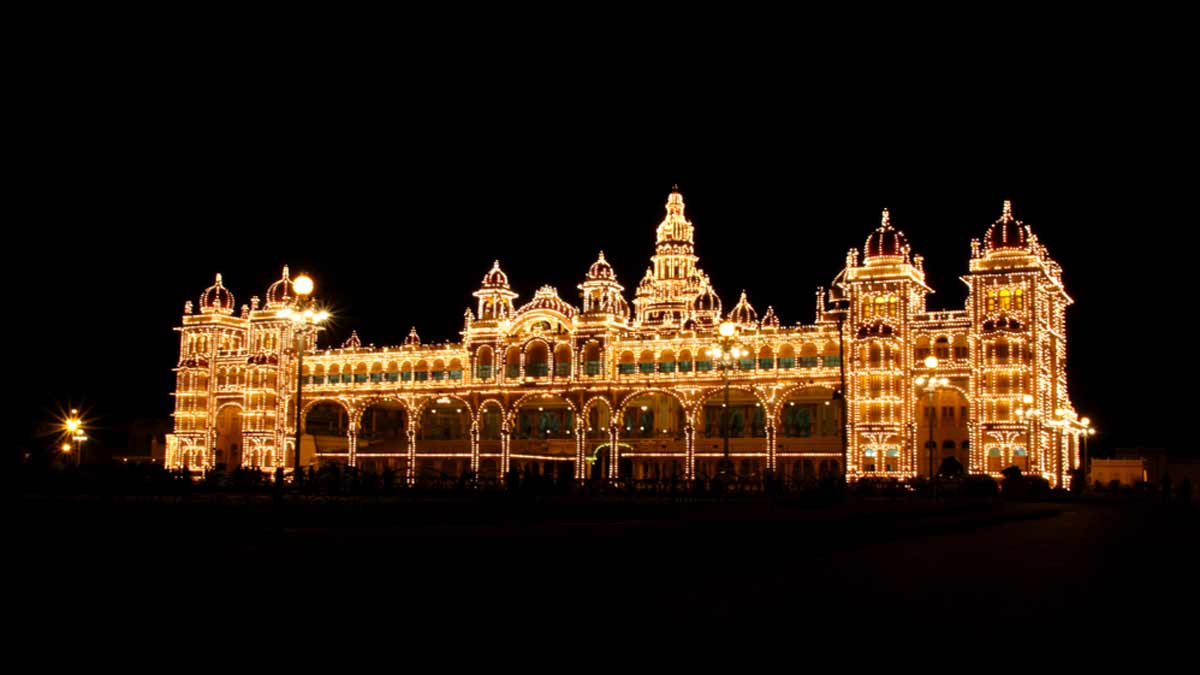
During Dussehra, the palace becomes the heart of grand celebrations, illuminated with nearly a lakh lights, creating a mesmerising spectacle. I can only imagine how magical it must look during that time of year!
In December, the palace also hosts the Mysuru Palace Annual Flower Show, where thousands of flowers, featuring roses, sunflowers, and other blooms from across the country are arranged in impressive displays. I was told the event attracts thousands of visitors who eagerly await it every year.

We ended our first day by watching the palace light show. Though we had to wait for hours, the sight of the illuminated palace in all its glory was worth every moment. Mysore Palace at night was truly a sight to behold.
The next day, we visited St. Philomena’s Cathedral. It is the second-largest church in Asia and is known for its Neo-Gothic architecture. Later, we took a bus to Chamundi Hill to visit the famous Chamundeshwari Temple.
The bus conductor asked the women in our group for their Aadhaar cards. We were initially confused, but soon learned that Karnataka offers free public transport for women, provided they show ID proof.
Reaching the top of Chamundi Hill, we were treated to a panoramic view of Mysuru, beautifully lit as night fell. The cool breeze and the sight of the illuminated city was an experience in itself.
In the evening, we visited the Brindavan Gardens, where the musical fountain show was an absolute delight. The movement of water jets to rhythmic music was mesmerising and a perfect way to end the day.
On our final day, we visited the Mysore Zoo, which is considered one of the oldest and best-maintained zoos in India. Spread across a vast area, it houses a diverse range of animals, birds, and reptiles. It is a must-visit for wildlife enthusiasts.
Of course, no trip to Mysuru is complete without indulging in its famous cuisine. We tried the local-style biryani, idlis, and dosas, which were an absolute treat. A friend recommended Mylari Dosa, a popular food spot, but it did not quite live up to my expectations. However, Mysore Pak, the city’s iconic sweet, was a different story.
Legend has it that Kakasura Madappa, the royal chef of Krishnaraja Wadiyar IV, accidentally created Mysore Pak while experimenting with a dish. The sweet comes in two varieties—-hard and soft—-though the soft version has become more popular in recent years. Interestingly, the word ‘Paka’ comes from the Kannada word for sugar syrup. To experience the authentic taste, it is best to buy it from the renowned local shops.
Our trip to Mysuru was worth remembering for a lifetime. We are already looking forward to returning here during Dussehra when Mysuru turns into a festival of lights, cultural performances, and royal processions.
Until next time, Mysuru!
Nila Satheesh is a student at the Manorama School of Communication, Kottayam, Kerala.
