



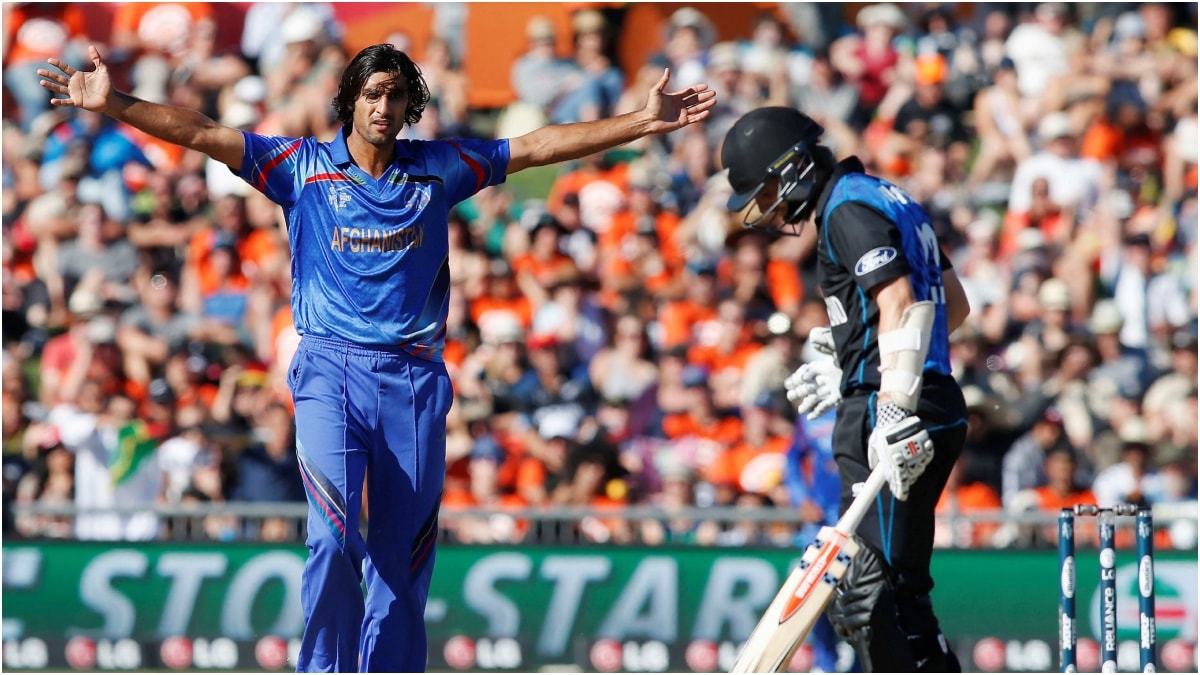
The mortal remains of the late Shapoor Zadran will arrive at Kabul International Airport on Wednesday evening, the Afghanistan Cricket Board said.
The mortal remains will be taken to his family residence in Sadr-e-Azam Township in Bagrami District. The funeral prayer will be offered on Thursday at 10:00 AM at Eidgah Mosque, Kabul. Zadran will be laid to rest during a special burial ceremony at Maranjan Hill, Kabul.
Shapoor Zadran, who is part of Afghanistan's famed cricket lore, died a day before his 39th birthday in New Delhi after a prolonged battle with a rare immune disorder. His demise on Tuesday was announced by the Afghanistan Cricket Board (ACB).
Zadran, a left-arm fast bowler, played 44 ODIs and 36 T20Is for Afghanistan between 2009 and 2020. He was Afghanistan's most successful bowler in the 2015 ODI World Cup, taking 10 wickets
The ACB said Zadran, an imposing bowler who was part of some memorable wins and drew attention for his flowing hair, was "one of the foundation-laying figures of Afghanistan cricket".
"Shapoor Zadran was one of the foundation-laying figures of Afghanistan cricket, whose dedication, passion, and unwavering commitment played a vital role in the rise and development of the game in our country," the ACB said.
He recorded his career-best figures of 4/24 against the Netherlands on his ODI debut in August 2009, and claimed an overall 43 wickets in 44 matches for Afghanistan. In 36 T20Is, Zadran took 37 wickets with a career-best of 3/40 against Bangladesh in Dehradun in June 2018.
It was Hemophagocytic Lymphohistiocytosis (HLH) that claimed the cricketer's life. He had been in New Delhi since January for treatment, but ultimately lost the battle, news agency PTI reported.
What is Hemophagocytic Lymphohistiocytosis?
Hemophagocytic lymphohistiocytosis (HLH) is a severe, life-threatening hyperinflammatory syndrome characterised by excessive immune activation. It can cause life-threatening tissue damage and multiorgan failure if untreated.
HLH is classified into primary (familial) and secondary (acquired) types. While primary HLH is characterised by inherited genetic mutations affecting immune regulation, secondary HLH occurs more often in adults. As per the Mayo Clinic, it is usually triggered by infections, malignancies, autoimmune diseases, or certain therapies and transplants.
If both parents are genetic carriers of HLH, a child has a 25% chance of having the disease, a 25% chance of not having the disease, and a 50% chance of being a carrier. There is no way to prevent HLH, but most children who are successfully treated go on to live normal lives.
Symptoms of HLH
HLH is a rare disease, and research to decode its causes is ongoing. Fever and enlargement of the spleen are the most common symptoms of HLH. According to Hopkins Medicine, other notable symptoms include an enlarged liver, swollen lymph nodes, and skin rashes.
According to medical websites, some patients may also experience symptoms associated with jaundice, like a yellow colour of the skin and eyes, or nerve issues like headaches, trouble walking, visual disturbances, and weakness. Yet others may experience difficulty breathing or coughing.
How is HLH treated?
As per Hopkins Medicine, HLH treatment depends on the cause, the patient's age when the disease starts, and how severe the disease is. Chemotherapy and cancer drugs, immunotherapy, steroids that fight inflammation, antibiotics, and antiviral drugs are all mentioned as part of the treatment protocol.
