



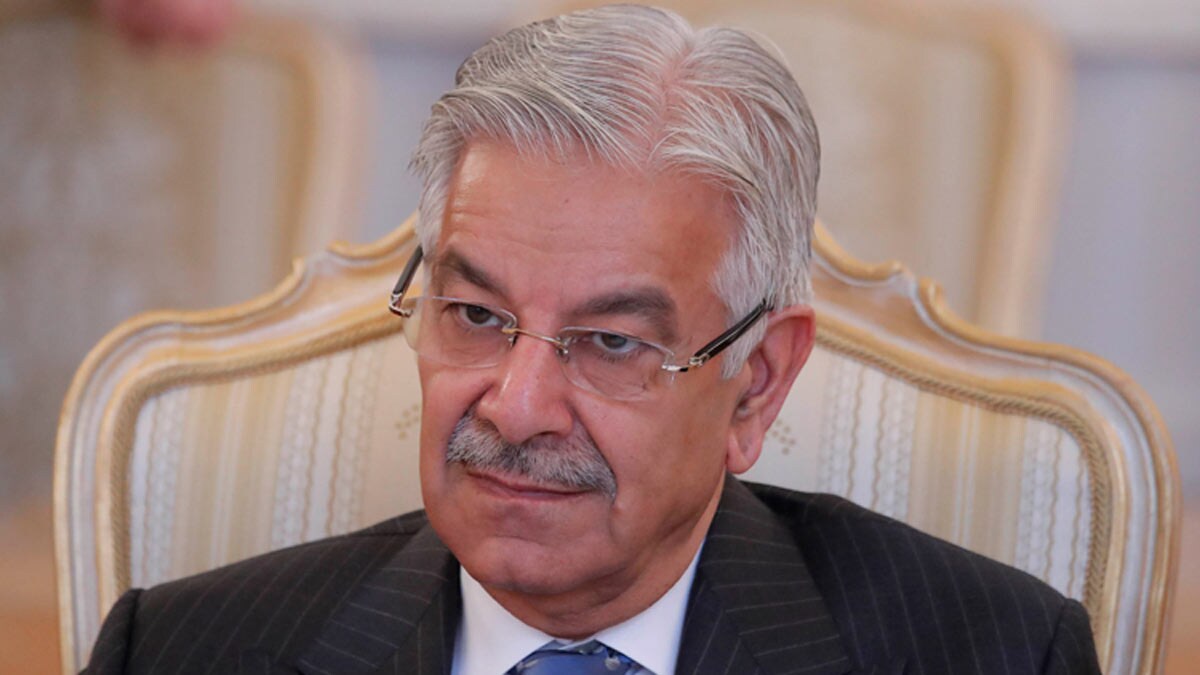
Infamous for his gaffes and controversial remarks during the height of Operation Sindoor, Pakistan Defence Minister Khawaja Asif has once again courted controversy over his comments about killing of protesters in Pakistan-occupied Kashmir (PoK).
Defending the governments crackdown and brutal killing of protesters, Asif said he views the protesters in PoK as enemies, just like India.
"I put the protesters of Azad Kashmir in the same category as India and consider them also as enemies like India," the Pakistani defence minister said.
This comes as at least 14 activists of the Joint Awami Action Committee (JAAC) were killed by security personnel when the banned organisation carried out a march from Rawalkot to the regional capital, Muzaffarabad. More than two dozen others were also injured in the clashes.
Among the deceased was Usman Nazir, younger brother of JAAC founding member Umar Nazir.
The JAAC revealed that its activists were killed when security personnel opened "unprovoked fire" on the 5,000-strong protesters who were marching "peacefully". Meanwhile, the ruling dispensation alleged that the protesters were brandishing mordern weapons and were targeting security personnel.
For several weeks, JAAC has been protesting over its demand for the abolition of 12 legislative assembly seats reserved for Kashmiri refugees. Before Monday's violence, 40 people had reportedly been killed. These include 34 protesters and six law enforcement personnel.
On Tuesday, India slammed the elections for the so-called legilative assembly in PoK as an attempt by Islamabad to camouflage the illegal occupation of the region and hide its "grave" human rights violations during the protests.
"India's position on this matter has been clear, consistent, and well known. The entire Union Territories of Jammu and Kashmir, and Ladakh, including the areas currently under Pakistan's illegal and forcible occupation, are integral and inalienable parts of India," External Affairs Ministry spokesperson Randhir Jaiswal said in Delhi.
"As we have stated earlier, the ongoing mass protests in Pakistan-occupied Jammu and Kashmir are the direct consequences of Pakistan's economic exploitation, its denial of the people's fundamental rights, and its administrative oppression," he added.
