



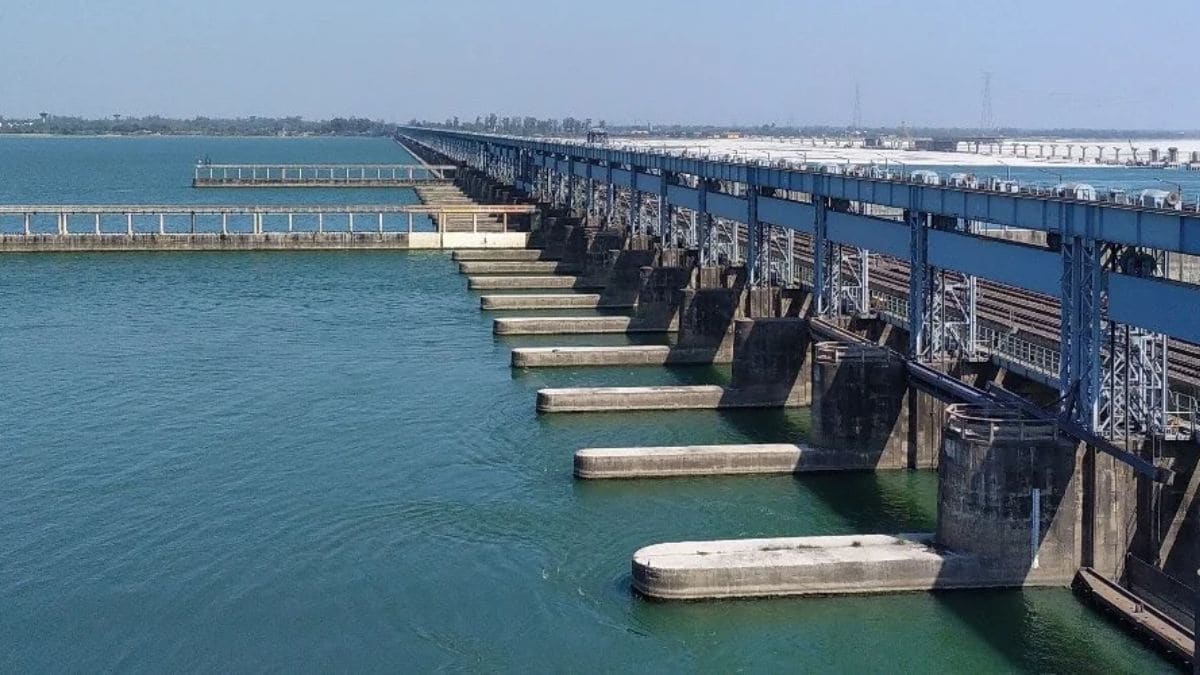
The treaty that has set the terms for dry-season sharing of the Ganga between India and Bangladesh since 1996 runs out on December 12. No renewal, extension or replacement has been announced, and the talks come as India weighs Bangladesh’s extradition request for Sheikh Hasina—a position analysts describe as a dilemma.
The treaty divides the river’s flow at the Farakka Barrage in West Bengal from January 1 through May 31. It is the only formal water-sharing treaty between the two countries, which share 54 rivers. Under Article XII, it can be renewed only with both governments’ consent.
India’s stake
The Farakka Barrage Project says the barrage was built to divert the waters of the Ganga into the Bhagirathi-Hooghly river system and keep Kolkata Port navigable. India maintains it is a diversion structure and that the rest of the river flows on to Bangladesh, according to ORF.
The Northeast is the other concern. Since 2009, Dhaka has handed over senior northeastern insurgent leaders to India and agreed to give the region transit facilities, and analysts say New Delhi cannot afford to lose that cooperation.
Bangladesh’s stake
As the downstream country, Bangladesh depends on dry-season releases. Officials warn a lapse could deepen shortages for millions who farm and fish along the river.
Dhaka points to the Ganges-Kobadak irrigation scheme designed for 955 square kilometres and now at about 550—according to state media—as evidence of dry-season shortages.
The sticking point
The 1996 treaty has no guarantee clause for when flow runs low. When the flow at Farakka falls below 50,000 cusecs in any 10-day period, the two governments are only to enter into immediate consultations. It does guarantee each side 35,000 cusecs in three alternating 10-day periods between March 11 and May 10.
Water Resources Minister Shahiduddin Chowdhury Anee has said Bangladesh wants a new treaty rather than a simple renewal, with guarantee clauses to secure its dry-season share. ORF’s Sohini Bose writes that, from New Delhi’s perspective, leaving the formula open-ended avoids committing in advance to a fixed share for Bangladesh.
Bangladesh has formed a negotiating committee led by Anee and Finance Adviser Rashed Al Mahmud Titumir. Bangladesh told AFP in late October that India had yet to respond to its request to negotiate, though a state minister said on November 2 that working-level contacts were underway.
Politics on both sides
In India, water is a state subject, so West Bengal’s agreement is needed. The BJP’s win there this year puts the state and Centre under one party.
Bihar wants the Centre to hold off on renewal, and coalition partner JD(U) is pressing for fresh talks.
In Dhaka, the BNP-led government, whose party has long criticised the treaty, has little room to accept less than it has demanded.
A chill in ties
Sheikh Hasina had signed the treaty in her first term as prime minister. Ties have soured since she fled to India after the 2024 uprising, which had led to Bangladesh’s International Crimes Tribunal (ICT-1) sentencing her to death in absentia in November 2025. Dhaka has continually demanded her extradition since, which New Delhi says remains under examination.
Jaideep Saikia, a security and terrorism analyst, in The Diplomat, called this India’s “Hasina dilemma”, explaining why returning her would show neighbours that India drops partners when politics shift, while sheltering her feeds anti-India sentiment.
Bangladesh PM Tarique Rahman’s planned August visit fell through, and he skipped September’s BRICS summit in New Delhi. A trip before the treaty lapses has been reported but not confirmed, and ISAS says Hasina remains the main obstacle to a visit.
Dhaka is also pursuing membership in the UNECE Water Convention—a move ORF says could back the country's water claims with international legal weight.
Securing a guaranteed floor—or even a short-term extension—before December 12 will show whether water diplomacy can survive the wider chill in bilateral ties.
