



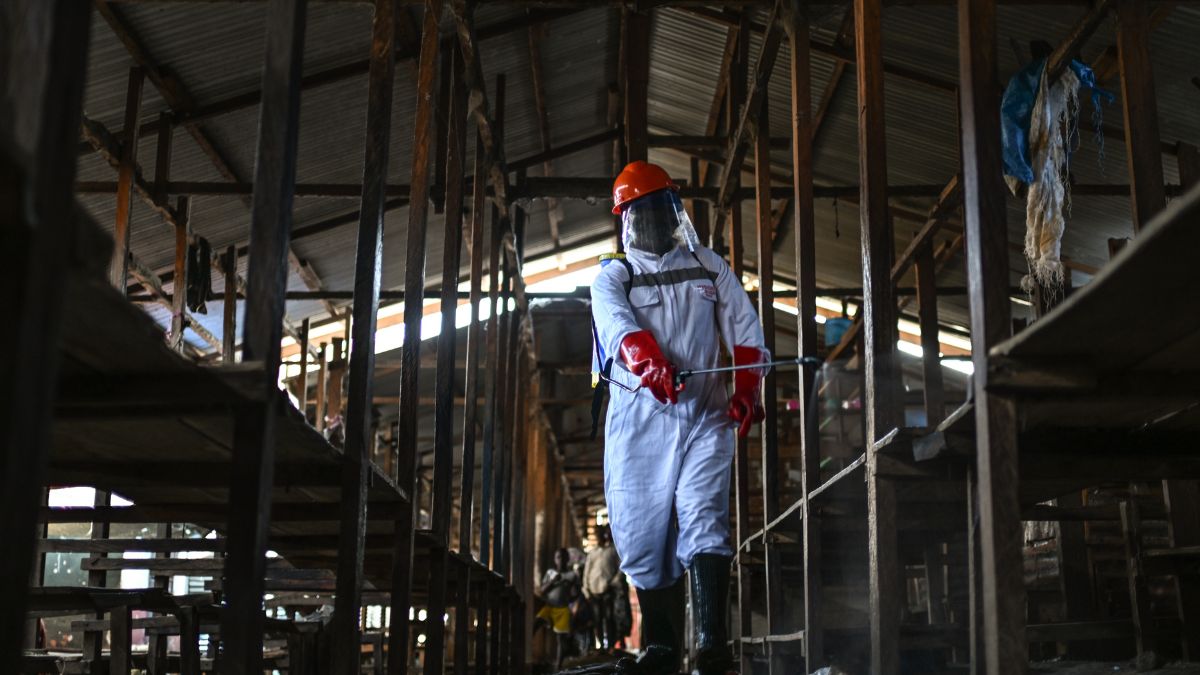
Uganda has officially declared itself Ebola-free, marking a major public health achievement after successfully containing the country's latest outbreak of the deadly virus.
Officials announced that the last patient who was infected with the Ebola virus was discharged in mid-June. "Unlike previous Ebola outbreaks that informed the current 42-day declaration policy, Uganda's 2026 Ebola outbreak arose from a fully documented importation event," the Ugandan Ministry of Health said in a statement Tuesday.
The first cases in Uganda's outbreak were Congolese people who crossed the border to seek treatment for an unknown illness before it was known they had Ebola, PTI reported.
That statement said it was now possible to declare Uganda free of Ebola after "all identified contacts were institutionally quarantined and completed the mandatory 21-day follow-up without evidence of further transmission. Enhanced surveillance has detected no unexplained community transmission."
The 2026 outbreak involved the Bundibugyo strain of the Ebola virus, a rare variant for which there is currently no licensed vaccine or specific treatment.
Measures taken to contain the spread:
After the confirmation of Ebola cases in May, the president urged Ugandans to " stop shaking hands," and ordered the postponement of an annual religious event that attracts thousands of pilgrims.
Other measures included the suspension of all public transportation and flights between Uganda and Congo.
Ebola is a severe viral disease transmitted through direct contact with the bodily fluids of infected individuals or contaminated materials. Symptoms include fever, severe headache, muscle pain, vomiting, diarrhoea and, in severe cases, bleeding.
