



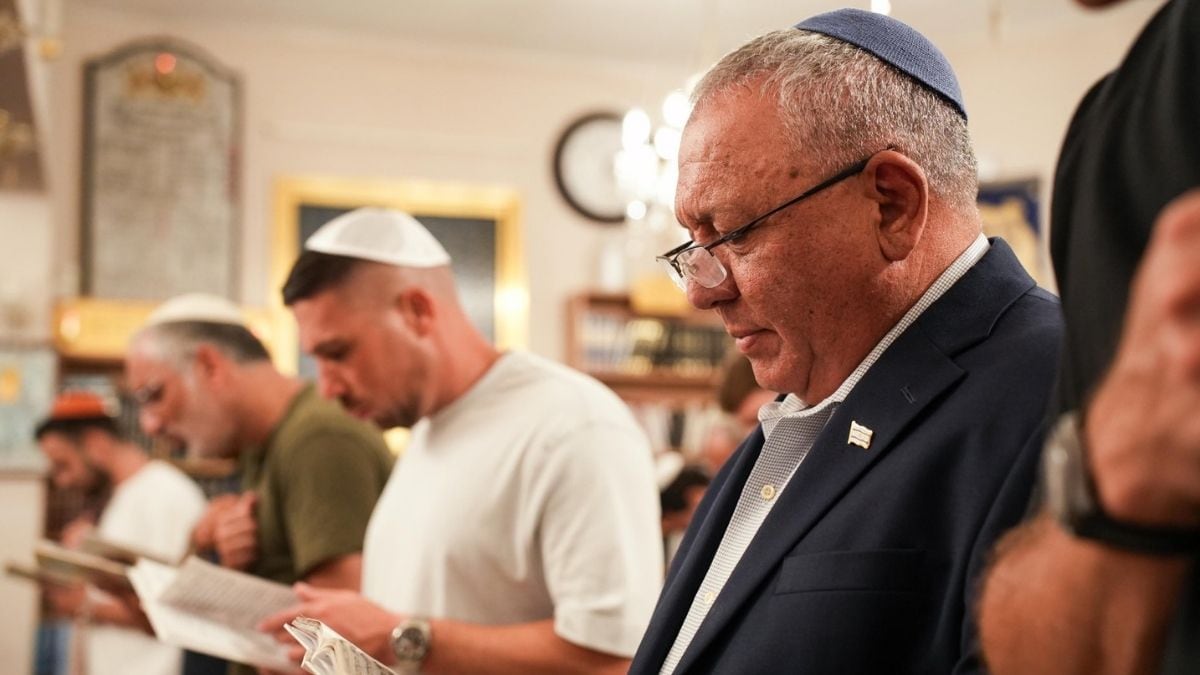
The Israeli opposition bloc that wishes to replace Benjamin Netanyahu has found that agreeing on his departure is the easy part. Gadi Eisenkot emerged from Israel's inconclusive election as the main opposition party, with his Yashar winning 21 seats. Yet, that has unsettled the allies he needs. Naftali Bennett, whose B'Yachad won 12 seats, is unwilling to be set aside as a junior partner and fears for his political independence over the long term.
Meanwhile, Avigdor Liberman, whose Yisrael Beytenu won seven seats, attacked Eisenkot and Yair Golan of The Democrats, arguing that their talk of a minority government backed by Arab parties sent right-leaning voters back to Likud. The confrontation within the alliance has been clearly visible in their search for a speaker candidate. In the place of incumbent Amir Ohana, the bloc now has three names: Yashar's Orit Farkash-Hacohen, Yisrael Beytenu's Oded Forer and Yair Lapid of Yesh Atid, the compromise favoured by B'Yachad. An opposition unable to choose a speaker will struggle to choose a prime minister.
The 120-seat Knesset requires 61 votes for a government to survive a confidence motion. Netanyahu's right-wing and religious bloc holds 53, with Likud on 27, Otzma Yehudit and United Torah Judaism on seven each, Shas on six and the Religious Zionist Party–Zehut on six. The opposition bloc has 48 seats, and the remaining 19 belong to Arab-led factions: Ra'am with eight and the Joint List with 11. Together the parties opposed to Netanyahu hold 67, but that majority on paper does not mean an alliance.
The Arab parties are the key. Thousands rallied in Tel Aviv on Friday demanding a Jewish-Arab coalition, but Liberman and Bennett have both made it clear that they would never govern with or rely upon the Joint List. Eisenkot has set four coalition demands, among them universal military or civilian service and the destruction of Hamas's capabilities in Gaza, conditions that Arab parties would find hard to accept. Likud has meanwhile branded any Arab-backed arrangement as election theft and accused its rivals of leaning on supporters of terror and on foreign interference. Such charges narrow the space in which Eisenkot can negotiate.
He has therefore turned to the ultra-Orthodox. Shas, with six seats, and United Torah Judaism, with seven, could allow the formation of a broad Zionist coalition without Arab votes. Complicating matters is the fact that Liberman will not shake hands with the Haredi parties, and Eisenkot's insistence on universal conscription runs directly against the draft exemptions those parties demand.
A national unity government offers another route. Likud, Yashar and B'Yachad together have 60 seats. Yet Eisenkot and Bennett both campaigned on pledges never to serve under Netanyahu, and the policy gaps are wide. They include a state commission of inquiry into the October 7 attacks, the judicial overhaul and the terms of any rotation, with each side distrustful of who would hold the premiership first.
Israel's constitutional mechanics, meanwhile, favour the man already in office. Netanyahu remains caretaker prime minister until a successor is sworn in, which lets him wait out his opponents while courting potential defectors. The opposition is attempting to use its 67-seat majority to seize the legislative agenda before any government exists. Citing High Court precedent, it hopes to replace Ohana, set up an October 7 inquiry, repeal the judicial overhaul laws and advance draft mandates. Some members are also exploring an amendment to the Basic Law to allow direct election of the prime minister, a scheme dubbed the "Netanyahu 2021 model", which would pick a leader without the toil of coalition building. However, direct elections between 1996 and 2001 deepened parliamentary fragmentation rather than curing it.
Neither Netanyahu nor Eisenkot commands an organic majority. The incumbent can lean on the power of office to pressure rivals, while the challenger must reconcile Arab factions, secular nationalists and the ultra-Orthodox, whose demands exclude one another. Unless a party leader abandons a core campaign pledge, Israel may be sent back to the polls.
