



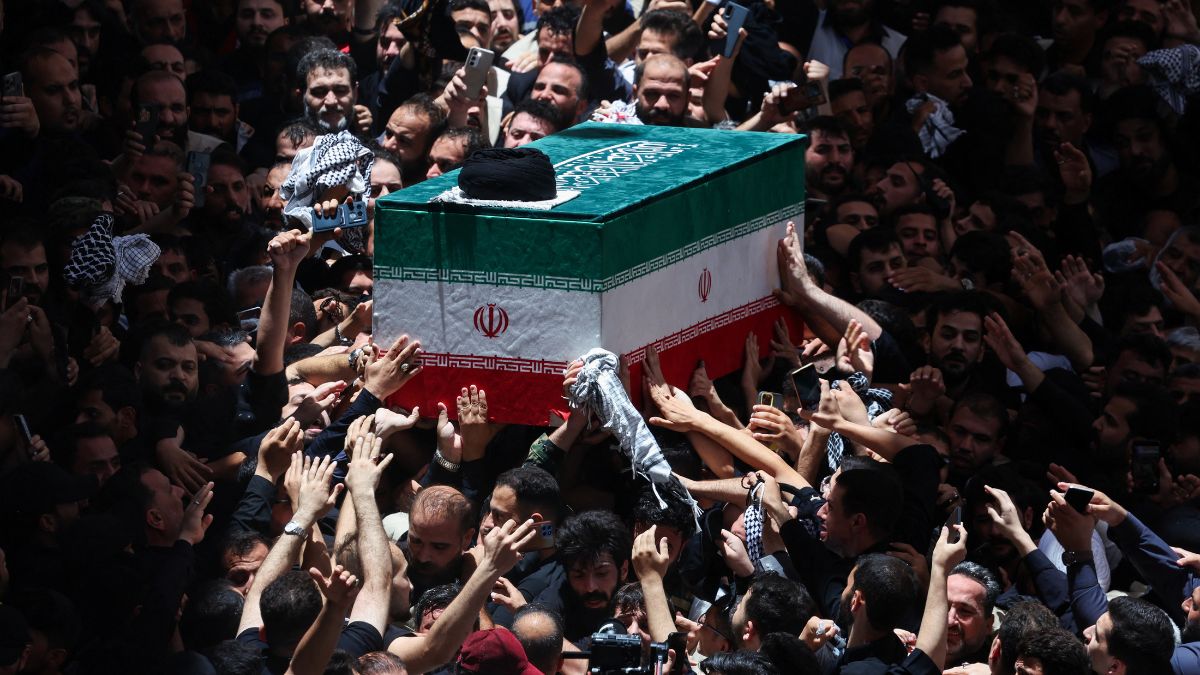
Funerals in the Middle East shape politics. The funeral of Iranian Supreme Leader Ali Khamenei, spanning more than seven days beginning on July 3 and attended by millions, reflected Iran’s resilience, strength and domestic support while signalling its inclinations and future moves in the conflict. The funeral, a deliberate display of strategy and thoughtfulness, took place 125 days after he was assassinated on February 28.
Public farewell ceremonies took place at the Grand Mosque in Tehran, where global leaders paid their respects as verses were recited with messages tailored to Iran’s perception of the countries that sent representatives. Processions were held in Qom, a centre of Shia scholarship where Ali Khamenei received advanced studies and was mentored by the first Supreme Leader, Ayatollah Khomeini, and Allamah Tabatabai. Subsequently, public processions were held at the Iraqi Shia sites of Najaf and Karbala, which host the tomb of the first Shia Imam, Ali, and the shrine of Imam Hussain, respectively. Lastly, he was buried at the shrine of Imam Reza in Mashhad, the holiest city in Iran and Khamenei’s birthplace.
The funeral itself gained significant traction due to the ongoing conflict. However, the politics surrounding death, grief, and funerals is not unique, even in the broader Middle East. The state has used funerals to demonstrate its legitimacy and domestic support. In 1999, the funeral procession of King Hussein of Jordan signalled continuity and resolve. Notable examples include hundreds of thousands of Syrians attending Hafiz al-Assad’s funeral in 2000, chanting to preserve Bashar al-Assad, and an equally large number of Lebanese attending Prime Minister Rafik Hariri’s funeral in 2005.
Similarly, the protesters and non-state actors have also used funerals to signal the intensity of grievances and a strong resolve for reform and change. Funerals provided an important platform for opposition to express their anguish and discontent in Syria; deaths of protesters at the hands of Assad officials often evoked sentiments ranging from demands for reform to calls for regime change. The funeral of Hamas leader Abdel Aziz al-Rantisi in 2004 was attended by tens of thousands of Gazans vowing a volcano of revenge against Israel.

Yasser Arafat's death in 2004 created a major political vacuum, fracturing the Palestinian national movement and ultimately leading to the conflict between the Fatah and Hamas factions. Hezbollah leader Hasan Nasrallah’s funeral in 2025 was attended by 450,000 to 1,000,000 people, signalling resistance and boosting the outfit's morale.
On the other hand, funerals are also shaped by the existing political situation in the state and the region. For instance, despite being a long-serving president, Hosni Mubarak’s funeral in 2011 was a restricted event, attended only by high officials. One reason for the low-key funeral was polarized public opinion over his military achievements during the 1973 war and his emphasis on stability, versus those harping on corruption and human rights abuses under his rule. Likewise, Muammar Gaddafi’s funeral was a low-key affair, conducted secretly, with only a few relatives and clerics in attendance to prevent the gravesite from becoming a revered shrine for his loyalists.
In the Middle East, religion also plays a significant role in determining funeral scale. The core elements of last rites are similar across Shia and Sunni communities and include washing the body (ghusl), shrouding it in unstitched clothing (kafan), funeral prayer (salat al-mayyat), and burial (dafn). However, mourning practices and burial traditions differ. The Sunni tradition advocates quiet weeping and patience, while the Shia tradition encourages communal mourning and vocal expressions of grief and lamentation. This divide is evident in funerals held in the Gulf states. Former Qatari Emir SheikhHamad bin Khalifa Al-Thani’s funeral, held three days after Khamenei’s burial in Mashhad, was a solemn ceremony in keeping with Islamic traditions and his belief in simple living, despite his efforts to push Qatar to new heights.
Funerals also have political implications; for instance, the 2024 funeral of Fethullah Gulen, the founder of the Gulen movement, in New Jersey strengthened the legacy of his movement among the Turkish diaspora rather than in Türkiye. President Recep Tayyip Erdoğan’s denunciation of Gülen after his death and his vow to eradicate the movement widened the existing divide.
Nevertheless, Khamenei’s funeral is more than a state leader’s funeral, given his religious stature, and it has clear implications for the ongoing conflict. It has created a narrative of revenge, with calls to target American and Israeli leaders responsible for his death reverberating during the funeral. Chants of death to America and death to Israel echoed similar slogans from the Iranian revolution in 1979. Certainly, the funeral had an impact on the ongoing negotiations and contributed to the recurrence of the conflict between Iran and the US. Ultimately, Khamenei’s funeral procession showed that politics over death remains a potent tool in the Middle East.
The author is an Associate Professor at the Centre for West Asian Studies, School of International Studies, Jawaharlal Nehru University, New Delhi.
