



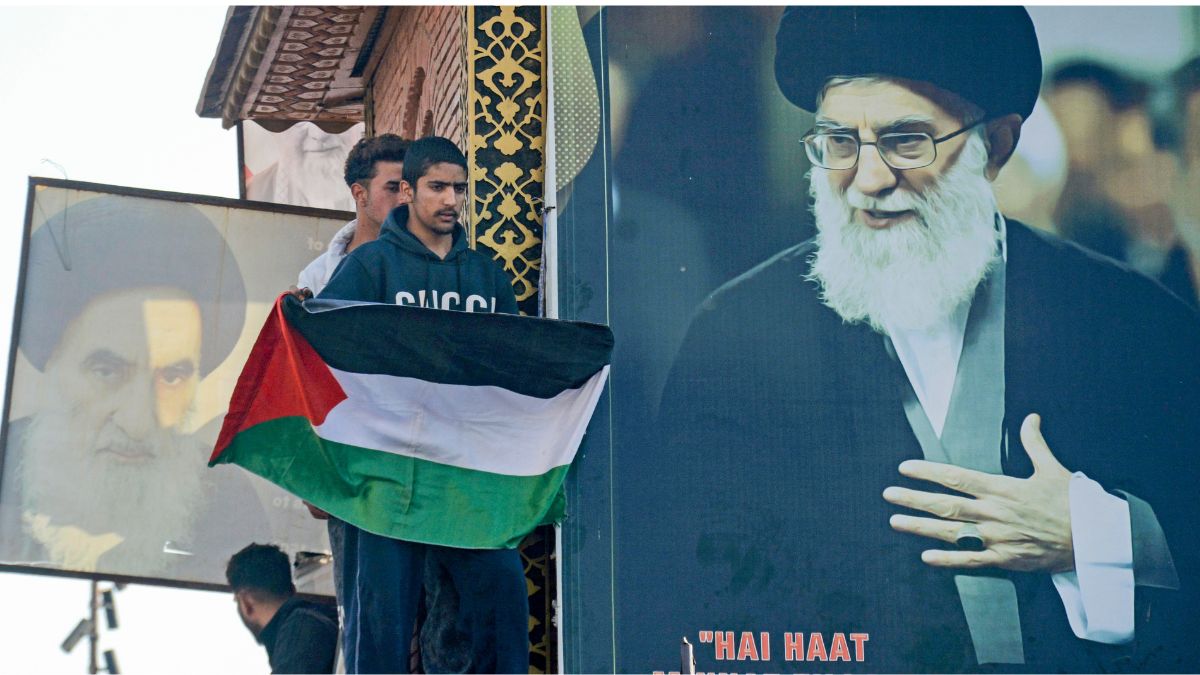
State funerals are major national events that draw international attention. Because mourning allows individuals and states to temporarily sidestep, if not forget, bitterness and hatred toward the deceased, it can, at times, provide a healing touch. The fragility of life reminds individuals and societies of the need to overcome past animosity. They also offer an opportunity for friends to reaffirm their bonds with those who have lost their loved ones.
Hence, the Iranian invitation to India for the funeral of the slain Supreme Leader Ali Khamenei is an astute diplomatic move. While the government has not indicated its acceptance or preference, social media is flooded with speculation. Everyone has their own candidate, and some keen observers of the Islamic Republic are betting on Prime Minister Modi himself.
While mourning is a solemn undertaking, it also takes on a strong political and religious tone. Unlike Sunni Islam, Shiism thrives on justice and resistance, and when the funeral is for someone who was killed or martyred, it acquires a more virulent form. No matter when one chooses to attend, the four-day, five-location funeral for Khamenei will witness a high degree of mourning, lamentation, and violent self-flagellation common during Moharram. Thus, the religious nature of Khamenei’s funeral will be unmistakable.
Two, India maintained diplomatic silence when US-Israel forces assassinated the Supreme Leader. After considerable internal debate, the Foreign Secretary, not the Foreign Minister, signed the condolence book at the Iranian embassy in New Delhi. Attending Khamenei’s funeral more than four months later, after so much mayhem on both sides of the Persian Gulf, will invite further criticism of India.
Three, since the conflict began on 28 February, India has clearly indicated its preferences. While it was not ready to criticise Israel and the US for starting the war, New Delhi did not hesitate to criticise Iranian missile and drone attacks on the Gulf Arab countries. Unlike domestic critics and ideologues, the Indian government was more concerned with the welfare of over one crore Indian expatriates—a sizeable portion from the state of Kerala. Hence, comforting and reassuring Gulf Arab countries is more vital for India than identifying the aggressor. In short, Prime Minister Modi wished to avoid the problem Pakistan faced when the UAE expelled a large number of its expatriates over Islamabad’s perceived sympathy for Iran.
Four, Prime Minister Modi did meet the vilayat-e faqih Khamenei during his 2016 visit to Iran. Khamenei frequently made unflattering comparisons between the plight of Muslims in the Palestinian territories and in Kashmir. The Indian leader was not averse to attending the funerals of leaders who were staunch friends of India, even if they were not in public office at the time of their death. Khamenei does not fit into this category.
Five, over the past few months, Prime Minister Modi has made his priorities loud and clear. In the wider Middle East, he sees Israel as a friend, and recent bouts of tension between Benjamin Netanyahu and President Donald Trump have not dampened Modi's enthusiasm. In Modi's view, by focusing on his national priority, Netanyahu has even earned the grudging recognition and admiration of some Arab powers. When it comes to meeting threats from Iran, these Arab countries see Israel as more dependable than the Trump Administration.
Likewise, in the Gulf region, the UAE, which has the largest concentration of Indian expatriates, has emerged as a key player in India's Gulf strategy. Prime Minister Modi’s brief stopover on 15 May was a reminder of the Emirate's importance to Modi's economic agenda and of his willingness to stand with the beleaguered country. The Emirate is unlikely to forget, let alone forgive, the Iranian attacks on its civilian infrastructure and the blockade of the Strait of Hormuz.
Six, funeral meetings also send subtle messages not only to the grieving country but also to its neighbours, friends, and adversaries. Regionally, Iran has more adversaries than friends. Seeing Prime Minister Modi in Iran at this time would send the wrong signal to some of the countries with whom India seeks to improve relations. Not just the US and Israel, but even Saudi Arabia and its Crown Prince Salman would be unhappy to see Modi in Iran.
His upcoming trips to Indonesia, Australia, and New Zealand, scheduled for the same dates as the funeral, should provide him with strong diplomatic cover. Thus, as a diplomatic courtesy, Prime Minister Modi would send a junior minister, a senior diplomat, or even a Shia figure to represent India. Nothing more.
The author teaches contemporary Middle East at Jawaharlal Nehru University, New Delhi.
