



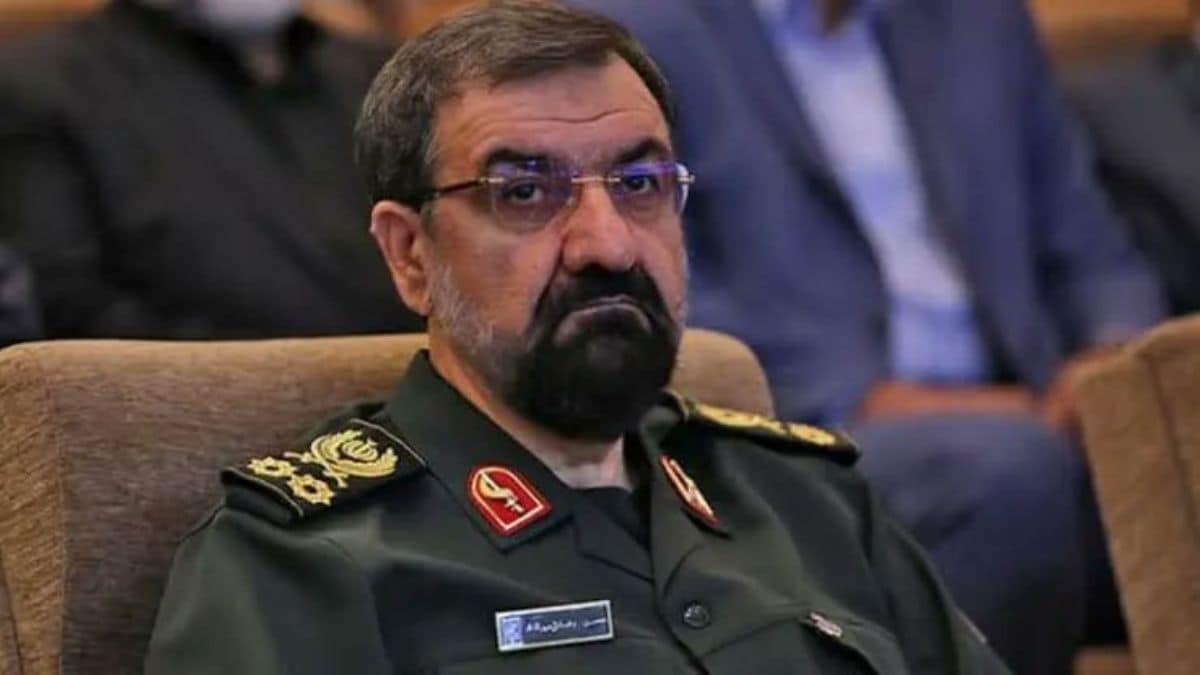
The appointment of Mohsen Rezaei as the head of Iran's Supreme National Security Council and as Supreme Leader Mojtaba Khamenei's personal representative to the body in the place of Mohammad Bagher Zolghar marks a strategic shift for Tehran. Coming at a critical juncture in the US-Iran war, the move looks like an attempt to unite defence, diplomacy and the economy under experienced wartime leadership.
Rezaei's background as commander-in-chief of the Islamic Revolutionary Guard Corps from 1981 to 1997 brings a clear military logic to the decision. His experience during the Iran-Iraq war (1980-88) could prove invaluable during the ongoing war with the US. Analysts see his appointment as a reflection of Iran's shift toward "offensive deterrence based on punishment”. It signals Tehran's readiness for continuing the war, projecting a message that escalating sanctions and military blockades will be met with an equally hardline response.
Rezaei has earlier threatened that if the US attacked Iran, his forces would capture at least a thousand Americans and demand billions of dollars in ransom to solve Iran's economic problems. He also places immense strategic value on the Strait of Hormuz, claiming that controlling it is worth more than "dozens of atomic bombs”. He has repeatedly warned against the opening of a second corridor to transit the strait. His appointment underscores the enduring influence of the old-guard security establishment and shows that the leadership would rather lean on battle-tested veterans than hand power to a younger generation of political elites.
Beyond projecting external strength, Rezaei's presence is meant to improve coordination among Iran's government bodies that usually operate within silos. His extensive institutional experience, including years steering the Expediency Council and managing macroeconomic policies under former president Ebrahim Raisi, makes him well placed to bridge the divides between President Masoud Pezeshkian's relatively liberal government, the conservative faction led by Parliament Speaker Mohammad Bagher Ghalibaf and the rigid hardliners associated with Expediency Council member Saeed Jalili.
Some analysts interpret Rezaei's appointment as a deliberate move by Mojtaba Khamenei to rein in Ghalibaf's growing influence, given his close ties with Zolghadr. By installing a figure with such institutional authority and a history of considerable personal ambition, having run unsuccessfully for president four times, the supreme leader seems to be trying to ensure that no single political faction gains dominance.
Rezaei's hardline credentials and military pedigree could make him the ideal figure to facilitate diplomacy. Because he is so deeply entrenched in the military and security apparatus, and even carries an Interpol Red Notice over his alleged role in the 1994 AMIA (a Jewish group in Argentina) bombing in Argentina, he has the credibility to sell difficult compromises to the Iranian public.
While moderate politicians are targeted by protesters and are accused of weakness for backing the June MoU with the US, Rezaei is largely immune to such attacks. His involvement offers a political guarantee that any negotiated settlement will be accepted by the establishment's most radical elements who would find it nearly impossible to accuse a founding IRGC commander of squandering national security interests.
Rezaei is also recognised as an "institution builder," having expanded the IRGC's specialised structures, training capabilities and scientific centres during his tenure. At a time when national security spans economic resilience, technological competition and hybrid warfare, Rezaei is expected to bring a broad geopolitical perspective. He has actively advocated regional alliances with nations such as Saudi Arabia, Turkey and Egypt, warning against total dependence on any single power bloc. And unlike many secretive security officials, Rezaei is a highly visible public figure, his gift for public communication seen as a crucial asset in navigating the modern “battle of narratives”.
Apart from elevating Rezaei, Mojataba’s office also announced several other major military appointments meant to consolidate the hierarchy. Brigadier General Ahmad Vahidi was formally appointed commander-in-chief of the IRGC with the rank of major general, succeeding Mohammad Pakpour, who was killed during the opening strikes of the war. Like Rezaei, Vahidi is wanted by Interpol over the 1994 Buenos Aires bombing, and represents the hardline veteran establishment. Ali Abdollahi, the former head of Iran's joint war command who recently issued threats against neighbours acting as US “defensive shields”, was appointed the new chief of staff of the armed forces. Ali Ozmaei, meanwhile, was named the new head of the IRGC navy. The outgoing SNSC secretary Zolghadr has been reassigned to serve as a political adviser to Mojtaba, a move meant to make use of his experience while handing the top security role to Rezaei.
