



The first round of the high-level talks between the United States and Iran under a proposed memorandum of understanding (MoU) concluded early Monday, although lower-level technical discussions are expected to continue throughout the week.
Iranian Foreign Minister Abbas Araghchi praised the mediation efforts of Pakistan and Qatar, saying they had “delivered major progress.”
A statement issued by the mediators said Washington and Tehran had agreed to establish a “de-confliction cell” aimed at ensuring compliance with any cessation of military operations in Lebanon.
However, it remains unclear how Israel would be brought into the arrangement, given its position that it must retain operational freedom to strike Hezbollah targets in response to attacks on northern Israel. Neither Israel nor Hezbollah is a party to the US-Iran talks.
Israeli Prime Minister Benjamin Netanyahu has reiterated that Israeli forces will remain in southern Lebanon until what he describes as a credible security threat is eliminated.
“Tireless Pakistani and Qatari mediation has delivered major progress to end the Lebanon war,” Araghchi wrote on X, adding that the first real test of the negotiations would be whether the proposed de-confliction mechanism succeeds in halting the fighting.
On the eve of the talks, Tehran reiterated that its stance on the Strait of Hormuz was linked to Israel’s ongoing military campaign in Lebanon against Hezbollah. Iranian officials have maintained that any interim deal would be intended to halt hostilities across multiple fronts, including Lebanon.
While Iran, Pakistan, and Qatar described the first round of talks as successful, there has been no formal statement from the United States confirming the outcome.
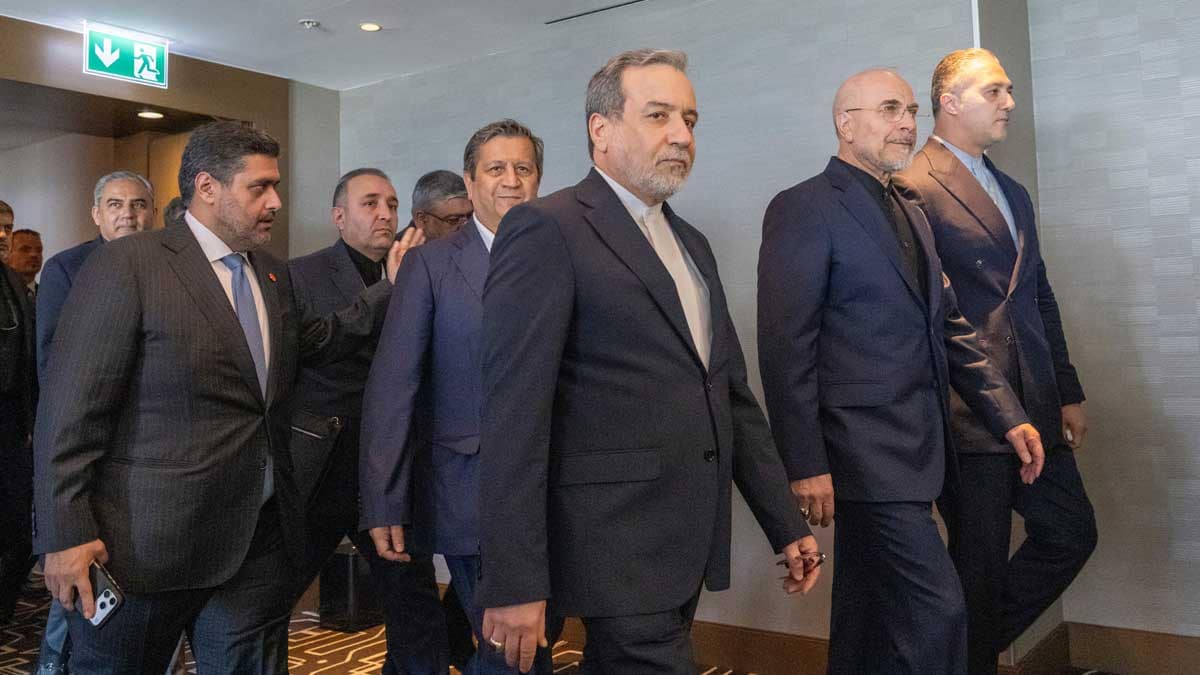
The US delegation was led by Vice President J.D. Vance and included Jared Kushner and Steve Witkoff, while Iran’s delegation was led by Araghchi and Parliament Speaker Mohammad Bagher Qalibaf.
Pakistan and Qatar, acting as mediators, said lower-level technical talks would continue in Switzerland for the remainder of the week, with the aim of preparing groundwork for future high-level negotiations.
A senior US diplomat, quoted by the Associated Press, said much of the discussion focused on clarifying Tehran’s recent statements regarding the Strait of Hormuz.
Earlier reports suggested that technical talks had encountered a temporary roadblock initially, even as back-channel diplomacy continued. A CNN report indicated that negotiations have persisted behind the scenes despite rising tensions, including warnings issued by US President Donald Trump on Sunday.
Trump warned Iran against any attempt to close the Strait of Hormuz, threatening to seize control of the strategic waterway and impose tolls if Tehran proceeded.
“You close it, and you won’t have a country. You won’t even make it back to your f***ng country,” he told Fox News.
Qalibaf rejected Trump’s remarks, saying Iran would not be intimidated by US threats and that its armed forces were prepared to respond if necessary.
Other issues under discussion included the unfreezing of billions of dollars in Iranian assets and concerns over Iran’s nuclear programme. The US has sought to bring Iran into structured negotiations over its nuclear activities, amid concerns in Washington that the programme could be used for military purposes—an allegation Tehran denies.
Iranian officials told reporters that Sunday’s discussions were largely focused on Lebanon, though broader regional and bilateral issues were also raised.
During the negotiations, Vance reportedly conveyed Washington’s willingness to “fundamentally transform” its relationship with Tehran and “turn a new leaf” in diplomatic engagement.
