



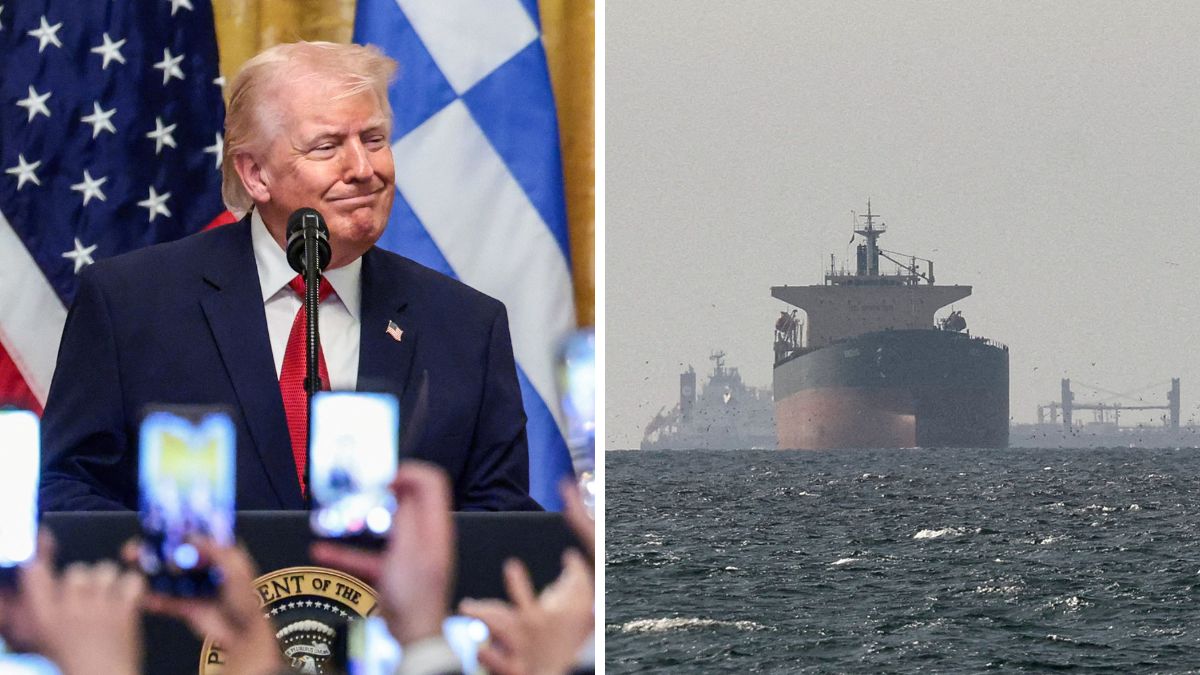
President Donald Trump has announced yet another pause on planned military strikes against Iranian energy facilities, pushing the deadline for Tehran to fully reopen the Strait of Hormuz to April 6. The decision to extend the pause in attacks for another 10 days marks another shift in tone after days of increasingly aggressive rhetoric from Washington and comes amid signs that both sides are trying, at least cautiously, to avoid a deeper and more destructive escalation.
Trump said the Iranian government had requested a seven-day extension through intermediaries, but that he chose to grant 10 days as a gesture of goodwill. He described the move as a response to what he called a “present” from Iran, referring to the fact that several oil tankers, including Pakistan-flagged vessels, had recently been allowed to pass safely through the crucial shipping route. The April 6 deadline is now the second time Trump has postponed his threat to carry out what he earlier described as “devastating strikes” on Iran’s power infrastructure. Initially, the White House had issued a much shorter 48-hour warning.
Over the past two days, Trump has repeatedly claimed on social media and in television interviews that indirect peace talks are already underway and are going “fairly well”. He has insisted that Iranian leaders are eager to strike a deal because, in his words, their military capabilities have been “obliterated”. Iranian officials, however, have categorically denied that any negotiations are taking place. They have accused the Trump administration of deliberately exaggerating diplomatic progress in order to calm global markets and alleviate investor panic.
As both Iran and the US show no signs of letting up, oil prices have surged sharply, sending shockwaves through global markets. Yesterday, Wall Street suffered its largest single-day decline since the conflict began, reflecting the panic that the crisis could result in a prolonged disruption of energy supplies. European and Asian economies, which rely more heavily on Middle Eastern oil, are also becoming increasingly anxious as the standoff drags on.
Behind the public rhetoric, diplomatic channels are quietly becoming more active. The United States has reportedly used Pakistan as a key intermediary, presenting Tehran with a 15-point “action list” that could form the basis of a potential settlement. Trump’s special envoy to the Middle East, Steve Witkoff, and his son-in-law, Jared Kushner, are said to be involved in these efforts, urging Iranian officials to view the present moment as a decisive turning point. According to reports, they have told Tehran that “this is the inflexion point, with no good alternatives for them other than more death and destruction”.
Iran has so far been dismissive about the proposal. An unnamed Iranian official described the American plan as “one-sided and unfair”, while Iranian state media outlined a set of counter-demands. Tehran wants an immediate cessation of hostilities, war reparations and recognition of Iranian control over the Strait of Hormuz. Trump has meanwhile called for American access to at least a part of Iran’s oil output, which has further complicated the situation.
Despite the temporary pause in strikes against energy facilities, the war itself shows no sign of slowing down. Israel has intensified its operations inside Iran, carrying out yesterday a high-profile assassination of Alireza Tangsiri, the naval commander of the Revolutionary Guards. American and Israeli officials had accused him of playing a central role in mining the Strait of Hormuz and effectively shutting it down. The strike, reportedly carried out in Bandar Abbas, was followed by heavy bombardment in Tehran and further airstrikes targeting military and nuclear-related sites near Isfahan.
The human cost of the conflict is mounting rapidly. Nearly 2,000 deaths have been reported from Iran, while about 1,100 have died in Lebanon.
Despite talks about a negotiated settlement, the US is deploying thousands of additional troops, including Marines and airborne units, giving Washington the option of launching targeted raids or even seizing strategic assets such as Kharg Island, Iran’s main oil export hub. Defence Secretary Pete Hegseth summarised the administration’s approach bluntly when he said, “We negotiate with bombs”.
Trump, however, remains reluctant to commit large numbers of American troops to Iranian soil. Officials say he is concerned about the political consequences of rising casualties. So far, 13 US personnel have been killed and nearly 300 wounded. The president is also under pressure to end the war quickly because of domestic political priorities. His advisers believe the conflict is distracting from his wider agenda, including immigration policy, voter eligibility reforms and efforts to address the rising cost of living ahead of the midterm elections.
The push for a rapid settlement has exposed divisions within the administration itself. While key leaders like Secretary of War Pete Hegseth and Joint Chiefs Chairman General Dan Caine, are pushing to prolong the attacks, arguing for a decisive military victory, opposition is growing in Congress. Republican Senator Lisa Murkowski is reportedly preparing a resolution that would force lawmakers to vote on a formal authorisation for the use of military force.
The wider region remains deeply unstable. Iran has warned that any American ground invasion would be a grave mistake, and there are increasing fears that Tehran could encourage the Houthis in Yemen to target shipping in the Red Sea and step up attacks on Gulf assets. “Iranian forces are monitoring enemy movements, and if they take any step, we will attack vital infrastructure in that regional country that assists in the operation in continuous and relentless attacks,” said Iran’s parliament speaker, Mohammad Bagher Ghalibaf.
