



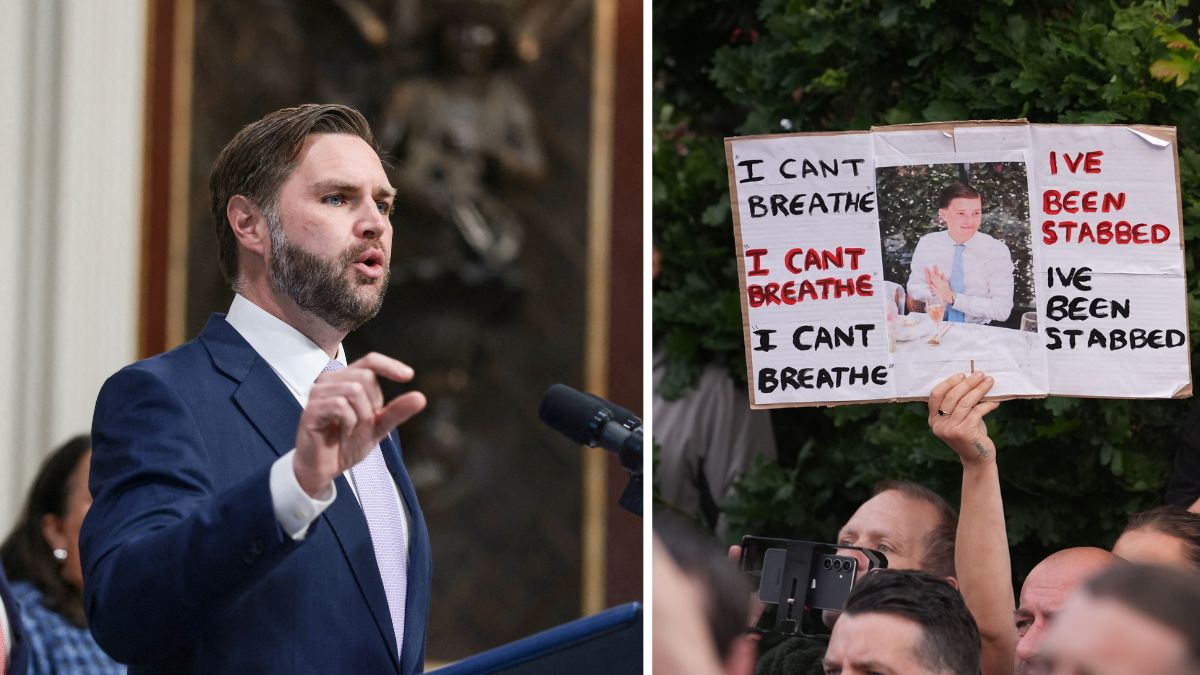
British Prime Minister Keir Starmer has sharply condemned remarks by US Vice President J.D. Vance following the murder of 18-year-old Henry Nowak, accusing American officials of trying to meddle in British democracy and deliberately fan the flames of division. A Downing Street spokesperson said those comments were "trying to interfere in our democracy and seeking to stir up division on our streets."
Starmer echoed that view on Friday, insisting that politics ought to bring people together even in the most harrowing of circumstances. Earlier this week, he singled out American billionaire Elon Musk for trying to sow discord and gave weight to the wishes of Nowak's grieving family. Henry's father, Mark Nowak, had pleaded that his son's death not be used to create "further division, hatred or tension."
The confrontation followed the fatal stabbing of Nowak, a white university student, in Southampton in December. His attacker, 23-year-old Vickrum Digwa, a British-born Sikh, lied to police, claiming he had been the victim of a racist attack. Officers who responded, acting on that false account, handcuffed the dying teenager as he bled from his wounds. Bodycam footage later showed Nowak begging for help, telling officers he could not breathe and had been stabbed, only to be met with disbelief. Digwa was convicted of murder and sentenced to life in prison with a minimum term of 21 years. The footage provoked widespread public fury and violent protests in Southampton, with police pelted by rocks, cans, and flares.
Vance wasted little time in turning the tragedy to his own ends, pushing an anti-immigration narrative. On social media platform X, the US vice president blamed Nowak's murder on "the mass invasion of migrants, many of whom despise the West and the people who love it."
He claimed the teenager had died "the same way a civilisation dies: abandoned and handcuffed by authorities who neither trusted nor cared for him" and accused European elites of failing to resist a "politics of self-hatred." His remarks formed part of a wider Trump administration drive to shape British domestic debate, framing the whole affair as a question of Western civilisational survival.
The US State Department lent official weight to Vance's framing, attacking British institutions and pointing to what it called "ideological conditioning and two-tiered policing" as signs of civilisational decline. The notion of "two-tier policing" is a right-wing talking point holding that police treat white people more harshly than minority communities out of fear of being branded racist. Musk and Reform UK leader Nigel Farage eagerly amplified the message, with Musk accusing the British police of shamelessly pandering to the murderer.
The British government rejected these claims outright. Deputy Prime Minister David Lammy dismissed the idea of a two-tier justice system, pointing out that no statistical evidence backs the allegation. Genuine domestic concerns about police conduct are being examined through an investigation by the Independent Office for Police Conduct, and Conservative leader Kemi Badenoch has called for an independent rapid review.
The transatlantic row has piled fresh pressure on the UK government over how to handle aggressive American rhetoric. Minister for Children and Families Josh MacAlister hit back at Vance, saying Britain has no need of policing advice from American politicians and rejecting any attempt to import "toxic politics." Ed Davey, leader of the Liberal Democrats, urged Britons to stand firm against "MAGA politicians like Vance" and formally called for the US ambassador to be summoned over what he called "flagrant foreign interference."
Despite the public friction, Downing Street has tried to hold a careful line, insisting that the broader UK-US relationship remains "incredibly strong" and pointing to continued cooperation on global security.
Even so, the Starmer-Vance spat has exposed a far deeper collision of worldviews, one in which a local tragedy is being used by the Trump administration to launch a geopolitical quarrel over immigration and institutional trust. In his response, Starmer has made the case, quietly but firmly, for measured diplomacy and the kind of national solidarity that resists unwanted external intervention for political gain.
