



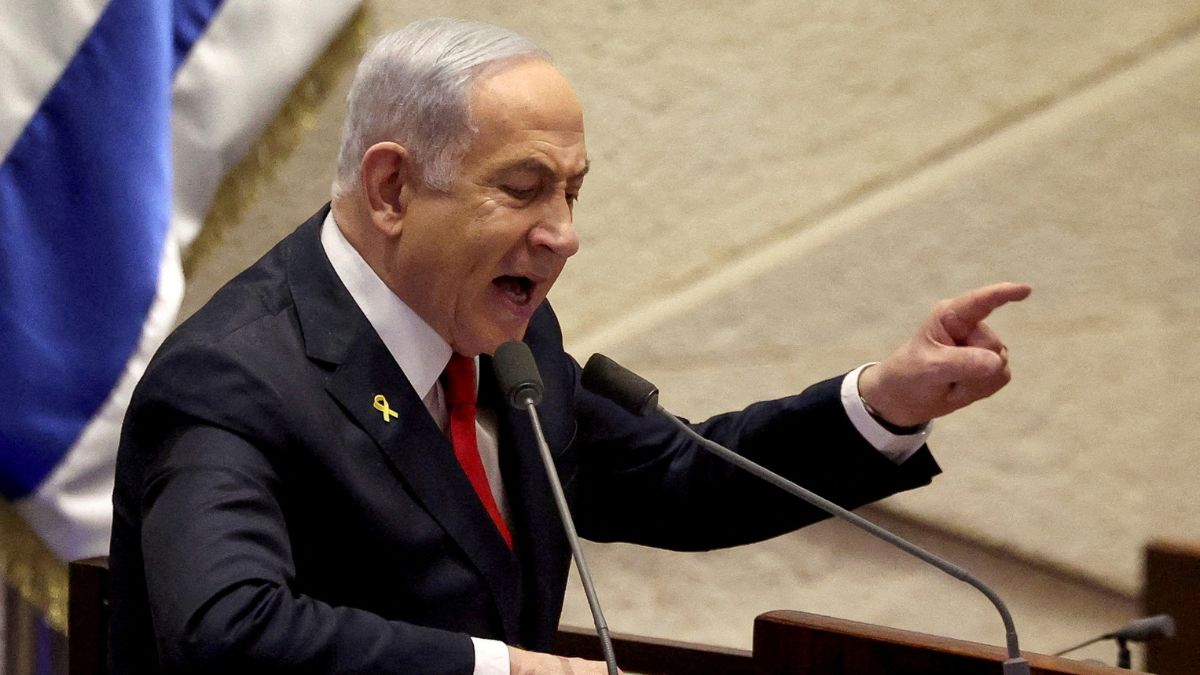
Prime Minister Benjamin Netanyahu narrowly survived a motion to dissolve Israel’s parliament on Thursday but the vote exposed deep fractures within his governing coalition, raising fresh questions about the stability of his leadership.
The opposition-backed bill, which aimed to trigger early elections by dissolving the Knesset, failed in a preliminary reading, with 61 lawmakers voting against it and 53 in favour. Significantly, two coalition members broke ranks and supported the motion, while most ultra-Orthodox legislators withheld their support despite previous threats to back the opposition.
The controversy pertains to the exemption given to ultra-Orthodox men in religious seminaries from serving in the military. While the issue has always been controversial, it snowballed into a major crisis after the 2023 Hamas attacks and the subsequent Gaza war. Now most Israelis strongly demand a broader draft policy and an end to the religious exemption.
Netanyahu’s coalition, formed in late 2022, includes the ultra-Orthodox parties Shas and United Torah Judaism, which together hold 18 crucial seats. Recent proposals to conscript thousands of seminary students have created tensions within the government. Though ultra-Orthodox leaders threatened to vote for the bill to dissolve parliament, only two members of United Torah Judaism did so, both from the Hasidic Agudath Israel faction. One member voted against the motion, while others abstained after Netanyahu struck a last-minute compromise on enlistment legislation.
This agreement prevented a collapse of the coalition for now, but analysts say it offers only temporary relief and does not address the core dispute over conscription. "There is no formula that satisfies the military, the public and the ultra-Orthodox," said a senior coalition insider.
The military exemption dates back to 1948, when only a few hundred students were eligible. Today, tens of thousands are enrolled in full-time religious study, leading to widespread resentment in a country where most Jewish men and women serve in the military once they turn 18. A Supreme Court ruling last year ordered the government to end the exemption, intensifying pressure on Netanyahu to act.
The opposition, a fragmented bloc of centrist, leftist and Arab parties, united around this vote in a rare show of cohesion. While Netanyahu survived this time, the opposition’s efforts highlighted the prime minister's growing political vulnerabilities and the discord within his coalition. Netanyahu’s popularity has been on a downward spiral since the Hamas attacks as a large number of Israelis believe that intelligence failure was a key reason that allowed Hamas to launch the audacious raid on southern Israel. Many are also unhappy about what they call inadequate efforts by the PM to secure the release of hostages.
Opinion polls suggest his coalition would lose in a new election. Yet his ultra-Orthodox allies have little incentive to break ranks. Their voters have benefited from increased funding and policy concessions under the current government, the most religiously conservative in Israel’s history.
Despite their dissatisfaction over the draft issue, ultra-Orthodox leaders are wary of destabilising a government that has delivered for their base. Still, the vote has left Netanyahu politically wounded, with opposition parties sensing an opportunity.
“The cracks are widening,” said opposition leader Yair Lapid after the vote. “Netanyahu’s grip is slipping, and sooner or later, even his closest allies will have to choose between him and the country.”
