



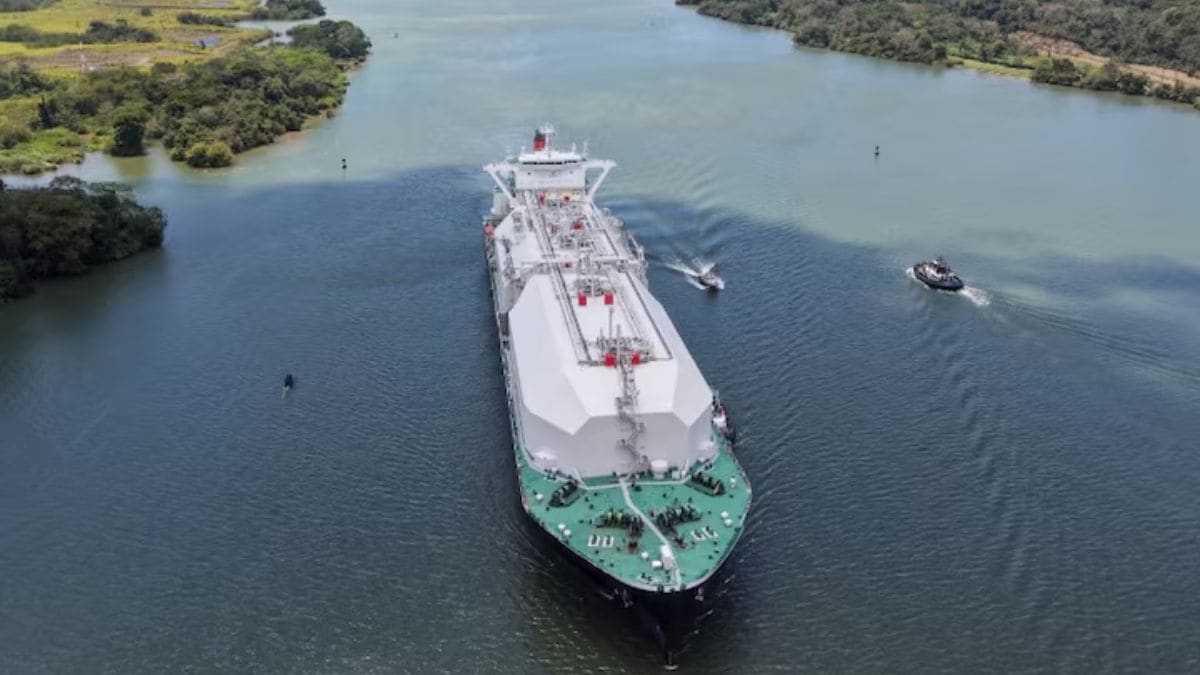
The Panama Canal is an 80km artificial waterway that links the Caribbean Sea and the Pacific Ocean. It serves as an alternative path for many Asian countries that are dependent on Gulf countries for oil to procure fuel directly from the United States. Japan, South Korea, India, and China are among the countries rapidly shifting to the canal to replace the loss of Middle Eastern supply.
While the canal is smaller compared to the Strait of Hormuz, five per cent of global maritime trade still passes through the Panama Canal. The United States and China are the main users of the canal.
After Trump’s latest introduction of a 20 per cent cargo shipping tax in the Strait of Hormuz, the Panama Canal is once again expected to see a rise in shipment traffic.
Previously, the canal reached its full capacity in late March when the Strait of Hormuz was closed, with around 36 to 38 vessels travelling daily.
During the first eight months of the fiscal year 2026, which runs from October to September, the canal registered 8,593 total vessel transits. The entire fiscal year 2025 only registered 13,404 transits.
Ships transiting through the passage are expected to book in advance, and ships without a booking have to wait for a period of five days. However, an auction system exists for last-minute transits. The canal is increasing its revenue via these priority slots.
During the last upheaval in the number of tankers passing through the Canal, charges had increased considerably, with an LNG vessel even winning a bid of $400,000 to avoid the five-day wait time. Prices for shipments between October 2025 and February 2026 had ranged around $130,000. It increased to $360,000 in March 2026.
The charges imposed by the US and Iran, however, are at least five times higher than these prices. Iran was charging tankers passing through Hormuz a sum of $2 million, and the new tax imposed by the U.S is expected to cost $32 million per supertanker.
