



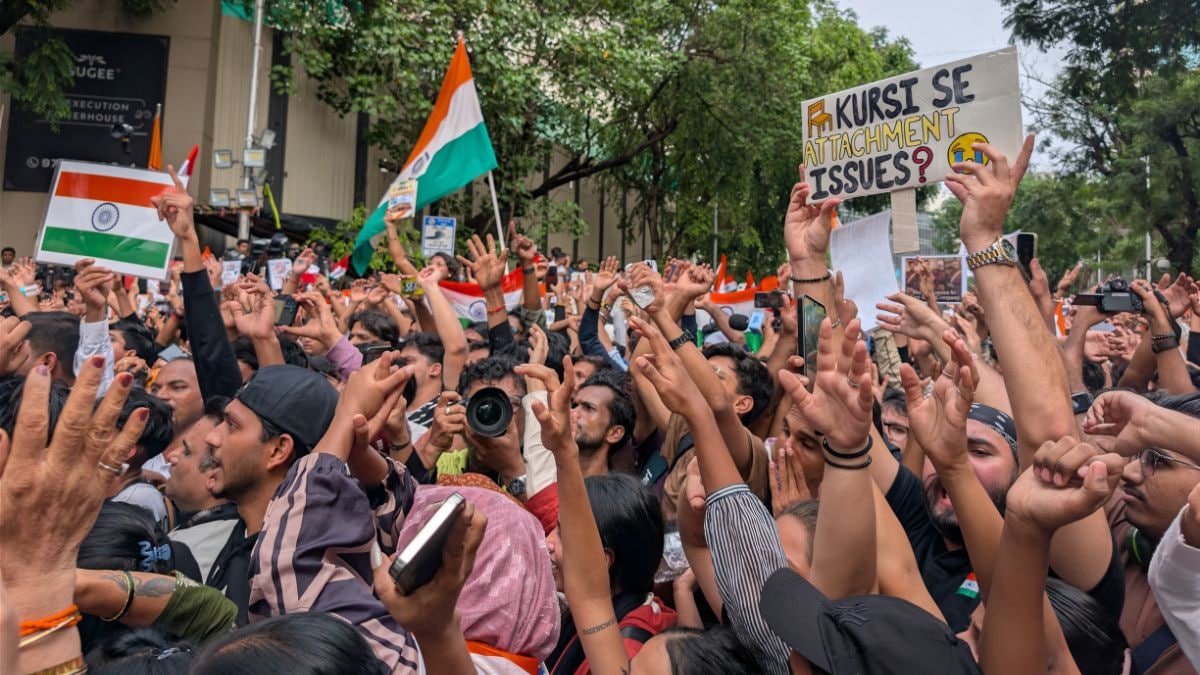
The government has made visible efforts to show that it is serious about addressing students' concerns. From Prime Minister Narendra Modi's late-night message to students, to two senior ministers meeting protesters at a neutral venue, and finally the Union Cabinet approving a tougher anti-paper leak law, the sequence suggested careful political messaging. Each move projected a government that was listening and acting.
A day after the Opposition turned up the heat on the government over the issue, the government's outreach also gathered pace.
On Thursday night, Sonam Wangchuk also ended his fast after Union Ministers J.P. Nadda and Jitendra Singh met him at a private hospital.
Modi recorded a simple selfie-style video and posted it close to midnight. The Prime Minister described the paper leak as "extremely painful" for lakhs of students and assured them that the government was taking the matter seriously. He spoke about arrests, the re-test, fast-track courts, and promised further decisions the following day.
On Friday, the government reinforced that message by agreeing to meet protesting students on neutral ground.
Initially, officials had suggested a minister's office or residence, but the CJP had insisted that the talks be held elsewhere. The Centre agreed, and the meeting took place at the Constitution Club.
The venue did not change the government's position on the protesters' central demand for Union Education Minister Dharmendra Pradhan's resignation, but it helped project flexibility and willingness to engage. The government asked for a day's time to respond to the demand, though it is unlikely to be accepted.
The meeting between the CJP and the government will take place again on Saturday, when the government will respond to the demands raised by the students, which also include compensation for those who died by suicide and an assurance of no police action against the protesters.
Union Minister J.P. Nadda said the CJP had made three main demands and five suggestions for exam reforms.
"We have told them that we will meet them again tomorrow afternoon and tell them about the discussion we had within the government," he said.
The most concrete action of the day came at the Union Cabinet meeting, which approved a tougher law prescribing stringent punishment for examination paper leaks. The legislation gave the government a concrete policy response that could be presented as proof that consultations were leading to action.
This bill is likely to be taken up on Monday.
BJP MP and spokesperson Sudhanshu Trivedi argued that the government was resolving the crisis "step by step, from every direction, with sensitivity".
He highlighted the second round of talks with students, the decision to hold discussions outside government premises, the announcement of fast-track courts, and the Cabinet's approval of the anti-paper leak bill as evidence of a compassionate and responsive administration.
