



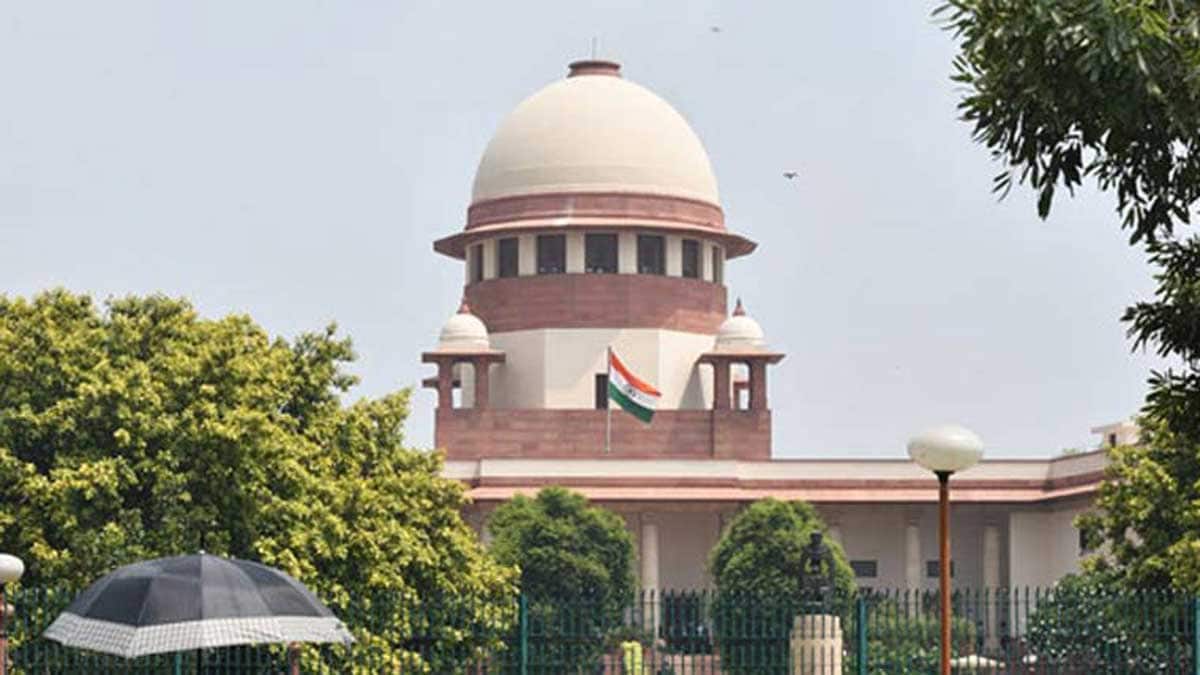
The "cockroach" controversy, which began with a comment by Chief Justice of India Justice Surya Kant, is now returning to the judicial domain by way of fast-track courts and the paper-leak law.
India has a rich history of protests and movements: after the Emergency, the JP movement led to the 44th Constitutional Amendment; the Nirbhaya movement led to the Criminal Law (Amendment) Act, 2013, and the Anna Hazare movement led to the Lokpal and Lokayuktas Act, 2013.
However, while these movements have led to changes in government, underlying systemic challenges remain unchanged. At a time when the youth are troubled by poverty, unemployment, and inequality, there is a dire need for better governance. Reforms in the justice delivery system are critical to catalyse this change.
“Gangsters in Gowns”: The Vohra Committee report, submitted by Union Home Secretary N.N. Vohra in October 1993, exposed the tragedy of our republic through shocking revelations about the nexus between the mafia, politicians, and bureaucrats. More than three decades later, a fresh roadmap has emerged from a judgment by Allahabad High Court Judge Vinod Diwakar. He termed lawyers "gangsters in gowns" and said that the legal profession in Uttar Pradesh has been infiltrated by elements fundamentally incompatible with its obligations.
The Court further said that "the Bar Council, the profession's statutory guardian of integrity, has for decades, failed in its most basic regulatory duty."
Bar and Bench
Challenges to the legal system are deep-rooted and start with insufficient barriers to entry for lawyers. A Bench of Justices Narasimha and Aravind Kumar of the Supreme Court earlier said that the Bar Council of India should conduct a comprehensive audit of the disciplinary systems operated by the BCI and State Bar Councils.
The Bench said that the legal profession's autonomy must be accompanied by greater accountability, transparency, and effective regulation. In the matter of Senior Advocate Yatin Narendra Oza, the Supreme Court held that the Bar and the Bench are inextricably linked, serving as the two indispensable wheels of the chariot of justice, which must move in perfect tandem to uphold the rule of law. In another matter, the Supreme Court held that the Bar is not merely a stakeholder but an equal institutional partner in the administration of justice, and that the health of the justice delivery system is as much the responsibility of the Bar as of the Bench.
Sub-standard colleges and fake degrees
A Bench of Justices Vikram Nath, Sandeep Mehta, and R. Mahadevan remarked that the Bar Council of India (BCI) is granting recognition to law colleges run out of garages, calling it a matter of larger concern. In April 2023, a bench headed by Chief Justice Chandrachud ordered the identification of lawyers holding fake degrees.
The Allahabad High Court intervened in the matter under the authority of Article 227, which vests it with powers of superintendence over all district courts and tribunals within its jurisdiction. As per the High Court's judgment, of the 5.14 lakh lawyers registered in UP, only 2.49 lakh hold a Certificate of Practice. In UP, around 4,157 advocates are involved in 5,056 criminal cases. The judgment further revealed that 105 lawyers hold fake law, undergraduate, or high-school degrees.
“Noble” profession
The decay in an ostensibly “noble” profession was sharply reflected in the Supreme Court itself, when a law student shouted at a Bench headed by Justice Vishwanathan and hurled papers before being removed by security personnel. He also used expletives against the Chief Justice of India. After video clips of the incident were widely shared on social media, the full court of the Supreme Court resolved that in cases argued by litigants-in-person, no live streaming or recording will be permitted.
The BCI also took serious note of the selective circulation of live-streamed proceedings to mock or scandalise the judicial system, and issued a circular calling for advocates, law students, and interns to maintain dignity and use social media with restraint.
Exacting standards in appointment
As per Justice Diwakar, a judicial officer, or a candidate for judicial office, is not permitted to hold or assume office even where a solitary criminal case stands registered against him. His conduct, like Caesar's wife, must be above suspicion, and a single blemish is sufficient to deny him entry into, or continuance in, service. If one wheel is held to an exacting standard of integrity while the other is permitted to run broken or off its axle, the chariot of justice cannot move; it can only lurch. Non-enforcement of constitutional norms on judges causes anger and anxiety in society.
The Yashwant Verma case
Following a fire, a large amount of unaccounted cash was found at the official residence of Delhi High Court Judge Yashwant Verma. A three-member high-power committee appointed by Chief Justice Sanjiv Khanna questioned the police and fire authorities for failing to lodge an FIR or prepare a seizure memo. A subsequent inquiry committee report was submitted to Lok Sabha Speaker Om Birla in May 2026. It is a paradox that the impeachment process is now being discussed even though Verma has already resigned. Despite there being no constitutional protection against such conduct, the judicial and government machinery failed to register an FIR.
Bar as a public institution
In a 1975 judgment, Justice V.R. Krishna Iyer said that the social canvas must be spread wide when profiling a statute like the Advocates Act, 1961. He observed that the Bar is not a private guild, like that of barbers, butchers, and candlestick makers, but, by bold contrast, a public institution committed to public justice and pro bono public service. Fifty years later, Judge Diwakar captured this same travesty of justice in these words: "Law dies twice — once when its officers turn criminal, and again when judges choose silence over judicial courage. In both cases, the rule of law is the first casualty."
The legal system derives its strength not merely from statutory provisions or judicial precedent, but from the moral legitimacy that flows from public confidence in its fairness and integrity. Justice Diwakar, drawing a parallel from the Mahabharata, concluded his judgment thus: "Draupadi was disrobed by Dushasana, while King Dhritarashtra — the very authority bound to prevent the wrong — sat in passive complicity, blinded by his infatuation for his son. It was this failure that sowed the seeds of the Kurukshetra War. The epic thus stands as an eternal reminder that when those in authority remain mute spectators to injustice, the price is paid not by the wrongdoer alone, but by generations and multitudes who had no part in the wrong."
(The opinions expressed in this article are those of the author and do not purport to reflect the opinions or views of THE WEEK.)
(The author is an advocate in the Supreme Court.)
