



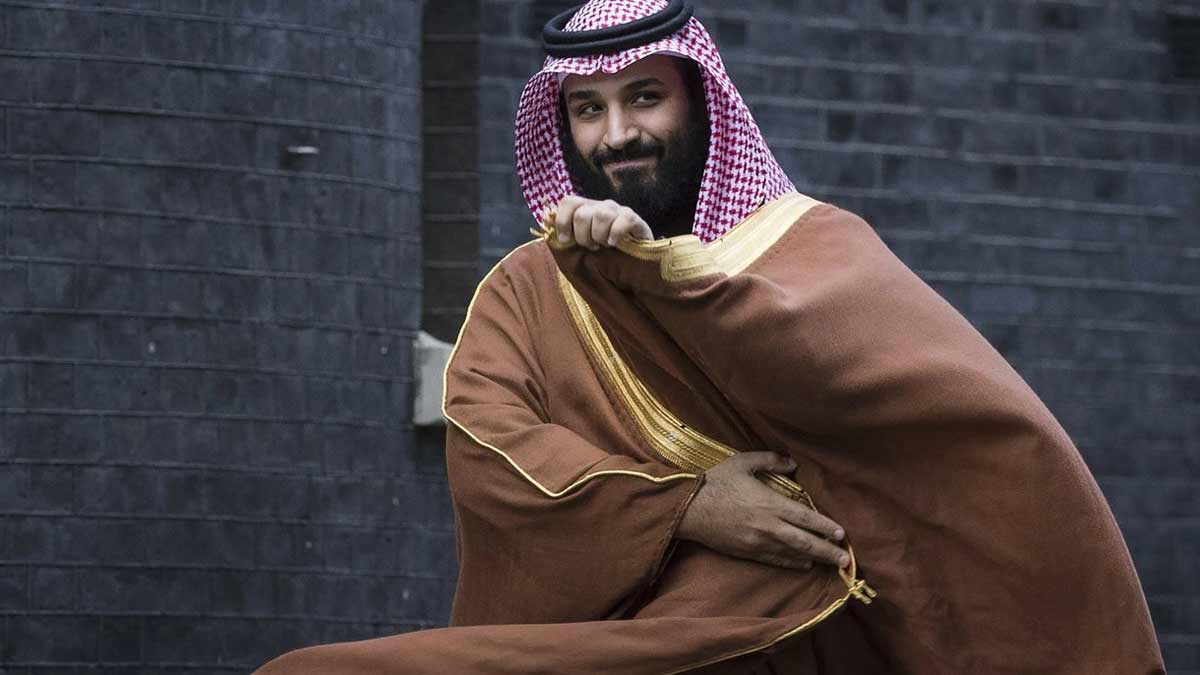
Saudi Arabia revealed that Saudi Crown Prince Mohammed bin Salman is shifting between "heavily guarded palaces equipped with bunkers", according to officials cited by The Wall Street Journal. He is accompanied only by trustworthy security guards hand-picked by the authorities, it added.
The Wall Street Journal, citing officials, revealed that the kingdom is running low on interceptor missiles amid incessant strikes from Iran-backed proxy group Houthis in Yemen.
The report claimed that Riyadh is "struggling to cover the vast country with air defence" as missile defence systems are moved around the Gulf kingdom to protect not just energy infrastructure, but palaces accommodating the royals and other infrastructure.
The WSJ report comes amid an AFP report regarding the challenges for Riyadh in defending against airstrikes. Andreas Krieg, the founder of MENA Analytica and an associate professor in Security Studies at King's College London, told AFP that "even a layered system combining Patriot, THAAD, fighter aircraft and other sensors cannot create an impermeable dome over a country the size of Saudi Arabia." The kingdom has a span of around 2.2 million square kilometres.
Krieg said the kingdom, which relies on imported weapons, has to "defend Riyadh, airports, oil facilities, military bases, the holy cities, and a vast amount of critical infrastructure continuously".
While acknowledging that Saudi has been successful in intercepting many of the missiles and drones, he pointed out that "the Houthis do not have to penetrate the system every time" to meet their goals. He said all they require is the occasional hit to show that they "retain the ability to generate follow-on attacks at strategic range," which is evident from the repeated strikes on Riyadh airport.
Krieg said that attacks on Riyadh airport may not impact Saudi military power, but repeated attacks can inflict economic and psychological costs beyond the physical destruction. The Riyadh airport is a key component of MBS's Saudi Vision 2030, aiming to turn the Saudi capital into a major tourist hub as well as host multinational companies and global events. "The Houthis understand that," he said.
