


 Add as a preferred source on Google

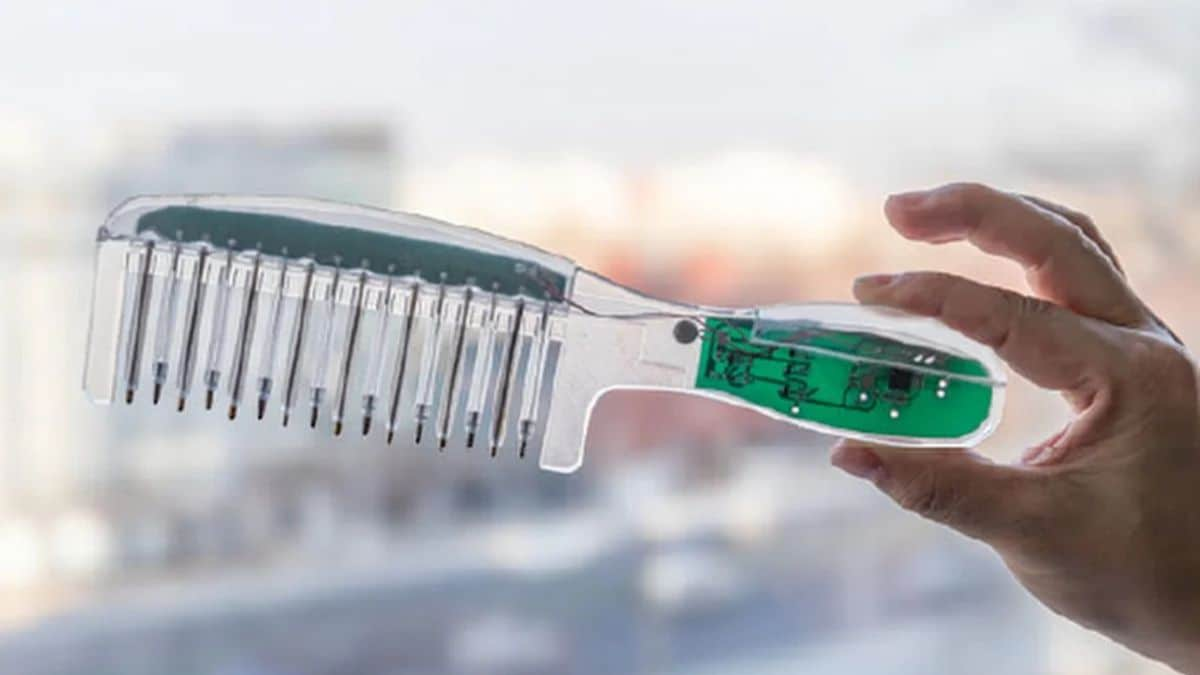
Scientists in China have developed an experimental electronic comb that uses targeted electrical pulses and integrated medication delivery to stimulate rapid hair regrowth, according to a study published in Nature Communications.
Dubbed “Detangle,” the prototype was created by a team at Beihang University in Beijing to address androgenetic alopecia—commonly known as male-pattern baldness—which affects up to 80 per cent of men during their lifetimes.
How 'Detangle' helps in reversing baldness
Detangle’s teeth are equipped with height-differentiated electrodes—comb teeth of varying lengths designed to part hair, maintain direct contact with the scalp, and generate a localised electric field around the hair follicle regions as the user combs.
In the case of male baldness, hair follicles shrink and enter a prolonged resting phase. The gentle electrical pulses triggered by combing stimulate local blood microcirculation and cellular signalling around the follicle base, nudging dormant follicles back into the active growth phase.
Alongside the electrodes, the comb’s teeth carry integrated drug-loading molecules. As the electric field is generated during combing, it temporarily increases scalp permeability driving the therapeutic compounds deeper into the hair follicle bulb rather than leaving them on the surface.
In preclinical testing on a mouse model of androgenetic alopecia, the researchers reported that the system boosted hair restoration efficacy from roughly 70 per cent to nearly 100 per cent within one month, outperforming standard topical minoxidil (the active ingredient in Rogaine).
Limitations of conventional hair-loss therapies
Conventional hair-loss therapies often have limitations that prompt patients to stop using them. Topical minoxidil, a medication applied directly to the scalp to treat hair loss, can take up to a year to produce visible results, requires indefinite application to maintain regrowth, and may cause scalp irritation or headaches.
Oral finasteride (marketed as Propecia) can be effective in early-stage hair loss, though it carries potential side effects including erectile dysfunction and depression. Meanwhile, surgical hair transplants offer lasting coverage by relocating resistant follicles from the back and sides of the scalp, but remain invasive, painful, and expensive.
Despite promising animal results, scientists caution that the Detangle system remains experimental and has not yet been tested on people. While mouse models serve as an established preclinical benchmark, further laboratory safety assessments and human clinical trials will be required to determine whether the technology is safe and effective for everyday consumer use.
