



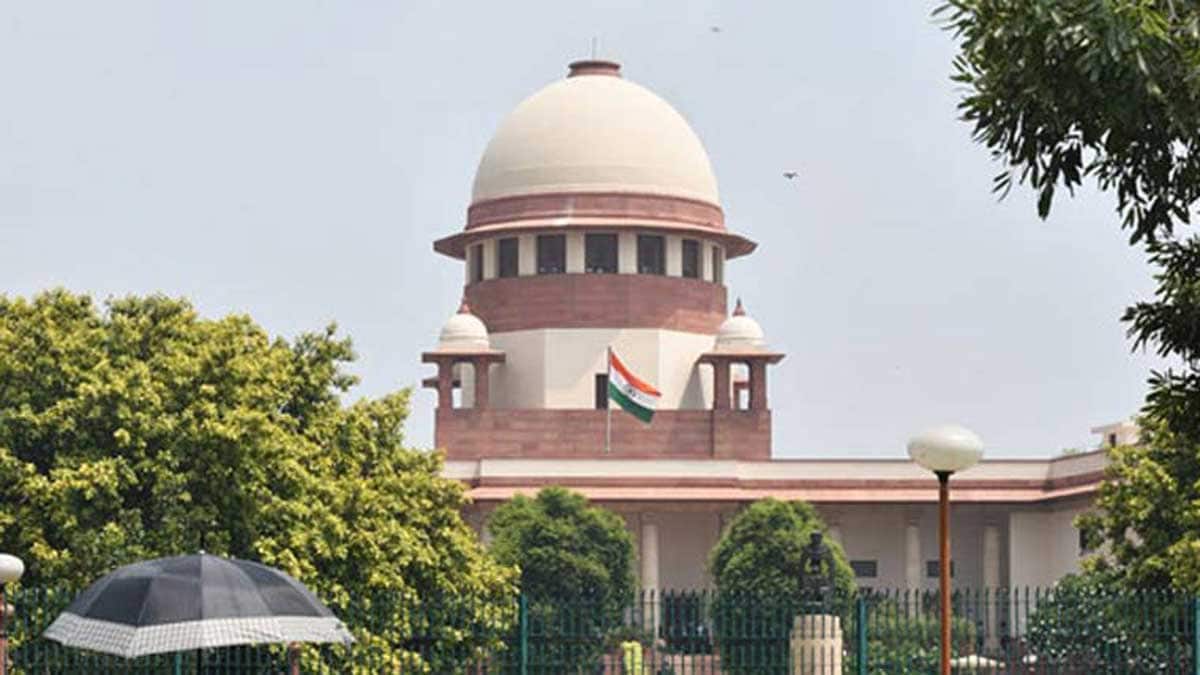
The Supreme Court has rebuked a Patna High Court ruling that was issued this year, where the court said that removing a woman’s salwar and physically molesting them didn't count as ‘an attempt to rape.’
The Patna verdict was issued over an incident that occurred in 2008, when a woman had alleged a man attempted to rape her when she had accompanied her father to a photography studio in Amarpur.
The prosecution said that the studio owner, after taking the photograph, asked her father to wait outside on the pretext of viewing the photograph on a computer, then bolted the studio door from the inside and attempted to assault her.
The accused had fled after her father rushed to the door, hearing her crying. An FIR was filed, and the trial court convicted the man under Section 376 for attempt to rape and wrongful confinement.
The accused had challenged the conviction before the High Court.
After a re-examination of the evidence, the high court found that there was no medical evidence on record to support the rape allegation/ its noted that the investigating officer was not examined during the trial, and the prosecution substantially rested on the testimony of the victim and her parents.
The high court held that the prosecution failed to establish an attempt to rape.
"In the absence of any evidence of penetration, even to the slightest extent, or any overt act unequivocally constituting an attempt to commit rape, the ingredients of Section 375 IPC, and consequently Section 376 read with Section 511 IPC, are not attracted in the absence of any medical corroboration," the high court said.
On Tuesday, a bench comprised of CJI Surya Kant, Justice Joymalya Bagchi and Justice V Mohana was informed about a previous order during a suo moto case taken over an Allahabad High Court verdict on March 17 2025. The verdict held that pulling a minor girl's pyjama string, grabbing the breasts, and dragging her beneath a culvert did not amount to an attempt to rape. The Allahabad could have observed that the act would constitute an offence under the 'aggravated sexual assault' under the Protection of Children from Sexual Offences (POCSO) Act, 2012, which carries a lesser punishment.
The high court order caused widespread outrage. The Supreme Court took suo motu cognizance of it and later set it aside. The SC also directed the National Judicial Academy to frame comprehensive draft guidelines to inculcate sensitivity and compassion in judicial handling of sexual offence cases.
Despite this SC order, Senior Advocate Shobha Gupta said that a similar verdict was passed recently in the Patna HC on similar facts and similar observations.
Gupta said, "Unfortunately, a similar order in similar facts was recently passed by Patna HC. Despite this court taking a suo motu case and setting aside the Allahabad HC order. It was reported on a social media website. The troubling part is - this is happening now and then.”
The Chief Justice said that there was a lack of thorough research before delivering the judgment. The Court also approved a report placed before it by the National Judicial Academy's Expert Committee containing guidelines on judicial sensitivity in sexual offence cases.
The SC also highlighted that courts needed to be sensitive when handling similar cases and directed that all courts follow the handbook when registering FIR and charge sheets.
