



Punjab has increasingly become the backdrop for filmmakers looking beyond the familiar images of prosperity and colourful culture. Amar Singh Chamkila revisited the life of the controversial singer who was killed by militants. Main Vapis Ayoonga explored the trauma of Partition through a fictional love story. Now, another long-delayed film has brought one of the state's darkest chapters back into public debate.
Satluj, based on the life of human rights activist Jaswant Singh Khalra, has unexpectedly become the centre of Punjab's political discourse, just months before the state heads for the 2027 assembly election.
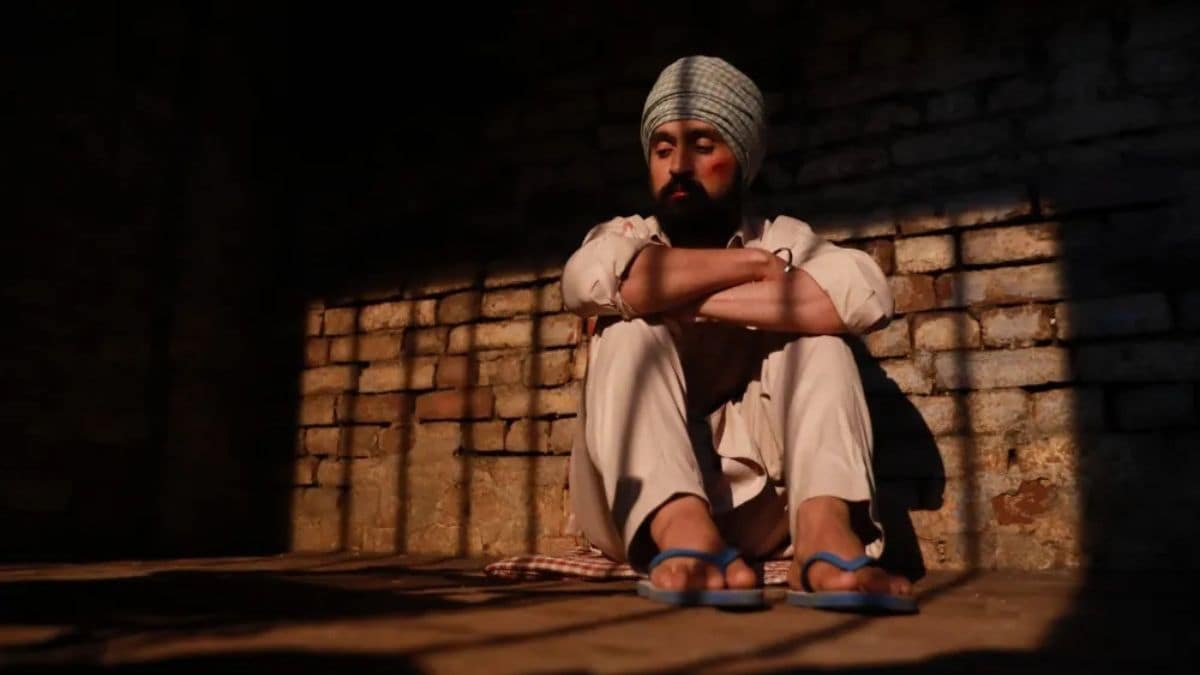
Starring Diljit Dosanjh and directed by Honey Trehan, the film was released on ZEE5 on July 3 after years of delay and a prolonged battle over certification. Within two days, it was taken down in India following a direction from the Union government, which said the version released on the platform had not incorporated the changes sought during certification. The name, 'Satluj', carries a wide resonance. It's the longest river passing through Punjab, has a dam at Bhakra and has been responsible for state's prosperity.
The removal had the opposite effect as interest in the film grew rapidly. Volunteer groups began organising screenings in gurdwaras, village squares and community halls. The Shiromani Akali Dal, along with several Sikh organisations, announced screenings across Punjab. There were reports that community screenings have taken place in Delhi, Rajasthan and Jammu. Copies of the film also began circulating widely on YouTube and other online platforms.
The film centres on Jaswant Singh Khalra, the human rights activist who investigated allegations that thousands of unidentified bodies had been illegally cremated during Punjab's insurgency. Khalra was abducted in 1995 and later murdered. Several Punjab Police officials were eventually convicted for the crime.
More than three decades later, the film has revived memories of one of Punjab's most painful periods. It has also reopened the debate over how that era should be remembered. Those who support the film say it draws attention to alleged human rights violations committed during the fight against militancy. Others argue that any account of the period is incomplete unless it also acknowledges the thousands of civilians, police personnel and public servants killed by militants.
That unresolved debate has returned to the centre of Punjab's politics.
The immediate trigger was Union minister of state Ravneet Singh Bittu's criticism of the film. Bittu questioned the evidence behind the claim that around 25,000 people had disappeared or been illegally cremated. He also asked why the killings of innocent Hindus, government employees and security personnel by militants had not received equal attention. He maintained that militancy had no religion and that every victim deserved to be remembered.
Given the sensitivity of the issue, leaders across party lines questioned the decision to remove the film and supported its screening. Leaders from the Shiromani Akali Dal and the AAP criticised the ban. BJP MPs Harbhajan Singh and Vikramjit Singh Sawhney also spoke in support of the film and spoke about Khalra's murder.
With the assembly election less than a year away, the controversy has added a new political dimension to the campaign. The debate over Khalra, police excesses and terrorism is likely to find resonance among sections of voters.
For the Shiromani Akali Dal, the controversy offers an opportunity to reclaim the Panthic space it has steadily lost over the past decade. The party has backed public screenings and accused the Centre of suppressing uncomfortable truths. The Akal Takht has also criticised the removal of the film.
Whether the issue translates into votes remains uncertain. In the 2019 Lok Sabha election, Khalra's widow, Paramjit Kaur Khalra, contested from Khadoor Sahib but finished a distant third. Her defeat showed that Khalra's legacy by itself was not enough to shape electoral outcomes.
The political scenario, however, has changed since then. In the 2024 Lok Sabha election, jailed preacher Amritpal Singh won the Khadoor Sahib seat as an Independent, while Sarabjeet Singh Khalsa, son of Indira Gandhi's assassin Beant Singh, won from Faridkot. Their victories reflected the appeal of Panthic politics among sections of Sikh voters, particularly younger voters who have grown disillusioned with mainstream parties.
Whether Satluj strengthens those sentiments remains to be seen. But it has revived issues that many believed had receded from Punjab's electoral politics.
At the same time, the controversy could also produce counter-polarisation. If the debate increasingly centres on Sikh grievances, it could consolidate sections of Hindu voters behind the BJP. The party offered a glimpse of that possibility in the 2024 Lok Sabha election. Contesting independently after breaking with the Shiromani Akali Dal, it secured more than 18 per cent of the vote despite failing to win a seat. Its strongest performance came in urban, Hindu-majority constituencies.
The controversy presents a different challenge for every major party.
Congress carries the burden of history because many of the alleged disappearances highlighted by Khalra took place during periods of Congress rule or President's Rule. At the same time, the worst phase of terrorist violence against civilians also occurred during those years. Any attempt by the party to highlight one tragedy inevitably invites questions about the other. As the principal challenger to the AAP government, Congress finds itself in a politically uncomfortable position.
AAP has tried to place responsibility on both Congress and the Akalis. It argues that the alleged human rights violations occurred under Congress governments, while later Akali-BJP governments promoted some of the police officers accused of excesses. At the same time, it has kept its distance from the unofficial screenings taking place across the state.
The BJP faces a different challenge. Although the Union government ordered the film's removal, Bittu's intervention has shifted the debate from censorship to the victims of terrorism. That places greater pressure on Congress and the Akalis while allowing the BJP to present itself as speaking for families who believe their suffering has not received equal recognition. In recent years, the party has also sought to engage with Sikh issues, from highlighting the 1984 anti-Sikh riots to invoking the legacy of Maharaja Ranjit Singh and Khalsa Raj.
The debate over Satluj is therefore about much more than a film. It has sparked off a discussion about terrorism, human rights, justice and memory. More importantly, it has brought those questions back into electoral politics at a time when every party is searching for an advantage before the 2027 assembly election.
