



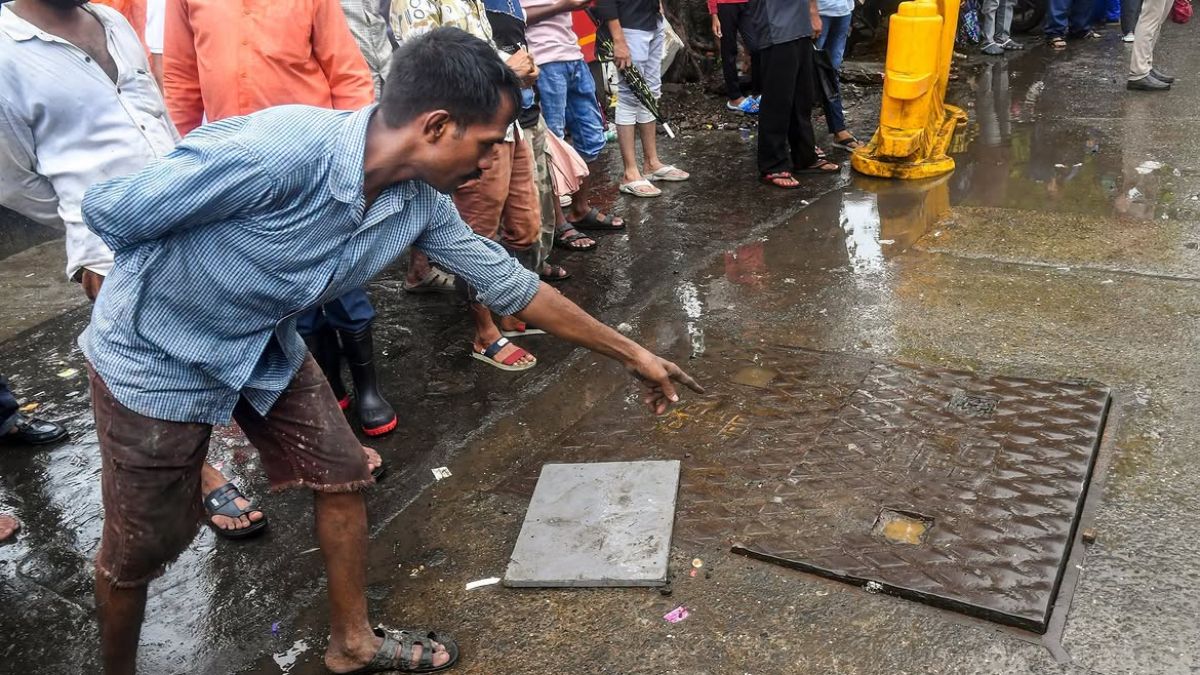
A man's death after he allegedly fell into an open manhole in Andheri's Saki Naka during heavy rains has once again turned the spotlight on one of Mumbai's deadliest and most persistent monsoon hazards.
As torrential rain inundates roads and drains overflow, submerged manholes become nearly impossible to spot, posing a life-threatening risk to unsuspecting pedestrians and motorists.
The latest incident has reignited concerns over civic preparedness and accountability, with citizens questioning why open or displaced manhole covers continue to claim lives despite repeated assurances from the Brihanmumbai Municipal Corporation (BMC) ahead of every monsoon.
According to preliminary information, the victim had been walking through a waterlogged stretch in Saki Naka when he fell into an uncovered manhole. The BMC Commissioner has suspended staff responsible for the negligence and further investigations are on.
Every year, Mumbai witnesses hundreds of complaints related to missing or damaged manhole covers, overflowing drains and waterlogged roads.
While the BMC undertakes extensive pre-monsoon desilting operations and claims to inspect storm-water drains before the rainy season, civic activists argue that gaps in maintenance, monitoring, and accountability continue to put lives at risk.
Experts point out that heavy rainfall can dislodge poorly secured manhole covers as storm-water pressure builds beneath them. In some cases, covers removed during maintenance are allegedly not replaced immediately, while the theft of cast-iron covers has also been cited as a recurring problem in the past.
Once submerged under muddy floodwaters, open manholes become virtually invisible.
"Manhole covers get displaced during heavy rainfall but we will make sure such incidents do not recur," said BMC Commissioner Ashwini Bhide.
The tragedy also raises questions about whether existing safety measures are adequate. Over the years, the BMC has introduced initiatives such as locking mechanisms, composite manhole covers that are less prone to theft, geo-tagging of civic infrastructure, and ward-level inspections before the onset of the monsoon. Yet, fatal accidents continue to occur.
Urban planners say the issue is not merely one of infrastructure, but also of governance.
"Recurring monsoon-related deaths point to systemic failures in civic planning and maintenance ... We need stronger accountability and time-bound inspections," says Pranit Shah, a citizen activist based in Prabhadevi.
Citizens' groups have long demanded that all manholes in flood-prone areas be fitted with locking or hinged covers that cannot be displaced by water pressure. Some experts have also recommended sensor-based monitoring systems that can alert authorities if a cover is removed or displaced.
The incident is reminiscent of several past tragedies in Mumbai where residents have lost their lives after falling into uncovered drains or manholes concealed by floodwaters. Each such accident has triggered public outrage and promises of corrective measures, only for similar incidents to recur in subsequent monsoons.
As climate change brings more frequent episodes of intense rainfall to Mumbai, experts say the city's ageing drainage infrastructure and inadequate maintenance could make such hazards even more dangerous, unless preventive measures are strengthened.
For Mumbai's residents, however, the incident is another grim reminder that during the monsoon, danger may lie hidden beneath every flooded street.
Until infrastructure upgrades are matched by rigorous maintenance and accountability, experts warn that open manholes will remain an avoidable but recurring cause of tragedy in the city.
