



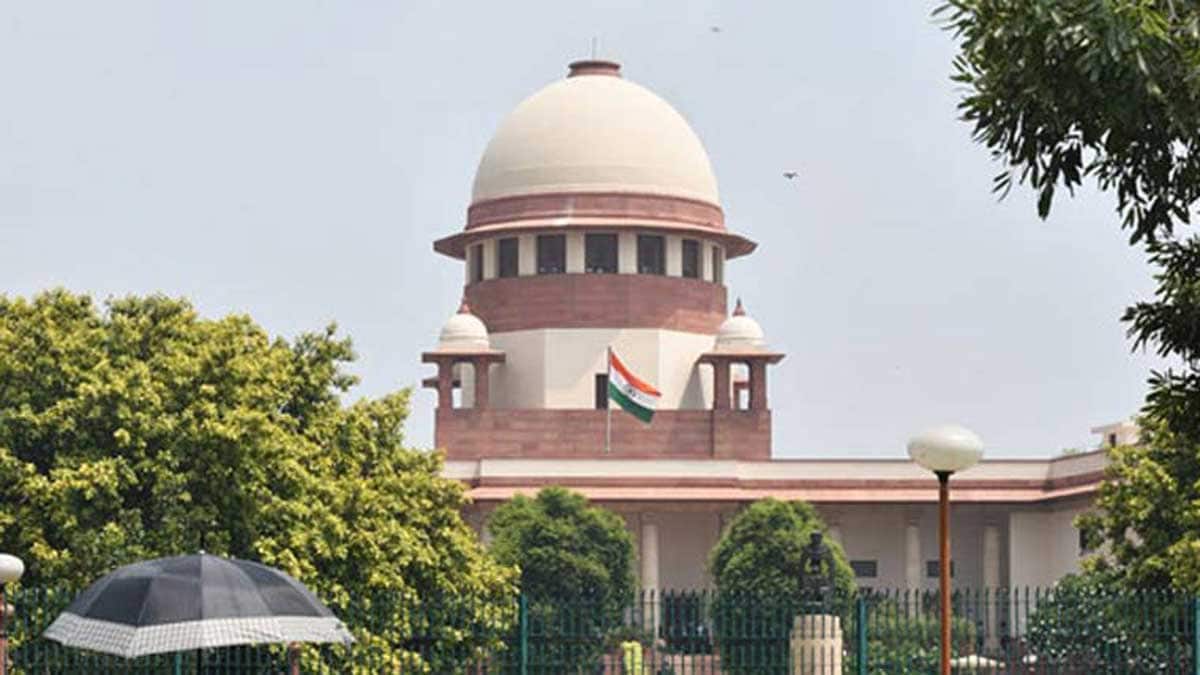
When the Supreme Court recently described the employment of children in orchestras, dance troupes, spas and allied establishments as a “serious issue”, it did more than respond to a Public Interest Litigation. The observation held up a mirror to an uncomfortable reality that India can no longer afford to ignore.
Behind the glitz and glamour of the entertainment industries lies a fundamental question: when a child is valued more for the work she can perform than for the childhood she deserves, are we not crossing a line that neither the law nor our collective conscience should ever normalise?
The question demands urgent attention. Hearing a PIL filed by senior advocate H.S. Phoolka, a Bench led by Justice Surya Kant, along with Justice Joymalya Bagchi and Justice Vipul M. Pancholi, sought responses from the Union Government, the National Commission for Protection of Child Rights (NCPCR), and the National Human Rights Commission on the employment of children and adolescents in dance troupes, orchestras, massage parlours and spas. The move reflects a timely and significant recognition that child labour is not merely a labour issue; it is, at its core, a child protection issue.
The significance of SC's intervention extends far beyond dance troupes, orchestras or massage spas. It compels us to examine the larger ecosystem in which children participate in entertainment and performance-related activities. As responsible citizens, are we doing enough to safeguard our children involved in the larger entertainment ecosystem, including television, reality shows, advertisements, live events and the rapidly expanding world of digital content?
The answer remains deeply concerning.
Legal framework and child labour
India already possesses a detailed legal framework to protect children from labour and exploitation. The Child and Adolescent Labour (Prohibition and Regulation) Act (CALPRA) prohibits the employment of children below the age of 14 in all occupations and processes, while regulating the conditions under which adolescents between the ages of 14 and 18 may work. In spirit, the law recognises a simple but powerful principle: childhood must not be compromised for economic gain. Yet, the continued presence of children in sectors that expose them to long working hours, unsafe environments and heightened risks of abuse raises troubling questions about implementation and oversight.
At the same time, experiential knowledge tells us that child labour rarely exists in isolation. It is often intertwined with poverty, migration, school dropouts, trafficking and social vulnerability. Children who enter informal and poorly regulated workspaces are frequently invisible to protection systems and are more susceptible to exploitation.
Whether in a factory, a roadside establishment, a private household, a dance troupe or an entertainment venue, the underlying issue remains the same: a child who should be in school, at play, or with family support is instead pushed into circumstances that compromise safety, dignity and development. The Supreme Court's concern, therefore, must be viewed through this broader lens.
Study findings show gaps in child protection
These concerns were echoed in “Child Artists in India: An Exploratory Study in Mumbai”, conducted by CRY - Child Rights and You in collaboration with Monk Prayogshala in 2022.
Drawing on interviews with parents, former child artists, producers, casting agents, acting institutes and industry associations, the study highlighted critical gaps in child protection mechanisms within the entertainment sector. It recommended mandatory child protection policies for media and production houses, regular capacity-building by child rights experts, stronger monitoring at event sites, greater awareness among stakeholders and transparent, child-friendly contractual arrangements. The study also underscored the importance of informed parental consent and adherence to national laws and the principles of the UN Convention on the Rights of the Child.
The findings point to a larger reality. The challenge is not merely legal; it is institutional and behavioural. Laws can establish safeguards, but protecting children requires systems that function effectively and a society that refuses to normalise their exploitation.
Judicial continuity and accountability
For decades, the Supreme Court has consistently emphasised that childhood cannot be sacrificed at the altar of economic or commercial interests. In the landmark M.C. Mehta vs State of Tamil Nadu (1996) judgment, the Court called for the eradication of child labour in hazardous industries and underscored the State’s responsibility to ensure rehabilitation, education and protection for affected children. The recent observation continues this constitutional tradition of placing children's rights at the centre of public policy and governance.
Several recommendations emerging from the CRY-Monk Prayogshala study can help strengthen existing safeguards. These include the creation of a dynamic national and State-level database of children engaged in entertainment-related work, jointly maintained by the Ministries of Women and Child Development, Labour, Employment and Education.
Such a mechanism could facilitate better tracking and monitoring of children's well-being. The study also called for mandatory child protection policies across the industry, effective grievance redressal systems under the oversight of District Magistrates, and stronger involvement of Child Welfare Committees (CWCs). Industry bodies, too, must be encouraged to refer complaints to statutory authorities such as CWCs, the NCPCR and State Commissions for Protection of Child Rights (SCPCRs).
The way forward
The Supreme Court’s intervention should therefore be seen as more than a procedural legal development. It presents an opportunity to strengthen enforcement, improve accountability and bridge the gap between legal intent and ground realities. Governments, regulatory institutions, industry bodies, civil society organisations and communities – all have a role to play. Most importantly, children and their caregivers must be empowered to participate in decisions that affect their safety, dignity and development.
India does not suffer from a lack of laws. Nor does it lack institutions mandated to protect children. What has often been missing is the collective resolve to ensure that every child, regardless of background or circumstance, is first recognised as a child before anything else.
The Supreme Court has signalled its concern. The larger challenge now is to translate that concern into action. For every child found working where they should be learning, playing and growing is not merely a violation of law – it is a reminder of a promise yet to be fulfilled.
The true measure of progress will not lie in court observations alone, but in building an India where no child is compelled to trade childhood for work, and where protection, education and opportunity reach every child without exception.
(The author is the CEO of CRY – Child Rights and You)
The opinions expressed in this article are those of the author and do not purport to reflect the opinions or views of THE WEEK.
