



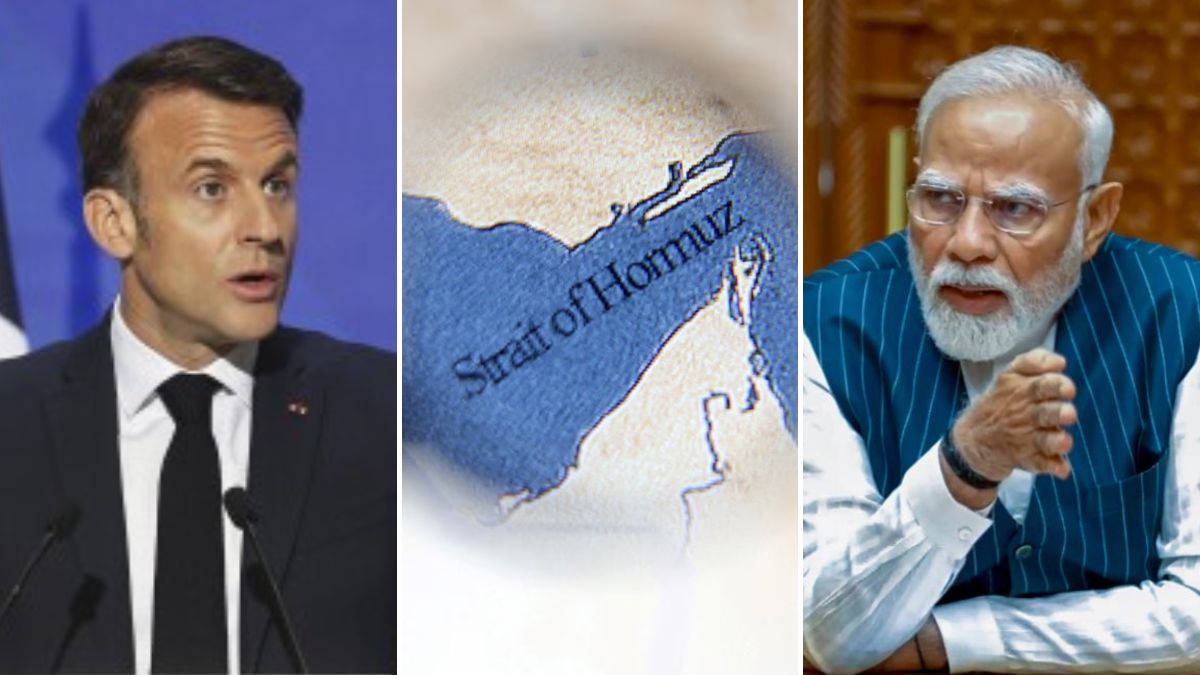
PM Narendra Modi on Thursday discussed the ongoing West Asia crisis with French President Emmanuel Macron, and the urgent need for maritime security in the Persian Gulf.
The two sides have also agreed to work together to restore stability and freedom of navigation in the Strait of Hormuz, although it is not currently known in what capacity and to what extent the two sides will work together on the Hormuz issue.
"We will continue our close cooperation to advance peace and stability in the region and beyond," PM Modi wrote in an X post on Thursday, reiterating the growing ties between India and France.
Concerns on the state of the strait continue to mount as the US Navy-imposed blockade of vessels remains in effect, amid a fragile ceasefire in the war between Iran and US-Israel forces.
Tehran has repeatedly warned that the blockade was a serious threat to the stability of the ceasefire—and negotiations for a lasting peace—as the strait remains choked, with only a handful of ships allowed by US warships to transit.
Notably, the waterway had once seen about 20 per cent of the world's energy flows before the war, which translates into about 150 vessels per day.
The war—and the subsequent blockade—have led to a serious decline in vessel traffic, which in turn has impacted energy flows, raising oil prices and impacting cost of living worldwide.
India's Ministry of Petroleum and Natural Gas (MoPNG) has reaffirmed that its reserves of piped natural gas (PNG) and liquefied petroleum gas (LPG) were adequate, and that New Delhi had diversified its crude imports to keep a fuel crisis at bay.
However, the situation in Europe is much more grim, as International Energy Agency (IEA) Executive Director Fatih Birol told the Associated Press that the US had about "six weeks or so (of) jet fuel left", calling the issue “the largest energy crisis we have ever faced".
"The longer it goes, the worse it will be for the economic growth and inflation around the world ... The front line is the Asian countries ... then it will come to Europe and the Americas,” he added.
