



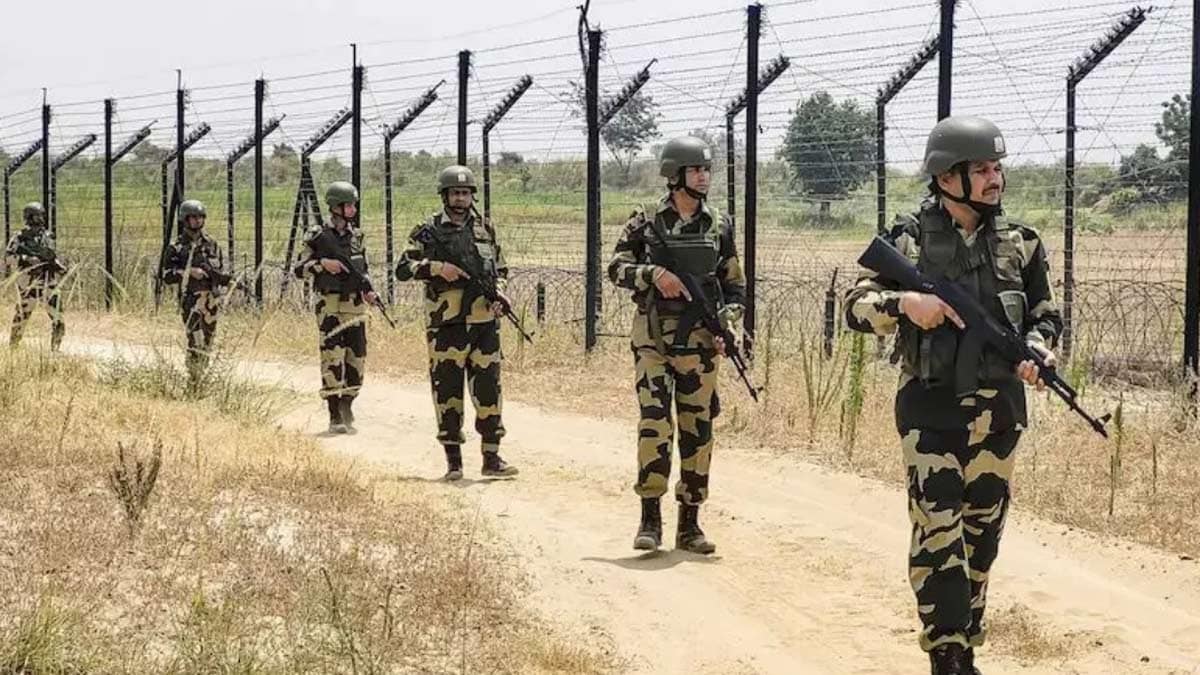
With a history of armed conflicts with both its nuclear-armed neighbours, China and Pakistan, India is preparing its military to face both these countries in conventional duels, says a report based on the findings of the International Institute for Strategic Studies (IISS) ahead of the Shangri-La Dialogue that began on May 29 in Singapore.
“India is preparing its army for large-scale conventional combat operations, as a result of long-standing territorial disputes with its two nuclear-armed neighbours,” the report says.
Stating that New Delhi’s conventional threat perception in the Asia-Pacific will continue to centre on Pakistan and China, it noted that India will continue to have militarised borders with China and Pakistan.
The report points out: “Any potential future ‘major conventional war’ would remain local in nature, with India’s surgical strikes having only taken place so far against Pakistan.”
“India’s border conflicts with China have been more traditional in nature and are unlikely to escalate to the same level of the Indo-Pakistan conflicts, given China’s superior military capabilities in the border area and India’s reluctance to provoke it.”
India’s military operations are mainly oriented towards addressing security concerns and territorial disputes with China and Pakistan, which it perceives as its foremost neighbouring threats. These include managing continuing tensions with Pakistan, especially along their shared Line of Control (LoC) dividing Kashmir, and countering China’s assertive behaviour and military build-up along their shared Line of Actual Control (LAC).
The IISS report also predicts that India is unlikely to play an active military role in the wider Asia-Pacific and will likely seek to avoid being drawn into a US–China conflict over Taiwan.
The London-headquartered IISS is a leading think tank on global security, political risk and military conflict. Defence leaders, military chiefs and security experts from around the world are attending the Shangri-La Dialogue, which is touted as Asia’s top security summit.
What makes the deliberations all the more significant is the fact that the summit is being held in the backdrop of surging geopolitical tensions and conflicts in West Asia and Europe.
Notably, China and Pakistan routinely declare their bilateral relationship as an “ironclad” one, although irritants persist.
Interestingly, the China-Pakistan joint statement issued in Beijing on May 26 began on a very terse opening note after the meeting between visiting Pakistan Prime Minister Shehbaz Sharif and Chinese President Xi Jinping.
Throwing diplomatic niceties to the wind, the joint statement straight away struck a discordant tone, which is never the case between two friendly nations. The opening line read: “The Pakistani side will take targeted steps to strengthen security measures and cooperation to ensure the safety and security of Chinese personnel, projects and institutions in Pakistan.”
