



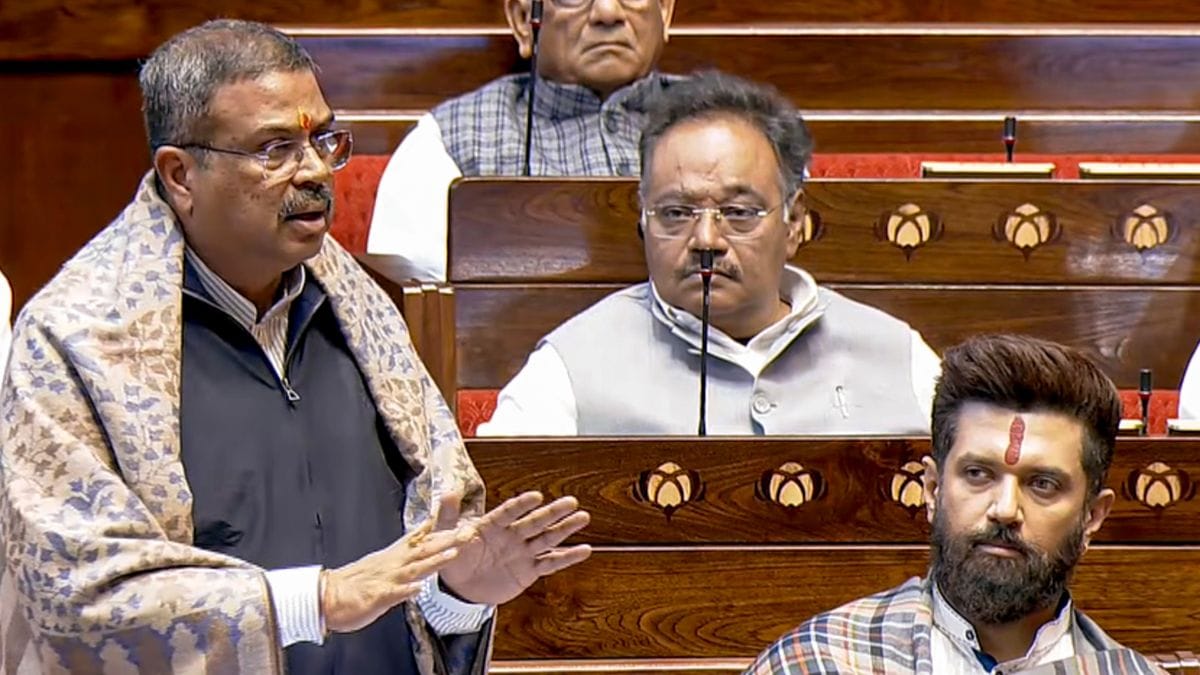
In a significant shift in how higher education institutions will be evaluated in India, the Viksit Bharat Adhishthan Bill, 2025, places student feedback at the centre of accreditation and quality assessment, marking a move away from purely inspection-driven regulation to learner-centric accountability.
A day after introducing the Bill, Union Education Minister Dharmendra Pradhan told the reporters that the reform draws directly from the National Education Policy (NEP) 2020, which flagged fragmented regulation and limited stakeholder participation as major hurdles in improving academic standards.
“For the first time, students will not be passive recipients of regulation. Their experience, learning outcomes and feedback will directly influence accreditation,” Pradhan said, describing the approach as “light but tight” less regulatory micromanagement but zero tolerance for malpractice.
Student voice as a quality metric
Under the proposed framework, student feedback will play a decisive role in accreditation outcomes, alongside institutional self-declared data, academic performance and research output. The aim, officials said, is to ensure that quality is measured not only by compliance on paper but by classroom realities, teaching effectiveness and campus experience.
Accreditation reports will be publicly accessible, allowing prospective students and parents to make informed choices while increasing pressure on institutions to maintain standards.
Why the shift matters
India’s higher education ecosystem includes about 1,200 universities, autonomous colleges, and other institutions, currently overseen by multiple regulators and accreditation bodies. This has often led to overlapping inspections, contradictory assessments and limited transparency.
By consolidating regulation, standards-setting and accreditation under the proposed Shiksha Adhishthan, the government aims to reduce redundancy while introducing student-led accountability as a corrective to bureaucratic excess.
Autonomy backed by feedback
Pradhan argued that greater institutional autonomy must be matched with stronger feedback loops. “If universities are to achieve global standards, they must have freedom but that freedom has to be judged by those it serves,” he said.
Institutions will be encouraged to innovate in pedagogy, research and curriculum design, with credit flexibility and interdisciplinary learning built into the system. While a central examination framework exists, curriculum decisions will remain with individual universities.
Centre–state balance and funding
On concerns of centralisation, the government has sought to reassure states that the Viksit Bharat Adhishthan Bill, 2025 strengthens, rather than weakens, cooperative federalism in higher education. While funding authority remains with the Union Education Ministry, Pradhan said states will have greater participation in regulatory processes, accreditation and standard-setting under the new framework. State universities will benefit from reduced compliance burdens and a single-window system, replacing multiple approvals from overlapping bodies. The Centre argues that a unified regulator will actually empower states by ensuring predictable funding, transparent accreditation outcomes and national-level portability of credits, while leaving curriculum design and academic priorities firmly with universities and state governments.
Parliamentary review ahead
The Bill has been referred to a recommended 31-member Joint Parliamentary Committee—21 from the Lok Sabha and 10 from the Rajya Sabha with extensive stakeholder consultations expected by the end of February.
Framing the reform as a break from colonial-era regulatory thinking, Pradhan said the objective is to create a robust, flexible and student-responsive higher education system aligned with the vision of a Viksit Bharat.
