



At a business meeting, Nepalese-American fashion designer Prabal Gurung was asked how he could define American fashion when he did not look American. His answer was his collection titled ‘Who gets to be American?’ at the New York Fashion Week 2019. He sent models down the runway in red, white and blue tie-dye dresses. It was a bold political statement that questioned when finally he could lose his outsider status. Many, however, were not surprised. After all, this was the designer who made his models wear statement shirts with slogans like ‘I am an immigrant’, ‘Girls just want to have fundamental rights’, ‘We will not be silenced’, and ‘Our bodies, our choices, our power’. He had always been outspoken about sexism and racism in the country, and had once collaborated with Lane Bryant, a plus-size retailer.
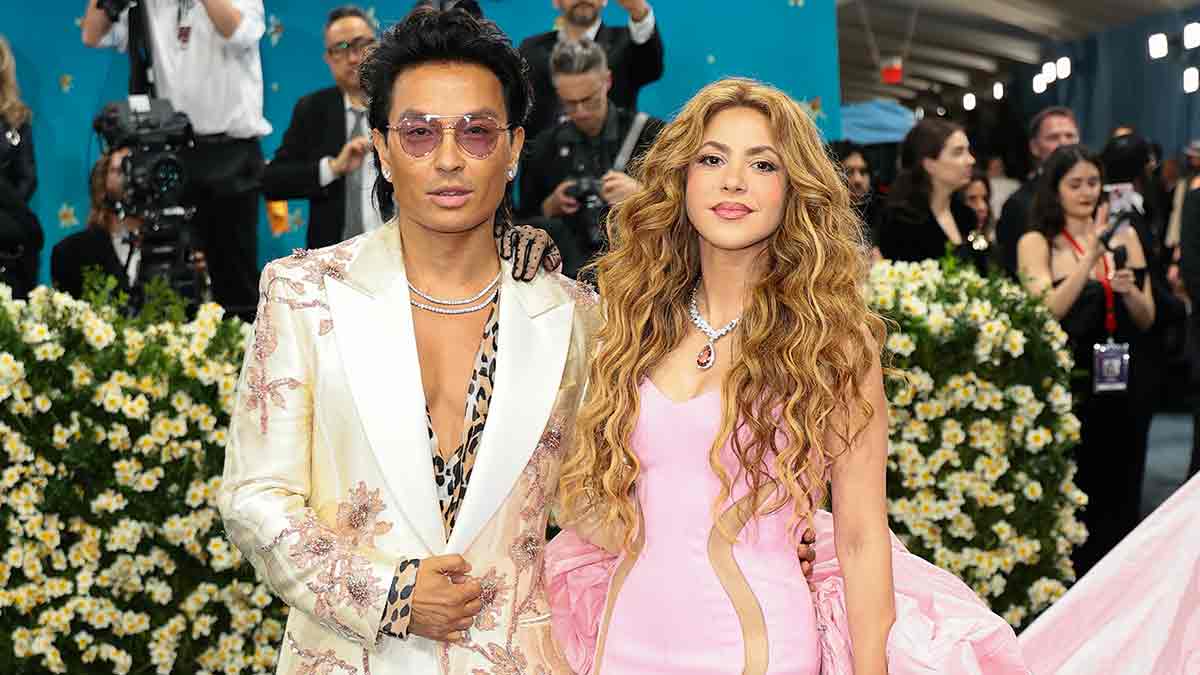
There was also his commitment to diversity. At one Met Gala, Anna Wintour, then editor-in-chief of Vogue, invited him to host and dress a table that reflected his ethos. One of the first Asian fashion designers to get the opportunity, he went beyond the expected Hollywood celebrities to invite the likes of Malaysian actor Michelle Yeoh, Indian-American actor and producer Mindy Kaling, Cuban-born American singer and actor Camila Cabello and Alaskan model Quannah Chasinghorse. “Together we checked many boxes: Asian, black, Latinx, and indigenous, each woman undeniably chic and powerful, a dazzling array of skin tones and experiences that proved my decades-in-the-making hypothesis: Everything is better in colour,” writes Gurung in his memoir Walk Like a Girl.
It took a long time—years of bullying, and facing racist and sexist slurs—for him to get to this place of power and privilege. “For most of my childhood ‘walk like a girl’ was not advice,” he tells THE WEEK. “It was ridicule. It was correction. It was a warning that I was not performing masculinity properly. For years, I tried to adjust myself. I tried to take up space differently. To deepen my voice. To harden my gestures. But no matter how much I tried, something in me resisted that erasure.” The book is more than a memoir; it is an exploration of identity, vulnerability and resilience. The struggles he faced as a queer person in conservative societies coupled with the racism and elitism of New York’s fashion circles are dominant themes. “Exclusion sharpens your sensitivity and also teaches you resilience,” he says. “When you are made to feel wrong simply for existing, you are forced to build an inner foundation that does not depend on applause. You survive by discovering your own worth before the world confirms it.”
Gurung was born in Singapore, where his father served in the Singapore Police. At the age of four, the family shifted to Nepal. In the book, he relates how his father used to physically abuse his mother. It was his mother, however, who was his staunchest support. She let him wear her lipstick and try on his sister’s ruffled dresses. “She raised me in a society that did not always know what to do with a child like me,” says Gurung. “And yet she never tried to shrink me. She taught me that dignity is not dependent on approval.”
He moved to New York in 2000 to study at the Parsons School of Design. After interning for Donna Karan while at Parsons, he worked as design director at Bill Blass for five years, but lost his job during the 2008 recession. As Bill Blass wound down its operations, Gurung used its discarded fabric to design his first collection, which he debuted at the 2009 New York Fashion Week. He wasn’t expecting overnight success, but that’s what he got when a red silk dress he had designed got featured on the cover of Women’s Wear Daily. Celebrities started knocking on his door in droves, starting with actors Demi Moore and Rachel Weisz. Today he has dressed the likes of Oprah Winfrey, Michelle Obama, Kate Middleton, Sarah Jessica Parker and Kamala Harris. “I don’t dress women to look beautiful; they already are,” he once said. “I try to bring out their innate strength and grace.” The women, it seems, would agree. “He can be very exuberant and loves all the glitzy stuff,” television host and model Padma Lakshmi said. “But he is also a deep person. He contains multitudes.”
Gurung’s story is filled with the complexities of being an outsider and finding his place within the global fashion industry. The narrative is intensely personal and raw, capturing moments of triumph and heartbreak with unflinching honesty. It was not easy to write it, he says. Putting these truths on paper felt more vulnerable than sending a political message down a runway. “There is nowhere to hide on the page,” he says. “When you describe trauma, loneliness or shame, you are not speaking as a designer. You are speaking as a child. As a son. There were nights I questioned whether I should soften certain memories. Whether I should protect myself. But then I asked a harder question: if I do not tell the truth, who benefits from my silence? Vulnerability felt terrifying. But it also felt honest. My sister Kumudini became my guiding light. She encouraged me to tell my story honestly and with grace, without pretence or posturing.”
In the end, however, writing the book turned out to be an act of healing. “It allowed me to honour the child I once was,” he says. “To say to him, you survived. You were brave. That acknowledgement felt like a release.” Through Walk Like a Girl, Gurung extends an invitation to all those who feel marginalised. His story, at its core, is about embracing one’s vulnerabilities instead of hiding them. The book is not just about Gurung’s life; it is about anyone who has ever had to carve their own path in a world that demands conformity and assimilation.
WALK LIKE A GIRL
By Prabal Gurung
Published by HarperCollins
Price Rs799; pages 320
