



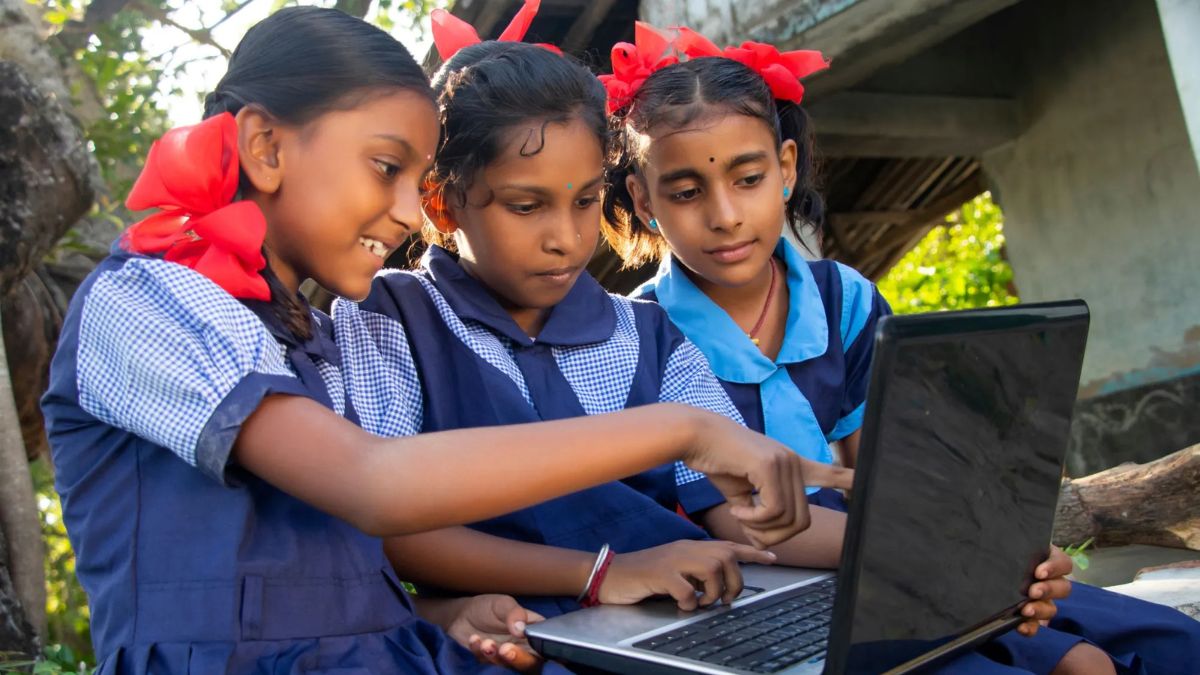
In a quiet village 40 kilometres from the nearest district headquarters, the Rural Technical Training Institute (RTTI) has achieved what many thought impossible: 100 per cent job placement rates for young women trained in welding, electrical work, and fabrication.
Not 100 per cent of those who accept offers: 100 per cent placement, period.
This matters profoundly: women typically comprise almost 30 per cent of such technical training batches, making every placement a breakthrough in fields where female participation has long been negligible.
RTTI is not alone—groups such as Sewa Bharat, Don Bosco Tech Society, and women-only ITIs across India have reported similarly high placement rates for women in skills-based technical professions.
Meanwhile, the persistent assumption that women don't "belong" in technical fields continues to influence educational and job decisions across the country. The difference between what is possible and what is assumed is deafening. And it costs India approximately $3 trillion in lost GDP per year.
The system was always broken: For women, doubly so
The labour market has operated through opacity and manipulation for millennia. For women, it's been worse: legal prohibition from professions, exclusion from education, and systematic wage discrimination.
The knowledge economy promised growth, but also created new inequality through "pedigree signals" such as elite universities, corporate work experiences, polished titles, and connections to networks. Success became guesswork, where hiring relied on assumptions rather than capability.
For Indian girls, the statistics are devastating. Young women are nearly four times more likely to be Neither in Employment, Education, nor Training (NEET) than young men, according to PLFS 2023-24 and V.V. Giri National Labour Institute reports.
Girls achieve 90 per cent enrolment at the primary level, but this plummets to 48 per cent at secondary and 35 per cent at higher secondary, data from the Ministry of Education's UDISE+ 2023-24 report shows—a 55-point drop representing millions whose potential is curtailed: not by ability, but by a lack of access to skills and opportunity.
According to the findings of a 2023-24 survey conducted by the Digital Platforms and Women's Economic Empowerment (DP-WEE) Project housed at IFMR-LEAD and the Indian Statistical Institute (ISI Delhi), three out of every five urban women aged 18-35 in Delhi and Bengaluru lack the skills required to secure well-paying, steady employment.
Girls' interest in technical vocations peaks between the ages of 11 and 12, then dips precipitously: not because talent fades, but because encouragement and opportunities depart.
We are facing what economists refer to as the 'Lost Einsteins' problem: talented individuals who are unable to fulfil their full potential for invention due to societal constraints. However, India is ideally positioned to lead the solution, with increasing momentum to close this gap.
Skills change everything
The credential-based system is collapsing. Work is no longer about titles, but demonstrable skills. Success is no longer about which college, but what you can build and deliver. For girls historically excluded by credential bias, this is revolutionary.
The evidence is visible. Shortlist, an Indian hiring firm using competency-based assessments, found that whilst 24 per cent of applicants are female, 32 per cent of job offers go to women, exceeding the 24.5 per cent national workforce average, a Shell Foundation report points out. When hiring is based on capabilities, women's representation improves significantly.
Crucially, women frequently excel at the most important human characteristics (curiosity, compassion, creativity, courage, and communication).
Research shows that growth mindset interventions benefit girls more, female role models improve performance by 17 per cent, and collaborative learning closes gender gaps more effectively than traditional instruction, according to studies published in Psychological Medicine and Proceedings of the National Academy of Sciences.
India's infrastructure is ready
Female labour force participation increased from 23.3 per cent to 41.7 per cent in six years, according to the PLFS 2023-24 and V.V. Giri National Labour Institute projections, indicating huge untapped potential.
The National Education Policy 2020 mandates vocational training beginning in Class VI, with the goal of reaching 50 per cent of students by 2025. The National Credit Framework enables students to collect skill-based credits.
The increased apprenticeship compensation of Rs 12,300 per month makes learn-and-earn an attractive alternative. The 30 per cent ITI reservation ensures women's representation.
It's already working
Residential training eliminates geographic barriers
In Himachal Pradesh, a specialised centre uses local languages and culturally adapted pedagogy to teach coding to women with no prior computer exposure. The year-long residential format removes daily commuting obstacles whilst delivering comprehensive training in web development, design, and project management.
Graduates now contribute to India's $250 billion IT industry, earning transformative salaries and returning home to teach relatives technology applications for agricultural management.
Corporate partnerships create sustainable pathways
A major manufacturing corporation achieves scalable effect through rigorous staff development.
Since 2013, they have trained over 25,000 women and placed over 22,000 in formal work. Integrating technical skills within a structured life skills programme results in well-rounded professionals.
One graduate's journey exemplifies the model's potential: she advanced from machine operator to post-placement officer in three months, and now mentors hundreds of people in her community, causing ripple effects that reshape cultural expectations and expand economic opportunities.
Outcome-based financing provides results
Skill Impact Bonds provide quantifiable figures for the strategy, including roughly 75 per cent placement rates, 60 per cent three-month retention, and around 72 per cent women trained.
These are not philanthropic projects—rather, they are smart economic investments with quantitative returns that demonstrate a key principle: when systemic barriers are methodically addressed, women not only participate, but also succeed.
What must happen now?
From classrooms to boardrooms, the road is obvious.
Educational institutions must combine hands-on skill development with portfolio-based assessment, with successes linked to the National Credit Framework.
Apprenticeships with stipends, secure transportation, and female mentors should become commonplace. The industry must eliminate degree filters and implement skill-based recruiting.
The government must scale proven successes: expanding programmes that work, ensuring support infrastructure, and holding stakeholders accountable for outcomes.
The nearly $3 trillion opportunity
RTTI's 100 per cent placement and Shahi's 22,000 placements: these aren't miracles. They're what happens when you systematically remove barriers and provide relevant skills.
The India Skills Report 2025 shows 54.81 per cent employability rising, with employers hiring on skills. 73 per cent struggle to find skilled candidates, ManpowerGroup's 2023 research highlights.
The ADBI report demonstrates women with formal skill training earn 110 per cent more, whilst workers with digital skills earn 30-40 per cent more, the TeamLease Digital Skills & Salary Primer estimates.
Here's the scale: if women participated in India's formal economy at rates equal to men, the GDP could grow by 60 per cent—nearly $2.9 trillion annually, the McKinsey Global Institute projects.
With close to half of young women currently NEET, as the PLFS 2023-24 and V.V. Giri National Labour Institute data show, India cannot achieve developed nation status by 2047 without unleashing this trapped potential.
The window is open. The infrastructure exists. The evidence is overwhelming. Market forces guarantee transformation. Now we must act with the urgency this moment demands.
Now we must respond with the urgency that this situation demands. Every stakeholder—including educators, employers, policymakers, and families—has a role to play.
Let's begin.
