



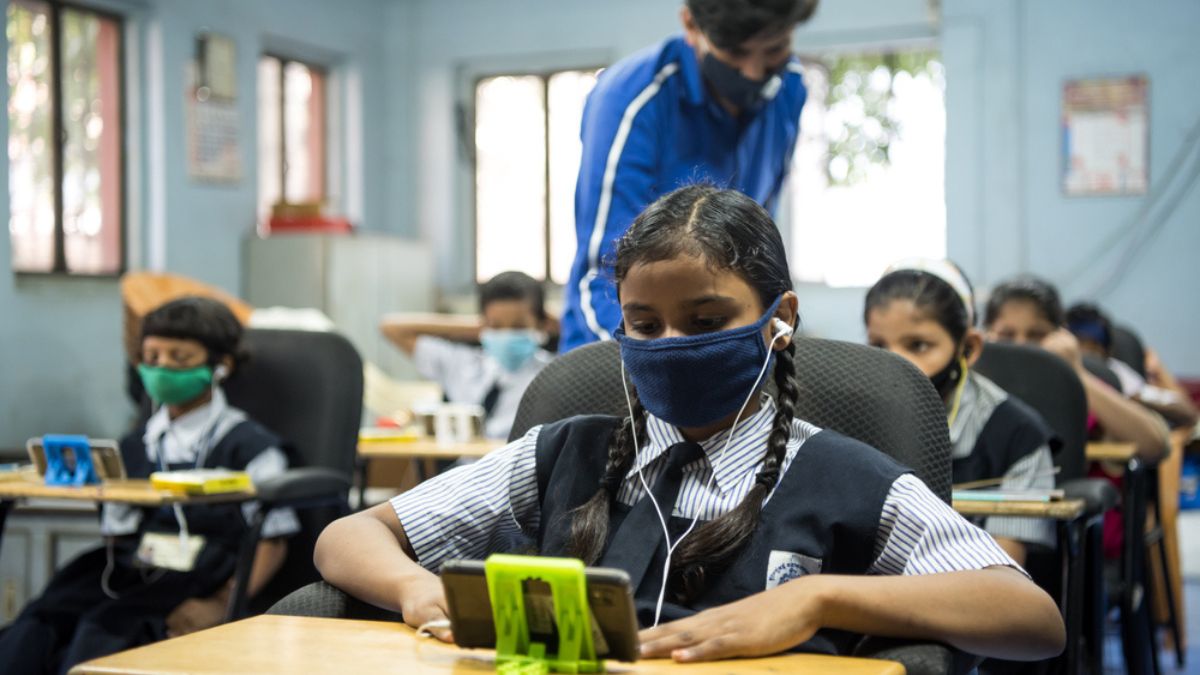
After a year of disruption driven by artificial intelligence and online learning, India’s education system is entering 2026 with a clear reset underway. If 2025 was the year classrooms were forced to adapt at speed, 2026 is shaping up as the year of consolidation, clearer rules on AI use, tighter alignment with industry needs and sharper focus on skills that technology cannot easily replace.
Five years after the rollout of the National Education Policy (NEP) 2020, the emphasis is shifting decisively from intent to outcomes. Policymakers and institutions are now under pressure to show results, higher enrolment, better employability and measurable productivity gains.
At universities, one of the most visible changes in 2025 was the rapid normalisation of AI tools in everyday learning. From drafting assistance and automated feedback to online simulations and hybrid teaching, AI reshaped how students learn and how teachers assess them.
“We are moving away from the idea that education ends at a certain age,” says Dr Ranjan Banerjee, Vice Chancellor of Nayanta University. “People will have multiple careers in a lifetime, and education will have to support that reality.” Degrees, he says, are increasingly being seen as modular investments rather than one-time credentials. “Continuous upskilling will become routine. Those who don’t adapt will find themselves less relevant in the job market.”
Online and hybrid learning also moved from the margins to the mainstream in 2025. Recorded lectures, modular credits and virtual internships expanded access, particularly for working professionals and students in smaller towns. But the expansion also triggered concerns around attention spans, screen fatigue and uneven digital infrastructure.
By the end of the year, a broad consensus emerged across institutions: AI was here to stay, but needed regulation. Several universities began drafting explicit AI-use policies, defining acceptable assistance, disclosure norms and penalties for misuse.
According to Dr Raman Ramachandran, Director and Dean at K J Somaiya Institute of Management, the challenge for 2026 is to move beyond ad hoc experimentation. “The real question is not whether AI should be integrated, but how,” he says. Institutions must now identify which skills are becoming redundant, which new competencies are required and how ethical frameworks around AI should be enforced. “This requires continuous engagement with industry and regular curriculum updates,” he adds.
Experiential learning is emerging as a non-negotiable. “Programmes will increasingly combine classroom instruction with real-world exposure,” Ramachandran says, pointing to internships, live projects and simulations. Life skills, communication, adaptability and ethical judgment are being elevated to the same level as functional skills.
However, educators are also warning against over-reliance on technology. Poulomi Bhadra, Head of Programmes at BITS Law School, says the AI boom has exposed a deeper concern. “Excessive dependence on AI can weaken cognitive engagement and analytical depth,” she says. “In 2026, institutions will have to consciously design learning in a way that strengthens foundational thinking rather than replacing it.”
Beyond pedagogy, student mental health has emerged as a pressing policy issue. NCRB data showing a rise in student suicides, combined with the Supreme Court’s recent suo motu intervention, has intensified scrutiny of campus support systems. Experts point to stigma, academic pressure, financial stress and information overload as key drivers. Institutions are now being urged to move away from siloed counselling models towards integrated, campus-wide mental health frameworks.
These shifts are playing out against the backdrop of NEP 2020’s fifth year of implementation. Government data shows that Gross Enrolment Ratio in higher education has risen to 28.4 per cent, up from 23.7 per cent in 2014, with total enrolment crossing 4.46 crore.
“This is why 2026 becomes critical,” says Kuldip Sarma, Co-founder and Pro Chancellor of Medhavi Skills University. “The focus will shift from policy formulation to quantitative performance.” To meet the NEP target of a 50 per cent GER by 2035, India will need nearly 86 million additional enrolments, he notes. “That scale-up will require deep industry-academia partnerships, apprenticeships and credit-linked on-the-job training.”
As the system moves into 2026, the direction is clear. 2025 disrupted classrooms through AI and online learning, 2026 will be about discipline, governance and outcomes. Education will increasingly be judged not by degrees awarded, but by skills delivered and by how effectively institutions prepare learners for a rapidly changing economy.
