



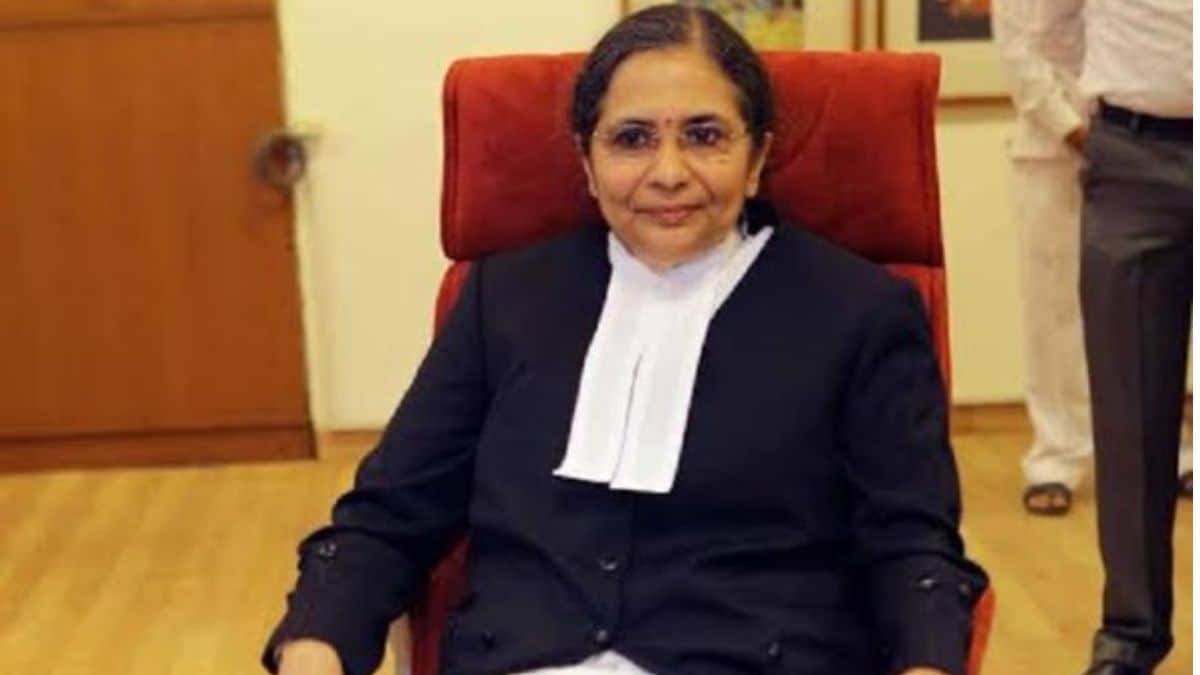
The tradition of farewells organised by the Supreme Court Bar Association (SCBA) marks the end of a judge’s tenure with dignity and camaraderie. These ceremonies, held on a judge’s last working day, are a testament to the mutual respect between the Bench and the Bar. Yet, there are rare instances when this tradition falters either because the SCBA withholds the farewell or because a judge declines it.
Justice Bela M. Trivedi, faced an unprecedented slight. The SCBA, breaking from custom, did not organise a farewell for her, a decision that stirred murmurs in legal circles. Justice Trivedi, who will retire on June 9 but chose May 16 as her last working day due to a family commitment, had earned both admiration and criticism for her strict judicial stance.
SCBA’s silence on the farewell was seen by many as a reaction to these tensions, though no official reason was given. Chief Justice of India B.R. Gavai, presiding over a ceremonial bench, openly criticised the SCBA’s stance, calling it a breach of tradition. “The presence of a full house here vindicates that she is a very, very good judge,” he declared, praising Justice Trivedi’s fairness and dedication.
As per tradition, the Supreme Court Advocates-on-Record Association (SCAORA) and the Supreme Court Bar Association (SCBA) each host farewell ceremonies to honour a retiring judge. SCAORA usually holds its event three to four days prior to the judge’s final working day, while SCBA organises its ceremony on the day the judge formally demits office.
Justice Trivedi, who was the 11th woman judge to be elevated to the Supreme Court in its 75-year-old history, had the rare distinction of being elevated to the top court after starting out as a trial court judge in Gujarat in July 1995, and was part of the top court's several landmark judgments.
Justice Bela enrolled as an advocate in 1983, practising civil and constitutional law at the Gujarat High Court for nearly a decade. Her sharp intellect and commitment to fairness earned her respect, but it was her appointment as a judge at the City Civil and Sessions Court in Ahmedabad in 1995 that marked a historic moment. Coincidentally, her father served in the same court, a rare father-daughter judicial duo immortalised in the 1996 Limca Book of Records.
In a letter to the SCBA and SCAORA, Bar Council of India (BCI) chairman Manan Kumar Mishra urged the two associations to reconsider their decision to disrupt the long-established tradition of giving a farewell, which, he said, was a hallmark of the institutional respect and recognition for the distinguished service rendered by retiring judges.
On her last working day, Justice Trivedi said, “I have always worked based on my inner conscience.”
But, in the past, some judges have chosen to forgo the farewell themselves, driven by personal or ideological reasons. In 1988, Justice A.P. Sen became one of the first to refuse a farewell.
Justice G.T. Nanavati who retired on March 16, 1999, also refused a farewell by the SCBA as he was a private individual who shunned ceremonial gestures.
Justice Ruma Pal declined a farewell upon her retirement on June 2, 2006 and she chose to forego the ceremony to maintain a private departure.
In 2018, Justice Jasti Chelameswar, the second-most senior judge, declined the SCBA’s invitation for a farewell function.
Similarly in 2020, Justice Arun Mishra declined one amid the Covid-19 pandemic, citing his conscience.
Justice V. Ramasubramanian who retired on June 29, 2023, opted out of the SCBA’s farewell ceremony. According to people aware about the decision, he communicated his preference to the SCBA, requesting no formal event, and his retirement passed quietly during the court’s summer vacation.
