



The Bengaluru Water Supply and Sewerage Board (BWSSB) has banned using drinking water to wash vehicles, for building construction, road cleaning and for kitchen gardens to prevent misuse of potable water. Violation of the ban would attract a penalty of ₹5,000 and an additional penalty for repeat offences.
Anticipating a water scarcity in summer, the Board has issued the directive under sections 33 and 34 of the Bangalore Water Supply and Sewerage Act, 1964, which bans the use of drinking water for activities such as vehicle washing, gardening, construction, decorative fountains, entertainment purposes, and any non-drinking purposes in cinema halls and malls, as well as for road construction and cleaning within the city.
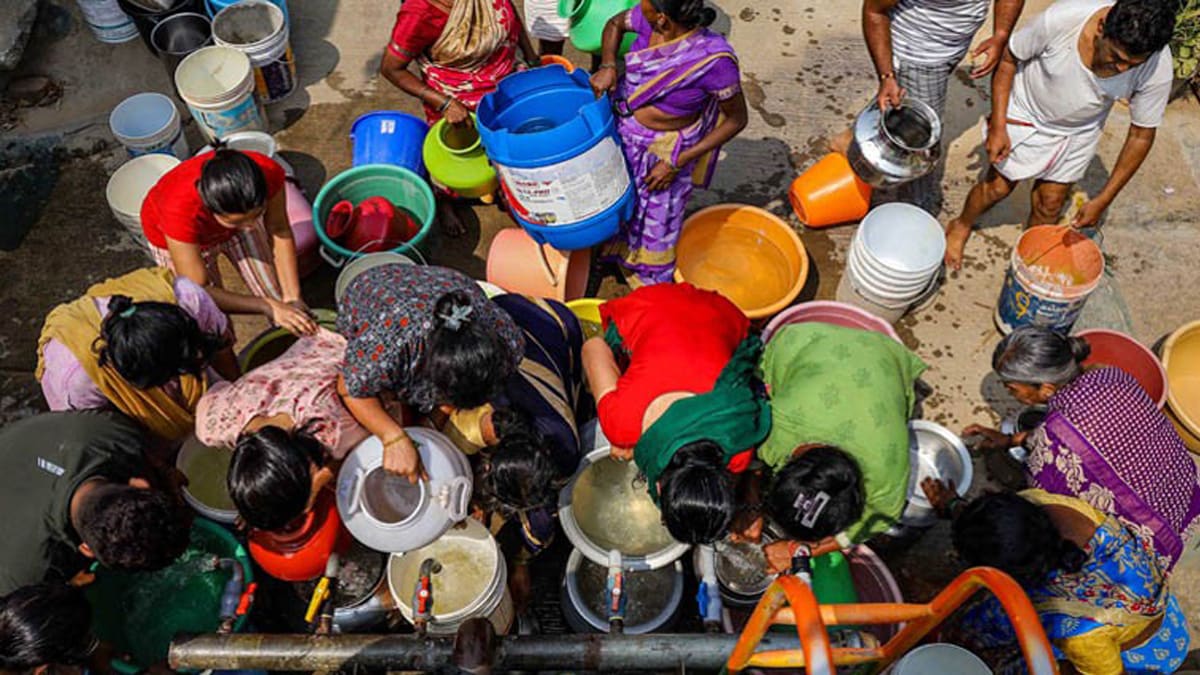
Bengaluru has an estimated population of 1.40 crore, including the floating population. The prohibitive measures are necessary to curb wastage of drinking water as rising temperature and groundwater depletion might lead to acute water scarcity, stated a press release by the Board, calling for judicious use of potable water.
The violators will be fined ₹5,000 under section 109 of the Water Board Act. Repeat offence will attract an additional penalty of ₹500 for each subsequent day of non-compliance. The citizens are encouraged to call the BWSSB call centre in the no. 1916 to report violations.
A recent study on water scarcity risks, conducted by BWSSB along with the Indian Institute of Science, has projected a sharp decline in the groundwater levels across the city in as many as 80 wards (out of 198), especially in outer areas like Mahadevapura and Whitefield. Last month, BWSSB Chairman Ram Prasanth Manohar appealed to the residents in the risk areas to shift from groundwater (borewells) to Cauvery water by availing new connections, to mitigate the water crisis during the summer months.
The Karnataka government has made it mandatory for all the apartment complexes in the city to avail Cauvery water connection.
The government, on October 16 last year, commissioned the Cauvery V Stage drinking water project at a cost of ₹4,336 crore in partnership with Japan International Cooperation Agency (JICA), to provide piped water supply to the 110 villages in the outskirts of the city.
Currently, the Bengaluru Water Supply and Sewerage Board supplies treated Cauvery water to the city’s core under the Cauvery Water Supply Scheme – Stage I, II, III and IV, which has a total installed capacity of 1,440 MLD.
With the Cauvery Water Supply Stage V nearing completion, an additional 775 MLD of water has been added to cater to the drinking water needs of the 110 villages that were merged with the core area in 2007 to form the Greater Bengaluru or the Bruhat Bengaluru Mahanagara Palike (BBMP).
The reluctance of residential apartments to avail the connection fearing high costs of installation, has posed a challenge to the government as it has spent huge money on the project and is also incurring a loss of ₹1,000 crore annually.
Last summer, an acute water shortage had forced apartment complexes to resort to rationing of water as they were forced to buy tanker water paying exorbitant costs – ₹1,500 to ₹6,000 per tanker.
Also, of the 16,781 borewells in the city, only 7,784 were operational, while 6,997 had dried up, forcing the BBMP and BWSSB to identify new sources of water, and redrill the old and defunct borewells.
