



Every year around World Heart Day, the same messages circulate — cut down on oil, walk more, get your cholesterol checked. Useful advice, but it treats heart disease as something that happens to other people, or something a check-up will catch in time. What it rarely does is ask the harder question: why is a country with such a long tradition of home-cooked, plant-forward food now facing one of the fastest-rising rates of heart disease in the world? The answer has less to do with any single ingredient and everything to do with a mismatch we've been ignoring for years.
India's transformation over the last three decades has been extraordinary. An economy once built on farms and physical labour is now built on laptops and desk chairs. Where a working day once meant walking to fields, standing at machines, or moving between tasks all day, it now often means sitting still for eight or nine hours, commuting in a car instead of on foot, and unwinding in the evening with more screen time rather than a walk. Our bodies simply don't move the way they used to.
Our food, though, hasn't made the same journey — at least not in the direction it needed to. We still eat as though we're going to walk it off, except most of us aren't. Worse, what we call "traditional" food today often isn't quite what our grandparents ate. Somewhere along the way, whole grains gave way to refined flour and polished rice, home-cooked dals gave way to packaged snacks and restaurant orders, and fresh seasonal produce gave way to sugary drinks and namkeen packets. We kept the label "traditional" while the actual plate quietly changed underneath it.
This is precisely why World Heart Day matters as more than a symbolic date. It's a reminder that cardiovascular disease isn't sudden — it builds quietly, meal by meal, for years before it announces itself. Refined carbohydrates like maida and white rice, eaten in the portions many of us still consider "normal," push the body toward insulin resistance and abnormal triglycerides. Salt, hidden in pickles, papad, sauces and packaged foods, steadily raises blood pressure, one of the single biggest contributors to heart attack and stroke. And a vegetarian diet, contrary to popular belief, offers no automatic protection — a plate heavy in fried snacks, sweets and refined grains can be just as harmful as one built around meat. What actually protects the heart is the composition of the plate, not a label attached to it.
Even the foods we consider healthy need a second look through this lens. Ghee, paneer, nuts and dry fruits carry real nutritional value, but they're also calorie-dense, and portions that made sense for a physically demanding day don't make the same sense for a day spent mostly seated. The gap between what we eat and what we actually burn is where much of today's obesity, diabetes and heart disease quietly takes root.
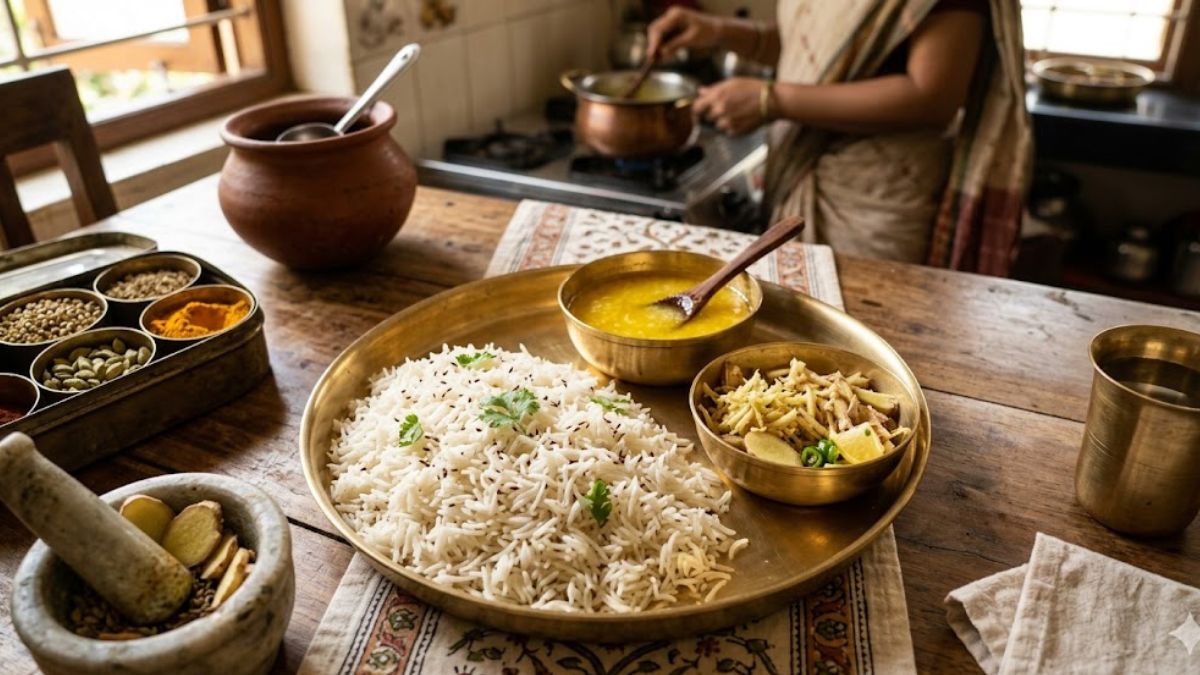
None of this calls for abandoning Indian food — if anything, Indian cuisine already has the answer built in. Millets, dals, seasonal vegetables, whole grains and simple home cooking were never the problem; they're the solution we've drifted away from. Bringing fibre back to the centre of the plate, cutting down on salt and refined carbohydrates, choosing lighter cooking methods over routine deep-frying, and sizing portions to match a far less active lifestyle — these are small, doable shifts, not a rejection of culture.
This World Heart Day, perhaps the most useful thing we can do isn't to promise a health check-up we'll forget by next month, but to honestly examine the plate in front of us. India has changed. It's time our food habits caught up — not by discarding tradition, but by finally living up to what it was always meant to be: food that fits the life we're actually living.
The author is the director of cardiology department at the CK Birla Hospital, Delhi.
The opinions expressed in this article are those of the author and do not purport to reflect the opinions or views of THE WEEK.
