



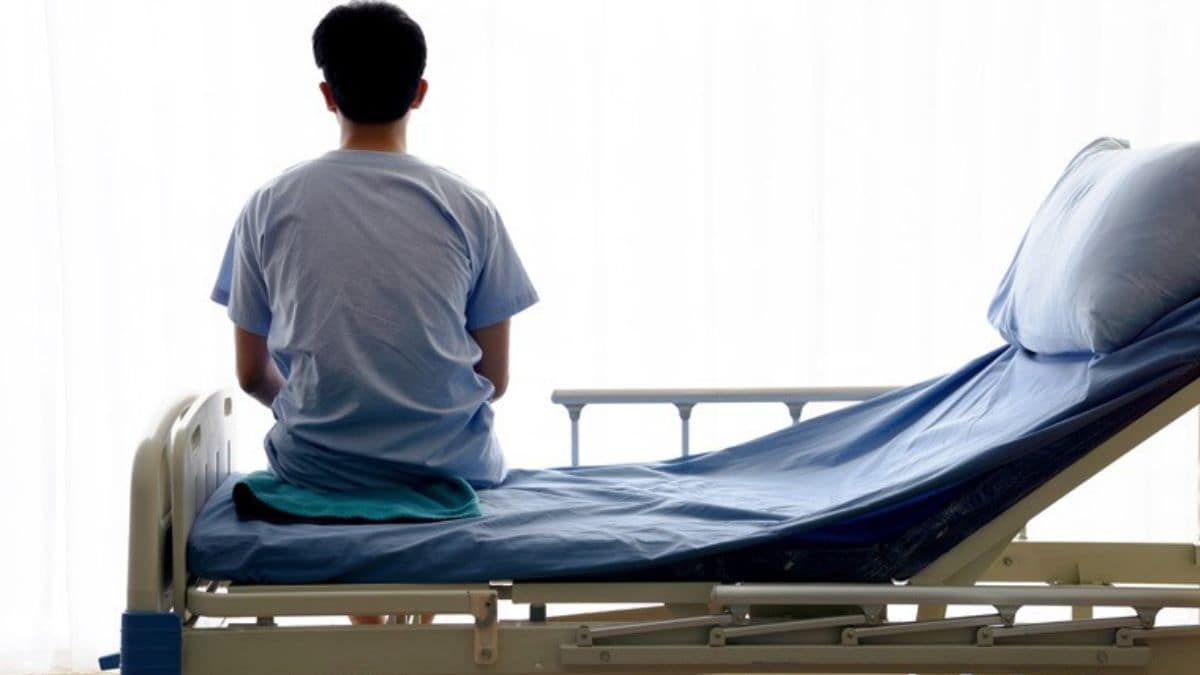
A patient in a Tier-3 city like Roorkee or Tenkasi receives a cancer diagnosis. Her oncologist orders a PET-CT scan. She gets it done at a nearby center and then waits. Not because the technology failed, but because there is no one licensed to read it immediately at the center. She waits, while her cancer does not.
Another patient, recovering from a cancer surgery in a Tier-4 town, boards a pre-dawn bus to the nearest railhead, then a 4-6 hour train to Howrah, reaches the scan centre by mid-morning, and is back on a train by late afternoon. Fourteen hours of travel for a scan she cannot afford to stay overnight to collect. The same scan that lets the treating doctor know if there is any remaining disease and helps to decide what further treatment she requires. The machine was there. The trained diagnostician was not.
PET-CT is now integrated into cancer care at every stage and considered the gold standard of imaging. Hybrid imaging enables whole-body visualisation across functional and structural lines, producing detailed pictures of every organ.
India has 0.3 PET CT scanners per million population, way below the World Health Organization standard of 2 and the American standard of 4. Additionally, the availability of trained nuclear medicine physicians to read the scans is only 0.8 per million population in India.
This is the reality for thousands of cancer patients across India. It is not only a technology problem. It is also a human capacity problem.
The arithmetic of a bottleneck
India has more than 500 PET-CT scanners and roughly 350 SPECT and gamma cameras installed across the country, representing enormous diagnostic capability and enormous public and private investment. Yet they depend on approximately 800 licensed nuclear medicine physicians, which grows by only about 40 specialists a year. Scan volumes, meanwhile, are growing at 13 percent annually.
The gap is structural. PET-CT reporting is licence-bound specialist work. A general radiologist cannot simply step in. And the training pipeline, including the residencies, fellowships and years of supervised reading required to achieve competence, cannot be accelerated by policy or demand.
This specialised training of doctors in India is available only at select central government institutes, university-based facilities and a handful of National Board-accredited hospitals in the country. Kerala is the first and only state to introduce a postgraduate training program in one of its state-run medical colleges with an annual intake of two students from 2025.
As the burden of cancer disease continues to rise, the demand for PET CT also grows dramatically. Any hospital aspiring to treat cancer adequately needs, not just the equipment, but a complete nuclear medicine physician read of disease status.
It is a supply curve that moves slowly, while the disease it serves does not. The result is scanners outside major metros running far below capacity, not because the equipment is idle, but because the expertise is elsewhere.
For patients in Tier-2 and Tier-3 cities, the implications are severe. Delayed reporting means delayed treatment decisions. An oncologist who cannot stage accurately cannot treat precisely, and when the report finally arrives, the window for optimal intervention may have narrowed. Surgeons decide the extent of surgery, radiation oncologists decide which tumour areas receive maximum dose while sparing surrounding tissue, and medical oncologists decide the intent of treatment — from cure to palliation — all based on these reports.
The consequences are not abstract. In Lucknow, patients needing PET-CT scans at government hospitals get appointments a month later. At King George’s Medical University, some patients wait nearly two months. The cost burden compounds the problem.
Cost compounds the problem: ₹12,500 at government hospitals against ₹18,000–22,000 at private centres. Often, due to local unavailability or higher cost, patients undergo less-than-standard imaging for life-changing decisions. This is the cancer diagnostics deficit. It is measured not in machines, but in months of life.
Why remote reading changes the equation
The insight behind a Centre of Excellence model is straightforward. If expertise cannot travel to the patient, the patient’s scan can travel to the expertise.
A remote, distributed network connects scanners anywhere in India to a national panel of credentialed nuclear medicine specialists. The local hospital performs the scan. The images are transmitted securely. A sub-specialty reader interprets them. The report returns to the treating oncologist.
This is not simply telemedicine applied to radiology. Nuclear medicine demands sub-specialty training and adherence to structured reporting frameworks. PERCIST for treatment response, Lugano for lymphoma, PSMA-RADS for prostate cancer, SSTR-RADS for neuroendocrine tumours. These ensure that a scan read in one centre is understood the same way in another. They make remote reading not just feasible, but rigorous.The treating doctor's ability to reach the sub-specialty reader directly to discuss cases further sharpens the clinical output.
Where AI fits and where it does not
Artificial intelligence has entered nuclear medicine with considerable promise. AI systems can now automatically detect lesions, quantify cancer activity, track tumour burden across serial scans, and draft structured reports. The technology is real, and it is improving. But the critical word is 'assisted'.
Recent research from the Journal of Nuclear Medicine makes the limitations clear. An LLM-orchestrated AI agent achieved 100 per cent sensitivity for primary tumour detection in a pilot study. Yet it missed every brain metastasis in the cohort. Sensitivity for adrenal metastases was low. The study authors concluded that such systems “should be viewed as workflow-level assistants” rather than autonomous readers.
AI flags findings. AI measures. AI drafts. AI does not replace the clinical judgement that distinguishes physiological uptake from pathological uptake, or determines whether a lesion requires biopsy or continued surveillance. The final read remains the responsibility of a credentialed physician, medico-legally valid and clinically accountable.
The model that works is not AI instead of doctors. It is AI supporting doctors, so that the scarce supply of sub-specialty expertise can reach more patients, faster, without compromising accuracy.
What is the path forward?
The physician shortage in nuclear medicine will not resolve in the near term. Training more specialists is essential, but it is a decade-long project at best.
Remote working enables the reader to deliver the same quality of report without the time pressures and physical constraints of being present in-house. Remote reading, supported by AI decision tools and standardised reporting criteria, does not solve the underlying shortage. But it can ensure that a scanner in a Tier-2 city does not sit idle while a patient's cancer advances. It can ensure that geography is not the deciding factor in whether a cancer is diagnosed in time.
India does not need to wait a decade for more specialists to make its existing scanners useful. It needs to connect the expertise it has to the patients who need it. And that can be done by leveraging AI And Remote Reading.
(The author is the head of the Centre of Excellence for Nuclear Medicine and Kalyan Sivasailam, Co-Founder & CEO, 5C Network)
The opinions expressed in this article are those of the author and do not purport to reflect the opinions or views of THE WEEK.
