



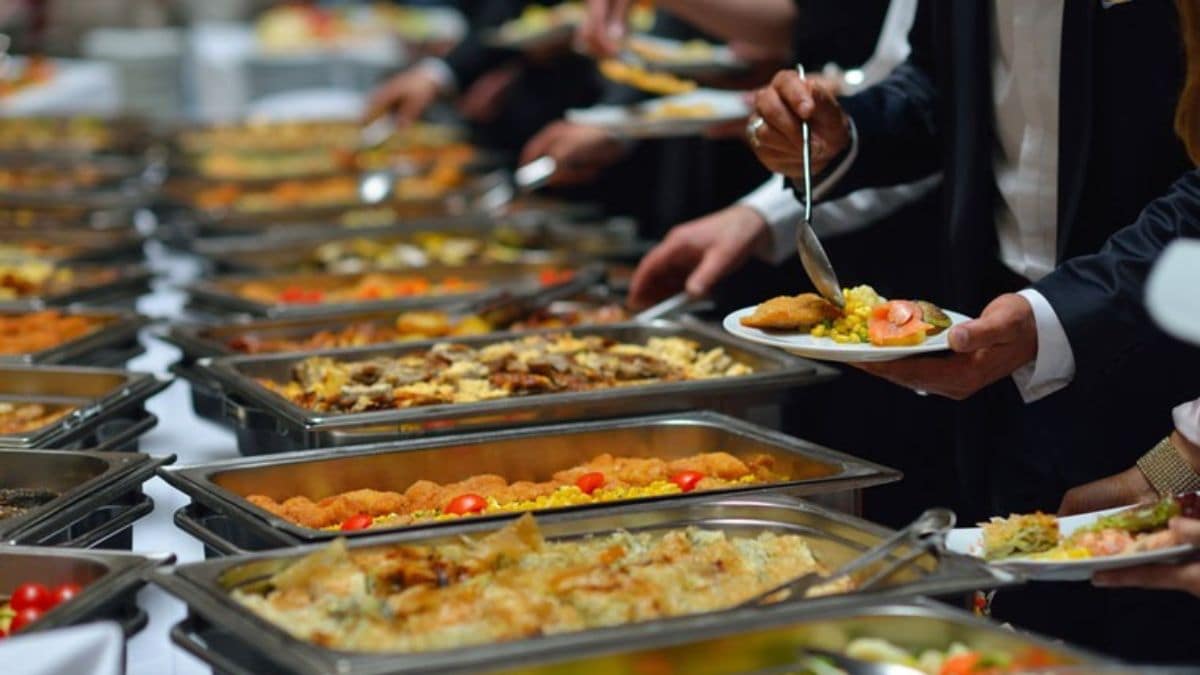
Emphasising the need to reduce unhealthy food in daily consumption and to set an example, the Maharashtra Public Health Department has issued an order to include healthy food and beverages at all government canteens and in official meetings or events.
The Government Resolution (GR), also called for a gradual reduction in ultra-processed foods and items containing excessive sugar, salt and unhealthy fats.
What items are included under the 'healthy foods' category?
The GR ordered millet khichdi, sprouts curry and solkadhi to be available in the menu, which will be designed as per the guidelines of the Indian Council of Medical Research-National Institute of Nutrition (ICMR-NIN) and Food Safety and Standards Authority of India (FSSAI). Care is also to be taken to ensure that it is low in salt, sugar and oil.
Seasonal fruits, roasted or boiled chickpeas and peanuts, sprouts, vegetable poha, idli-sambar, vegetable upma, millets khichdi, boiled eggs, nuts and seeds for short meetings and refreshments are also suggested in the GR.
Under the beverages category, coconut water, buttermilk, solkadhi, unsweetened milk, lemon water with limited sugar or jaggery, and unsweetened green or herbal tea have been suggested to be included in the menu.
As per PTI, for half-day or full-day programmes, the GR suggested a menu including jowar, bajra or ragi bhakri, multigrain chapati, hand-pounded or brown rice, dal or 'usal', leafy and seasonal vegetables cooked with limited oil, curd or buttermilk, salads, fruit instead of sweets, low-oil khichdi, vegetable pulao, paneer, sprouts-based curry, and properly cooked fish, chicken or mutton.
It is also mandated to publish information regarding the nutritional content of the food displayed, in a move to increase health awareness and help reduce risk factors for non-communicable diseases (NCDs).
The Public Health Department cited the rising incidence of diabetes, hypertension, obesity, heart disease and other non-communicable diseases in the state as a serious public health concern, attributing it to changing lifestyles, sedentary work patterns, increasing stress, unbalanced diets and greater consumption of processed and ultra-processed foods.
As per a UNICEF report in 2025, India is expected to be home to over 27 million children and adolescents (5 to 19 years) living with obesity by 2030, and will account for 11 per cent of the global burden. In adults, the prevalence increased by 91 per cent among women (from 12.6 per cent to 24.0 per cent) and 146 per cent among men (from 9.3 per cent to 22.9 per cent), indicating a nationwide health crisis. (NFHS 5, 2019-2021).
