



Most people can rattle off their parents' health issues without thinking twice. Dad's blood pressure, mum's thyroid, maybe a grandparent's diabetes. But ask someone what their sibling has been diagnosed with, and there's often a pause. It's strange, really, because siblings share something parents and children don't quite share in the same way — roughly half their genes, often the same childhood diet, the same household habits, sometimes even the same doctor growing up. And yet that overlap barely gets a mention when people talk about their own health risks.
In a consultation room, family history usually gets asked about in a fairly narrow way — parents and grandparents, occasionally an uncle or aunt. Siblings tend to come up almost as an afterthought, if at all. That's a gap worth closing, because a brother or sister's diagnosis can actually be more relevant to your own risk than a grandparent's ever was.
Take something like early heart disease. If a sibling has been told they have high cholesterol or had a cardiac event before fifty, that's not just their problem to manage. Shared genetics plus a shared upbringing — the same meals at the dinner table for years, similar activity levels as kids — means the risk factors often run in parallel, not just in parent-to-child lines but sideways too, between brothers and sisters.
The same goes for diabetes. Type 2 diabetes has a strong genetic component, but it also has a strong environmental one, and siblings usually grew up in the exact same environment. If one sibling develops it in their thirties or forties, it's a fairly loud signal that the others should be getting their blood sugar checked regularly, not waiting until symptoms show up.
Certain cancers work the same way. Breast, ovarian, and colorectal cancers, in particular, can cluster in families through shared genetic mutations, and a sibling's diagnosis sometimes matters just as much as a parent's when doctors are calculating someone's risk. In fact, in a few genetic screening guidelines, a sibling's early diagnosis is treated as seriously as a parent's would be.
Mental health deserves a mention too, even though it rarely comes up in these conversations. Conditions like depression, anxiety disorders, and bipolar disorder have a documented tendency to appear across siblings, not just top-down through generations. If a brother or sister has struggled with their mental health, it's not irrelevant information — it's context worth having, both for empathy and for early recognition in oneself.
None of this means a sibling's diagnosis guarantees the same fate. Genetics load the gun, as the saying goes, but lifestyle and screening pull the trigger or don't. What it does mean is that the information is useful, and right now, most people simply don't have it. They know their sibling was in hospital last year, but they've never actually asked what for, or whether it's something that runs sideways in families as much as it runs down them.
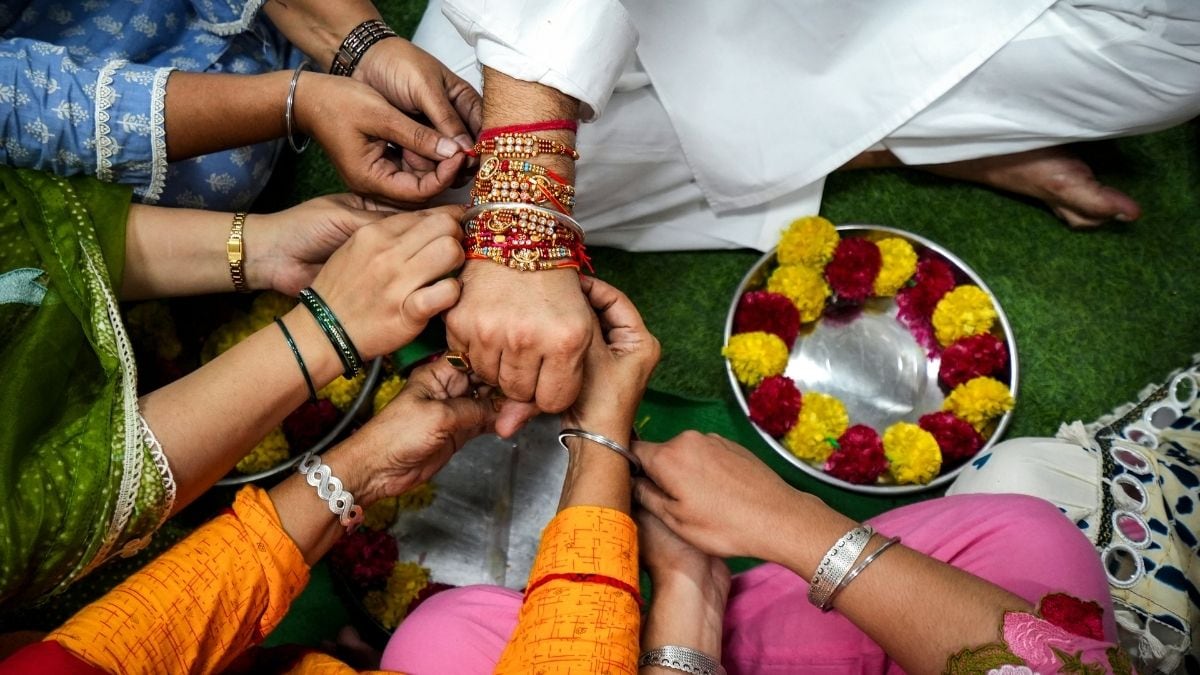
This is where Rakhi becomes more than a nice occasion for a reflection like this. It's one of the few days a year that pulls siblings back into a room together, away from the usual scattered texts and missed calls. It's as good a moment as any to ask a slightly more serious question than usual — not just how are you, but has anything come up health-wise that I should know about too.
Families already share plenty without realising it. Health risk is one more thing on that list, and it's far easier to plan around than to discover after the fact.
The author is a Consultant - Internal Medicine at the CK Birla Hospital®, Delhi.
The opinions expressed in this article are those of the author and do not purport to reflect the opinions or views of THE WEEK.
