



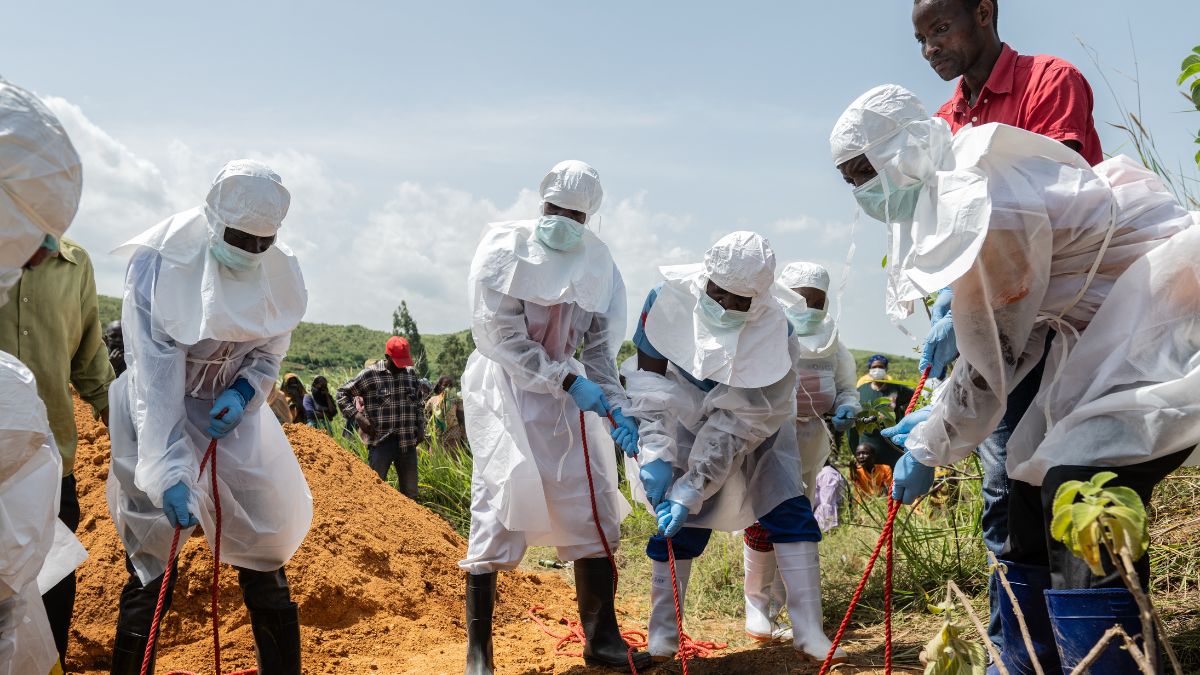
The Democratic Republic of the Congo (DR Congo)'s Ebola outbreak has officially become the second-largest on record. As per officials, the number of cases reported across Congo has risen to 3,532, with 1,556 deaths recorded.
The current outbreak is being driven by the Bundibugyo strain of the Ebola virus—a rare variant for which there is no approved vaccine or specific treatment yet. WHO has described the situation as "intensifying at an exceptional pace," with the epicentre in Congo's Ituri Province and cases now reported across multiple provinces.
As per a report published in the journal Science, Congo's fast-spreading Ebola outbreak started in January, or even earlier, in the eastern Ituri province. “If the outbreak could have been contained in Mongbwalu, it would have been much easier to control,” says Manuel Albela, an epidemiologist with Doctors Without Borders (MSF), as mentioned in the Science journal. Researchers mention that more than 500 suspected cases between mid-January and May 15 were identified, when the outbreak was announced.
What is Ebola?
According to the Centers for Disease Control and Prevention (CDC), Ebola disease is caused by a group of viruses, known as orthoebolaviruses (formerly ebolavirus). These viruses can cause serious illness that can cause death if not properly treated. It spreads through direct contact with the blood, body fluids, or tissues of an infected person or contaminated objects.
Symptoms of Ebola
The incubation period or interval from infection to onset of symptoms varies from 2 to 21 days. As per WHO, the symptoms of Ebola disease can be sudden and include fever, fatigue, malaise, muscle pain, headache and sore throat. These are followed by vomiting, diarrhoea, abdominal pain, rash, and symptoms of impaired kidney and liver functions. Early diagnosis and supportive medical care significantly improve survival.
Why is the current outbreak different?
The current outbreak involves the Bundibugyo virus. While vaccines and effective antibody treatments exist for the more common Zaire strain, none are currently approved for Bundibugyo, although clinical trials are underway. This has made controlling the outbreak more difficult.
