



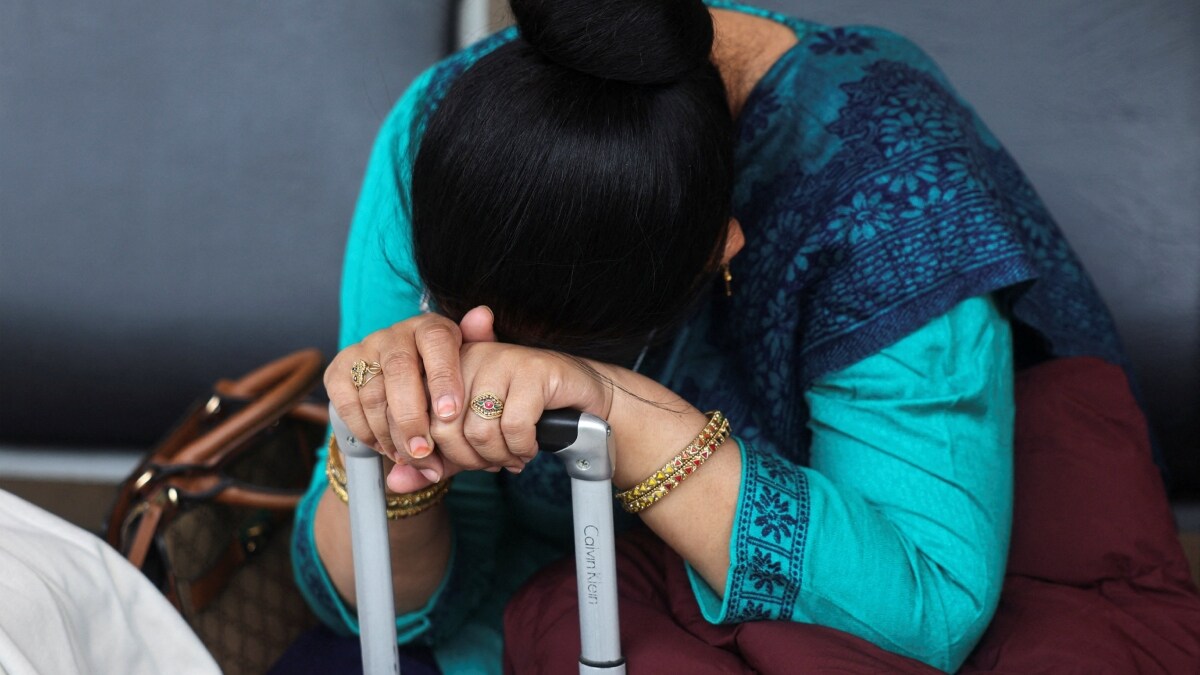
It is barely six o'clock in the morning, and her day has already begun before it officially starts. With breakfast to make, a house to set in order, and a commute that eats the morning whole, by the time the office login loads, some part of her has already completed a full shift. The evening promises no different arithmetic; she is home past eight, and what looks like rest is really a second job: dinner, dishes, tomorrow's plan, the low hum of a phone she cannot put down. Finally, sleep time arrives, and with it comes an audit for overthinkers–a future to plan, a past to unfollow, a life barely held together with double espresso coffee.
This was not just a bad week. This was her week.
While she was busy keeping track of her week, her body maintained a different kind of account. Doctors have a word for what this feels like from the outside: burnout. It is treated as a mood, a phase, or something that a holiday might fix. However, a growing body of research suggests that when stress becomes the baseline rather than the exception, it stops being merely a psychological phenomenon and begins to leave a biological signature, one written into the very system meant to protect the body from harm.
Under short-term stress, the body releases cortisol, a hormone that inhibits inflammation, among other functions. This is a useful, ancient system: stress hormone levels rise, inflammation is held in check, and the body returns to baseline once the stress passes. The problem begins when stress does not pass.
In a landmark 2012 study published in the Proceedings of the National Academy of Sciences, Cohen et al. proposed a model in which prolonged psychological stress causes immune cells to become resistant to cortisol signals, a state they termed glucocorticoid receptor resistance. In two viral challenge studies, individuals under chronic stress showed a diminished ability to regulate inflammatory responses, even when cortisol levels were adequate. The brake was present; however, the cells stopped responding. If left unchecked, this is thought to create a state of low-grade, persistent inflammation, which is increasingly implicated in the onset and flare of autoimmune conditions, in which the immune system turns against the body's own tissue.
Autoimmune diseases disproportionately affect women, with global estimates accounting for approximately 80 per cent of all cases. Its most common onset window overlaps almost exactly with a woman's most demanding working years, roughly ages 15–55, a period that in India often also carries the weight of caregiving, marriage, and early motherhood.
This does not mean that stress causes autoimmune diseases; the picture includes genetics, infection, and environmental exposure. However, this does not make stress a footnote. It may be an active biological trigger that arrives quietly at the cellular level, while the calendar insists that everything is fine. This is where the conversation usually turns to solutions, and the solutions usually turn small: sleep more, walk more in fresh air and sunlight, and drink more water. This is not incorrect.
However, there is something worth noting in how neatly the burden is handed back to the individual, as though the fix for a system that runs on a woman's unpaid, invisible second shift is a better bedtime routine.
The more honest starting point is diagnosis, not discipline: recognising exhaustion not as a character flaw to be optimised away, but as information. A body under sustained, unrelieved stress is not weak but strong. It is responding exactly as it was built to do; the trouble is that nothing about modern working life, or the domestic life stacked quietly beneath it, was built with any exits. If the immune system is listening to how we live, it is perhaps time for us to do the same.
The author is an M.Sc. Microbiology student at the University of Delhi and author of the book “A Siren from the Crane”(BookLeaf Publishing, 2022).
The opinions expressed in this article are those of the author and do not purport to reflect the opinions or views of THE WEEK.
