



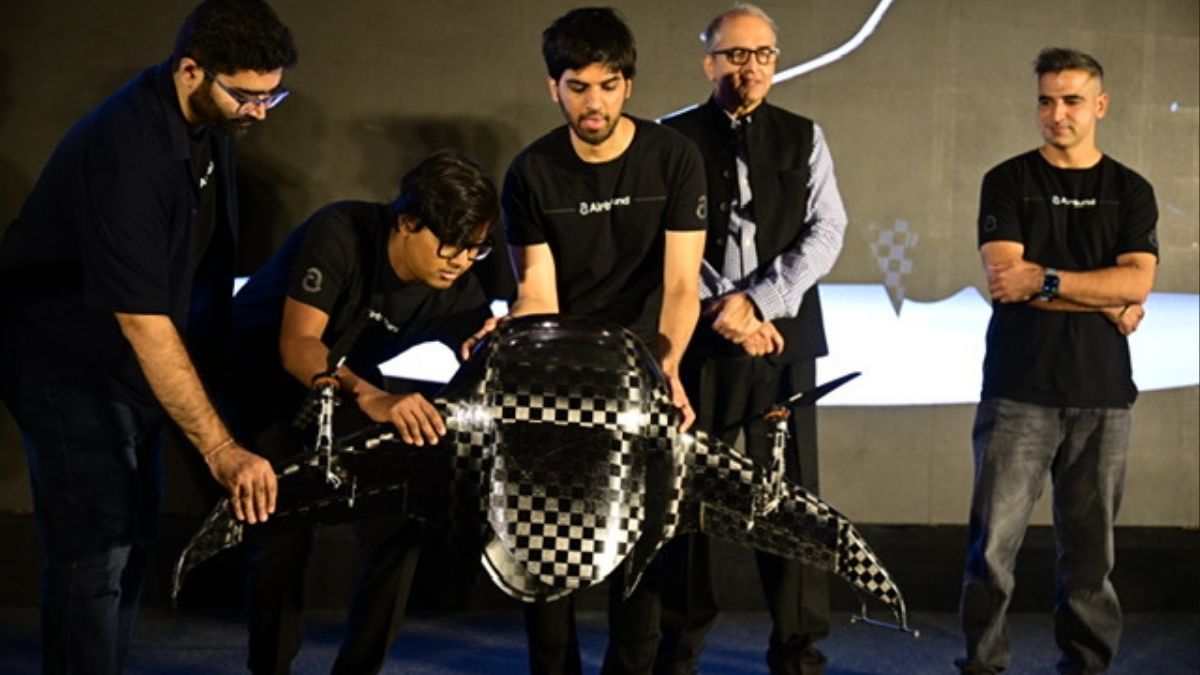
Bengaluru-headquartered Narayana Health completed a first-of-its-kind medical logistics pilot with Airbound, utilising drones to transport diagnostic samples between a clinic and the central lab in just 10 minutes.
As per the statistics, 700-plus drone flights were completed in over 54 days, carrying up to 40 diagnostic samples per flight with zero failed deliveries. It had up to 20 on-demand flights daily, replacing traditional batch-based road transport, resulting in faster diagnostic turnaround by enabling continuous sample flow to labs.
The medical logistics pilot connected Narayana Health’s Chandapura clinic to its central laboratory at Narayana Health City in Electronic City, demonstrating how aerial logistics can improve the speed and reliability of diagnostic transport across urban health care networks. Before this, diagnostic samples from the Chandapura clinic in Bengaluru were transported to the central laboratory of Narayana Health in three to four road transfers per day, with arrival times varying depending on traffic conditions.
It is expected that this model could significantly improve access to diagnostics while reducing costs and congestion at large hospitals, especially in high-density cities. Post this pilot, there are plans to introduce a dedicated aerial logistics corridor connecting Electronic City and Banashankari, with further expansion across Bengaluru and other cities like Kolkata.
The pilot had been running since January 2026, under which the 4 km aerial route is completed in 10 minutes, compared to significantly longer road transfers that are dependent on Bengaluru’s traffic conditions.
With the help of the aerial route, laboratories can now receive samples continuously rather than in fixed batches. Within three weeks of commencing operations, Narayana Health removed the road transfer entirely, making the aerial route the sole transport link between the two facilities. This allows the laboratory to begin processing sooner, helping doctors receive results faster and improving diagnostic turnaround times for patients.
“Following a successful pilot program with Airbound by connecting our clinic in Chandrapura with our hospital in Electronic City, we have seen firsthand the amazing outcomes that high-speed, low-cost aerial logistics can provide. The standardisation of drone transport for blood samples and life-saving blood bags will be a major game-changer, allowing for medical interventions at faster speeds,” said Dr Devi Prasad Shetty, Founder and Chairman, Narayana Health.
"Our aircraft uses a blended-wing-body tailsitter design that combines vertical takeoff with the aerodynamic efficiency of fixed-wing flight, enabling lower cost-per-kilometre delivery compared to conventional ground transport while supporting frequent, repeatable operations across dense urban environments. This pilot demonstrated that frequent, predictable aerial logistics is not a future concept and is running right now in one of India's busiest cities,” mentioned Naman Pushp, Founder and CEO of Airbound.
The pilot also addressed a structural challenge in distributed health care systems. Historically, samples collected at peripheral clinics entered the laboratory system in scheduled batches, with frequency constrained by road logistics rather than laboratory capacity. By enabling frequent aerial transfers throughout the day, the laboratory now receives a continuous flow of samples instead of fixed courier deliveries.
The model also opens possibilities for how hospital networks can operate. Clinics can collect samples closer to patients and send them rapidly to centralised, high-volume laboratories rather than maintaining a full diagnostic infrastructure at every location. This allows hospital networks to expand access to diagnostics while improving operational efficiency and reducing congestion at major hospital campuses.
Over the next few years, Airbound and Narayana Health plan to expand the model in phases by connecting more clinics and smaller private hospitals, including those outside the Narayana Health ecosystem, to the centralized laboratory at Narayana Health City. This is expected to allow health care providers across the city to access advanced diagnostic services without needing to build a full laboratory infrastructure at each facility.
