



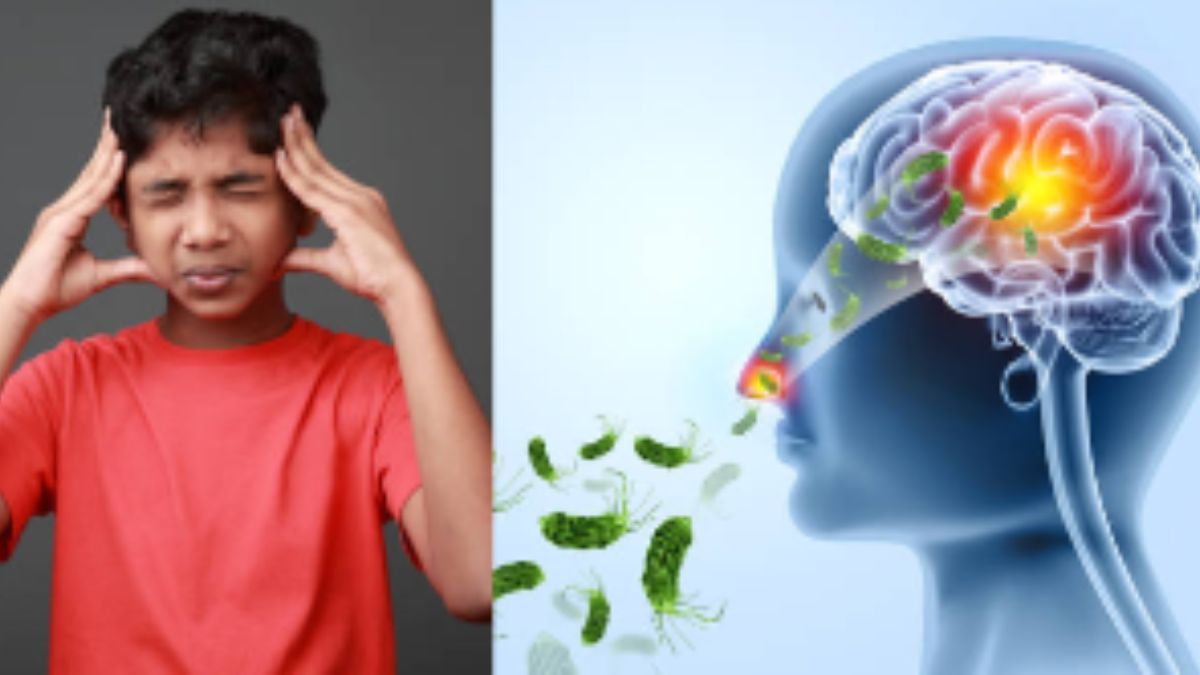
A new perspective study published in the journal ‘Biocontaminant’ has flagged a growing but largely overlooked global health threat, free-living amoebae, a group of microscopic organisms that thrive in soil and water and, in rare cases, can cause fatal infections in humans.
Scientists warn that climate change, ageing water infrastructure, and gaps in surveillance systems are creating conditions that allow these pathogens to spread more widely and persist longer in both natural and man-made environments.
With Kerala reporting an exponential rise in amoebic meningoencephalitis cases over the past three years— from only two fatal cases in 2023 to at least 170 cases and 42 deaths till November 2025— the insights could help address the mounting public health concern.
The study highlights that while most amoebae are harmless, a small subset can trigger severe and often deadly diseases. Among the most notorious is Naegleria fowleri, commonly referred to as the “brain-eating amoeba,” which causes a rare infection of the brain known as primary amoebic meningoencephalitis (PAM). The infection typically occurs when contaminated water enters the nose, often during swimming or other recreational water activities.
According to a 2025 global review, at least 488 cases of primary amoebic meningoencephalitis (PAM) caused by Naegleria fowleri have been reported worldwide since 1962. Considering that infection with the brain-eating amoeba is nearly always fatal, this study could provide critical insights into how rising temperatures and environmental changes are further expanding the spread and risk of these rare but deadly infections.
Findings of the study
The study warns that free-living amoebae are emerging as a serious but largely overlooked global public health threat. As the researchers note, “Amoebae, single-celled protists capable of altering their shape and moving via pseudopodia, represent a growing public health threat worldwide,” with species such as Naegleria fowleri and Acanthamoeba spp. being of particular concern.
Although these organisms are often ignored in conventional biosecurity research, the study highlights their extraordinary resilience. “These protozoa can survive extreme environmental conditions, including high pH, elevated temperatures, and high chlorine concentrations, making them resistant to standard water treatment approaches,” the authors write.
Their ability to persist in both natural and engineered environments increases the risk of human exposure through contaminated water sources, recreational activities, and drinking water systems.
Amoebae are widely distributed across soil, water, and air due to their adaptability. The researchers point out that they thrive not only in lakes, rivers, and ponds, but also in human-made systems such as drinking water distribution networks, swimming pools, sewage systems, and hot springs. This widespread presence, the study notes, “poses significant exposure risks,” particularly as pathogenic species have been repeatedly detected in treated drinking water and recreational waters.
As a result, everyday activities such as swimming may serve as exposure routes. In certain regions, the risks may be further amplified by cultural and religious practices, including ceremonial bathing and the use of neti pots for nasal irrigation, which can provide direct pathways for infection.
The study explains that N. fowleri, which typically inhabits warm freshwater or polluted environments, enters the human body through the nose and travels along the olfactory nerve to the brain, causing primary amoebic meningoencephalitis (PAM).
Other species, such as Acanthamoeba castellanii and Balamuthia mandrillaris, are responsible for granulomatous amoebic encephalitis (GAE) and Balamuthia amoebic encephalitis (BAE). These pathogens can invade through the skin, nasal passages, or eyes, leading to severe brain infections or sight-threatening conditions like amoebic keratitis, often associated with contaminated contact lenses.
The researchers caution that the true scale of exposure is likely far higher than reported. Before molecular diagnostic tools became widespread, traditional microscopy and culture techniques frequently failed to detect amoebic infections. As the study notes, amoebae are often mistaken for yeast cells or macrophages, leading to misdiagnosis and significant underreporting. Given their ubiquity across diverse environments, the authors argue that the current burden of disease is likely a substantial underestimate of the real public health threat.
Controlling amoebae-related risks remains particularly challenging. The study highlights that cyst forms of amoebae can survive conventional water treatment methods, including chlorination, filtration, and ultraviolet (UV) disinfection. Some species can withstand extremely high chlorine concentrations, while exposure to sublethal doses may even enhance virulence by increasing the expression of pathogenic genes. Physical barriers such as membrane filtration are also vulnerable, as amoebae can colonise these surfaces and contribute to biofouling.
Given these limitations, the researchers point to advanced oxidation strategies as promising alternatives. Emerging technologies, such as persulfate-based chemical systems, piezocatalytic composites, and innovative water oxidation approaches, have shown substantial reductions in amoeba viability and the inactivation of other pathogens sheltered within them. In addition, source control measures targeting biofilms in water distribution networks, including flushing and flow regulation, are identified as critical preventive strategies.
The threat is expected to intensify with climate warming, which may expand the geographic range of thermophilic species like N. fowleri into regions previously considered low risk. Reflecting this concern, the World Health Organization issued guidelines in 2025 specifically for controlling N. fowleri in drinking-water systems, signalling growing international attention to amoeba-related public health risks.
“What makes these organisms particularly dangerous is their ability to survive conditions that kill many other microbes,” said corresponding author Longfei Shu of Sun Yat-sen University. “They can tolerate high temperatures, strong disinfectants like chlorine, and even live inside water distribution systems that people assume are safe.”
The authors further emphasise that amoebae can act as hidden carriers for other harmful microbes. By sheltering bacteria and viruses inside their cells, amoebae protect these pathogens from disinfection and enable their persistence and spread in drinking water systems. This so-called “Trojan horse” effect may also contribute to the spread of antibiotic resistance.
Climate warming is expected to worsen the problem by allowing heat-loving amoebae to spread into new regions, while recent outbreaks linked to recreational water use have already raised public concern in several countries. In response, the researchers call for a coordinated One Health approach that integrates human health, environmental science, and water management, alongside stronger surveillance, improved diagnostics, and advanced water treatment technologies.
“Amoebae are not just a medical issue or an environmental issue,” Shu said. “They sit at the intersection of both, and addressing them requires integrated solutions that protect public health at its source.”
Significance for India
Building on the global concern over heat-loving amoebae highlighted in the study, the findings carry particular significance for India, where recent outbreaks and rising case numbers have intensified public health concern. According to a Lok Sabha reply, Kerala has reported a sharp increase in amoebic meningoencephalitis cases over the past three years. In 2023, the state recorded two cases, both fatal. In 2024, 39 cases were reported, resulting in nine deaths. By 2025, as of November 27, at least 170 cases and 42 deaths had been documented.
A 2025 global review highlighted the growing public health concern, noting that amoebic infections were “traditionally associated with warm freshwater environments in tropical and subtropical regions.” The authors observed that recent cases from temperate areas indicate that climate change and water resource mismanagement are expanding the epidemiological footprint. They also emphasised that “despite advances in molecular biology and phylogenetics, timely diagnosis remains elusive, as early clinical manifestations mimic bacterial or viral meningitis, often leading to misdiagnosis and delayed treatment.”
Another review on Kerala’s outbreak observed that climate change, inadequate chlorination, and water contamination have expanded amoebic reservoirs, contributing to what has been described as the largest-ever outbreak of amoebic meningoencephalitis in the region. Building on this, a systematic review highlighted the global significance of Naegleria fowleri, noting, “The thermophilic amoeba Naegleria fowleri, which can live independently, is normally located in hot freshwater and is responsible for a disease named Primary Amoebic Meningoencephalitis (PAM), a quick and nearly always lethal infection of the central nervous system.”
The review’s authors conducted a thorough literature search across databases such as PubMed, Scopus, and Web of Science, focusing on peer-reviewed articles, case reports, and clinical trials within this timeframe. Their synthesis indicates “a considerable geographical change in the occurrence of PAM cases, with South Asia, especially Pakistan and India, being the new hotspot, a transition that is closely linked to climate change and water management practices.”
In parallel, molecular studies have provided new insights into pathogenesis, using multi-omics approaches to explore unique virulence factors and host-pathogen interactions. The review emphasizes that the use of metagenomic next-generation sequencing (mNGS) has greatly aided rapid diagnosis of PAM, improving early confirmation of cases. Therapeutically, a shift from amphotericin B monotherapy to combination antifungal regimens, including miltefosine, has contributed to better survival outcomes in several recent cases. Experimental strategies, such as nanoparticle-based drug delivery and AI-assisted therapies, are also under investigation, holding promise for future interventions.
The review concludes that while PAM has revealed many biological and epidemiological insights, it remains a formidable disease. The authors stress that a persistent and multipronged approach is essential, stating that “the urgent need for raising public awareness, the establishment of a robust environmental monitoring system, and the continuous search for new diagnosis and treatment methods will be among the priorities.”
Steps taken by the government
According to a Lok Sabha reply, an investigation was conducted by the National Centre for Disease Control (NCDC), Kozhikode branch, under the Ministry of Health & Family Welfare, with support from the concerned District Health Authorities in July 2024.
The government stated, “A high-level meeting was conducted by the Secretary, Department of Health Research/Director General, Indian Council of Medical Research (ICMR) with National and State experts to review the surge in amoebic meningoencephalitis cases in Kerala. National Acute Encephalitis Syndrome (AES) surveillance was reinforced through 18 Virus Research & Diagnostic Laboratories (VRDLs), with emphasis on cross-validation of tests, improved environmental surveillance, and evidence-based treatment guidance.”
In parallel, the NCDC strengthened field operations, conducting detailed epidemiological assessments and supporting Information, Education, and Communication (IEC) campaigns in collaboration with the State of Kerala. The government emphasised its ongoing commitment, noting that it “continues to support Information, Education and Communication (IEC) activities and collaborated with the State of Kerala for research, prevention, and preparedness.”
As part of these efforts, a revised Communicable Disease (CD) alert was issued by NCDC, New Delhi, in October 2024. This alert highlighted management protocols, preventive strategies, and control measures for Primary Amoebic Meningoencephalitis, reinforcing the importance of coordinated surveillance and timely intervention to mitigate the public health risk.
Health officials in Kerala have emphasised the importance of strict water hygiene and preventive measures to reduce the risk of amoebic infections. “Water bodies should be cleaned regularly, and swimming pools must be chlorinated, maintained, and kept hygienic as per the guidelines. People need to be extra cautious during water-related activities, and always use a nose clip. Even babies must be protected; contaminated water should never enter their nose, so it is important to always filter or boil the water,” Dr Anuradha T.C. Nambiar, Assistant Director, Department of Health and Family Welfare, Government of Kerala, told First Check earlier.
Echoing these concerns, Dr Rajaram K.K., District Medical Officer of Kozhikode, highlighted the uncertainty surrounding the source of the outbreak. “We have not yet arrived at a definite conclusion regarding the cause. Kerala has a population density comparable to Delhi, and there may be contamination of water sources from different areas, but a conclusive study has not been undertaken. What we do know is that cases are being reported from different parts of the state. Though they remain occasional, they are alarming,” he told First Check.
Dr Rajaram explained that the infection is caused by free-living amoebae that usually enter the body through the nasal cavity. “They are most often found in stagnant water - ponds, slow-moving rivers, or even in water where animals like buffaloes bathe. In recent times, traces have also been detected in some well-water samples,” he added.
According to Dr Rajaram, the primary risk is not from drinking water but from contaminated water entering the nose. “That is why we are stressing preventive measures. People should avoid bathing in ponds for the time being. Even swimming pools can pose a risk if not maintained properly. Ideally, pools should be chlorinated weekly, scrubbed thoroughly before draining, and allowed to dry under sunlight before being refilled,” he told First Check.
This story is done in collaboration with First Check, which is the health journalism vertical of DataLEADS.
