



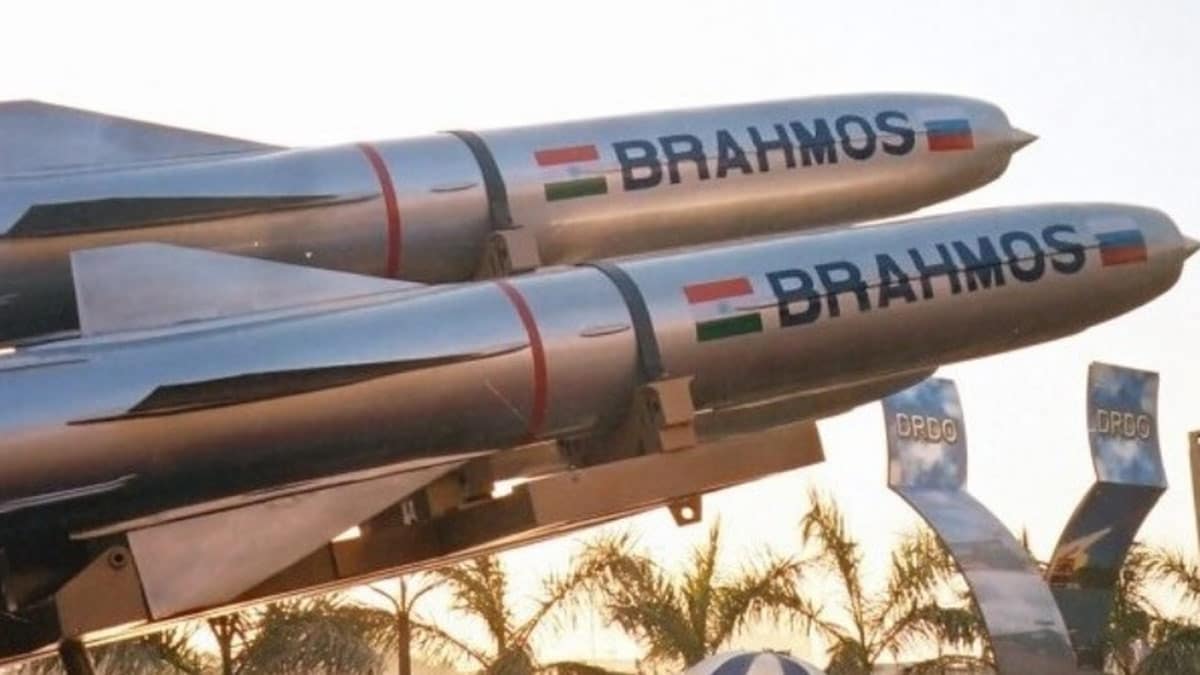
It is rather strange why big news breaks from the Indian military domain are announced from the Shangri-La Dialogue platform in Singapore. If in May last year, it was Chief of Defence Staff General Anil Chauhan admitting for the first time that Indian Air Force fighter aircraft were indeed downed by Pakistan during Operation Sindoor, this year it is about a key defence sale.
On Saturday (May 30), responding to a question at the Shangri-La Dialogue, India’s defence secretary Rajesh Singh said—in the first official confirmation—that an agreement to sell BrahMos missiles to Vietnam has already been signed and that Indonesia is next in line.
Singh said, “My understanding is that with both Indonesia and with Vietnam, the deal is in the final stages, that in fact, for Vietnam, I understand that it has already been signed, probably not publicly announced, but it’s already been signed.”
Singh didn’t provide specifics of when the deal was signed, the value of the deal, or the numbers involved.
In January 2022, India signed a $375 million (Rs 2,770 crore) deal to sell three BrahMos batteries to the Philippines. It is believed that the BrahMos deal with Indonesia is being negotiated at around $450 million.
Selling the BrahMos has a problem. It can be sold only to a country that is considered “friendly” to both India and Russia, as the supersonic cruise missile is a joint India-Russia collaborative affair.
Singh has added in his reply directed to a delegate from Vietnam: “So yes, obviously you are in the category of friendly foreign country with whom we would be happy to share this kind of advanced technology”.
That something was in the offing was clear with India and Vietnam having enhanced their bilateral relations of late. Vietnam’s President To Lam visited India from May 5-7, while Hanoi played host to Defence Minister Rajnath Singh from May 18-19.
While there are several variants of the BrahMos, the one primed for export has a range of 290 kilometres.
The BrahMos, often called India’s ‘Brahmastra’ (Hindu God Brahma’s weapon), performed superlatively during Operation Sindoor, completely overwhelming Pakistan’s Chinese-origin air defence systems and hitting targets with remarkable accuracy.
