



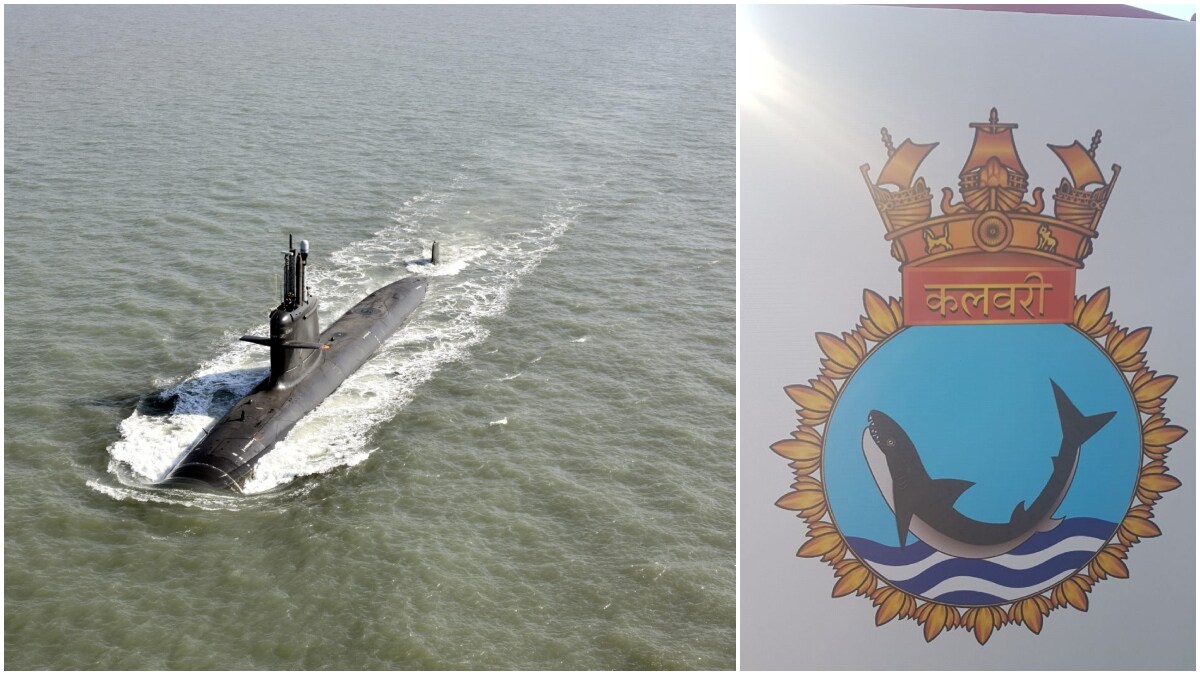
India’s indigenously developed electric heavyweight torpedo (EHWT), Takshak, will soon begin trials, a report said. The plan is to conduct the tests from the Kalvari-class advanced diesel-electric attack submarines (SSK) by the end of 2026.
Initially, dry and wet tests will be conducted in harbour to ensure that the torpedo can be safely launched without damaging the submarine’s sensors or exterior body. If these initial trials are successful, live tests using actual explosives will be conducted by 2027 on decommissioned ships or underwater targets.
The Takshak torpedo has been developed by the Naval Science and Technological Laboratory under the Defence Research and Development Organisation (DRDO). This electric heavyweight torpedo, capable of destroying submarines and ships, is 6.4 metres long and is powered by silver-oxide batteries. It is equipped with ring laser gyroscope (RLG)-based inertial navigation along with GPS/NavIC guidance, enabling it to strike targets with greater accuracy than earlier torpedoes developed by India, such as the Varunastra.
To indigenously build a heavyweight torpedo has long been a dream for India, and work began many years ago. "In Takshak, which is an anti-submarine system, the wire is the medium of communication between the torpedo and the firing ship. If the wire breaks, Takshak becomes an autonomous torpedo, like its ship-launched variant. It can travel up to a distance of 40 km to take out submarines and can operate at depths of up to 400 m," Frontline had said in a 2012 report. However, it is likely that the torpedo will now have an improved range.
The Defence Ministry had signed two contracts, worth around ₹2,867 crore, for the integration of the EHWT as well as the construction of an Air-Independent Propulsion (AIP) plug for the DRDO-AIP system. An AIP plug refers to a new hull section inserted into an existing submarine to integrate an AIP system, which allows conventional diesel-electric boats to be transformed into high-endurance stealth vessels.
"The contract for the construction of the AIP plug and its integration was inked with Mazagon Dock Shipbuilders Limited, Mumbai, worth around ₹1,990 crore, while the contract for the integration of the EHWT, being developed by DRDO, was signed with Naval Group, France, at an approx. cost of ₹877 crore. The AIP technology is being indigenously developed by DRDO. The project pertaining to the construction of the AIP plug and its integration will enhance the endurance of conventional submarines and significantly contribute towards the ‘Aatmanirbhar Bharat’ initiative," an official release by the Defence Ministry said in December 2024.
Takshak uses a “swim-out” launch system, which deploys torpedoes without compressed air. This significantly reduces, if not eliminates, the noise generated during launch, helping to prevent enemy warships and submarines from detecting Indian submarines through sonar systems. It will have a fibre-optic wire guidance system that will allow real-time data from the submarine’s sonar to be transmitted to the torpedo, ensuring highly precise strikes, Mathrubhumi said in a report.
As per a contract signed by the Defence Ministry with Naval Group in December 2024, the guidance software of the Takshak torpedo will be integrated with the Submarine Tactical Integrated Combat System (SUBTICS) onboard Kalvari-class submarines, the Mathrubhumi report said.
