



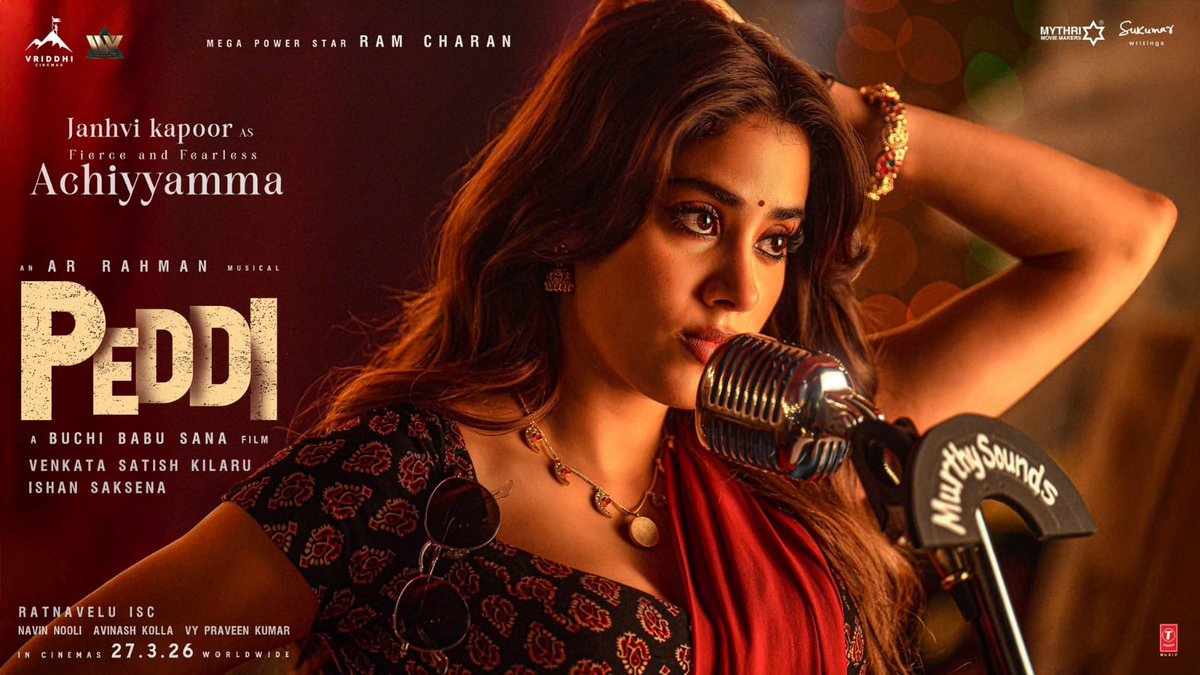
Hyper-sexualisation and objectification are not new for Telugu cinema (and South Indian cinema as a whole). But what Ram Charan's movie "Peddi", directed by Buchi Babu Sana, did was the summit of this. It lingers on Janhvi Kapoor's navel, waist, and chest a little longer than necessary, that too in multiple shots — not to mention the scene where Ram Charan barges into her bedroom at night during a power cut, and forcefully kisses her.
There's also, of course, a scene where a bunch of thugs humiliate her character Achiyamma by undressing her during a political rally and the man, who a while ago assaulted her without her knowing the identity of the man, jumps in to be her saviour. The character was promoted in the posters as "fierce and fearless" but none of that came through in the film.
Naturally, all this led to a widespread uproar over not only the Buchi Babu Sana's "lazy" and "male gaze-pandering" creative choices, but also Janhvi Kapoor's reluctance to say no to this kind of depiction when she happens to be the daughter of one of Bollywood's most famous couples. Things heated up quite a bit when Janhvi reportedly 'liked' (and later unliked) a viral Instagram post that criticised the makers for the disrespectful portrayal of her character.
Following this, on June 6, Buchi Babu Sana issued an unconditional public apology on X (formerly Twitter). In his statement, he noted that it was never their intention to disrespect or objectify women and officially announced that the production team has taken the audience’s feedback seriously and is actively making changes to remove or modify the controversial portions of the film in theatres.
Here's the filmmaker’s full statement:
"As a filmmaker, I believe cinema should entertain, inspire, and connect with audiences. It should never make anyone feel uncomfortable or disrespected. We have heard the feedback regarding certain scenes in Peddi and have taken it seriously. I have always had immense respect for women, both on and off screen, and it was never our intention to objectify or disrespect any female character. If any part of the film has been perceived that way, we respect those sentiments, understand the concerns being raised, and sincerely apologise. After reviewing the feedback, we have decided to make changes to the concerned portions. Cinema grows through its connection with audiences, and as storytellers, we have a responsibility to be mindful of evolving perspectives and sensitivities. Every woman deserves to be respected, valued, and represented with dignity. We remain committed to telling stories that celebrate strong characters and uphold those values."
