



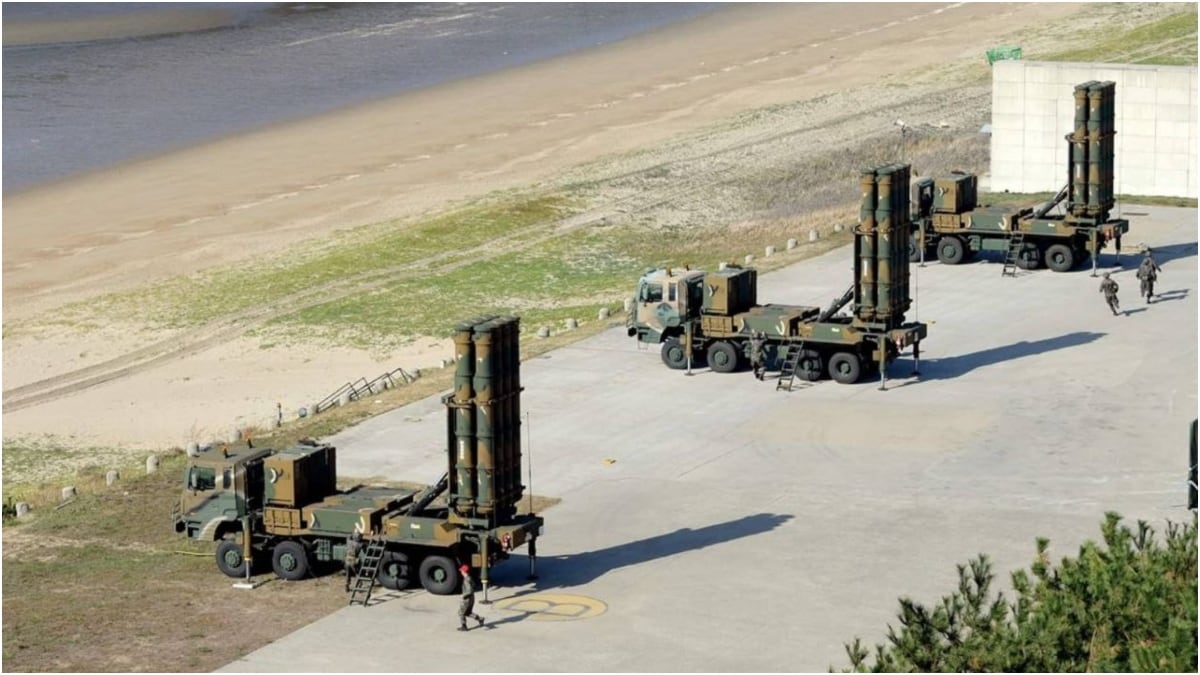
In its time of greatest need, the United Arab Emirates (UAE) has found a reliable ally in South Korea, which has reportedly sent interceptor missiles to the Gulf nation to fight Iranian aggression.
Ever since the US and Israel launched a joint military assault on Iran, the Islamic Republic has been targeting air bases across the region to damage US military assets. A defence deal signed in 2022 witnessed the Gulf nation procuring 10 Cheongung-II medium-range surface-to-air missile batteries from South Korea, and these are now part of the multi-layered air defence system that is safeguarding the country's skies from aerial threats.
AKSO READ | Iran-US tensions: How Gulf states are navigating economic warfare, shifting alliances
Although Seoul only needed to carry out a phased delivery of interceptor missiles until full operational deployment by the end of 2025, Abu Dhabi was forced to request an immediate addition of the interceptor missiles for operational use in light of the ongoing conflict, a news report said. The East Asian nation, another strong US ally, responded positively, sending 30 interceptor missiles via a C-17 transport aircraft operated by its own air force, Defence Security Asia said in a report.
South Korea supplied the UAE with interceptor missiles taken from its operational stockpile, Defence Security Asia said. "South Korea chose to prioritise rapid delivery of interceptor missiles from existing stocks rather than expedite delivery of complete batteries, as production was still tied to other export commitments as well as its own domestic defence needs," the report said.
Cheongung-II interceptors
Each of these interceptor missiles weighs about 400 kilograms. It is around 4.61 metres long and has a diameter of 275 millimetres. The missile can reach speeds of about Mach 4.5 and is designed to intercept high-speed airborne targets at a range of 40 to 50 kilometres.
The Cheongung-II system works alongside Patriot and Terminal High Altitude Area Defense (THAAD) systems, which are entrusted with safeguarding all US-aligned military facilities in the region.
