



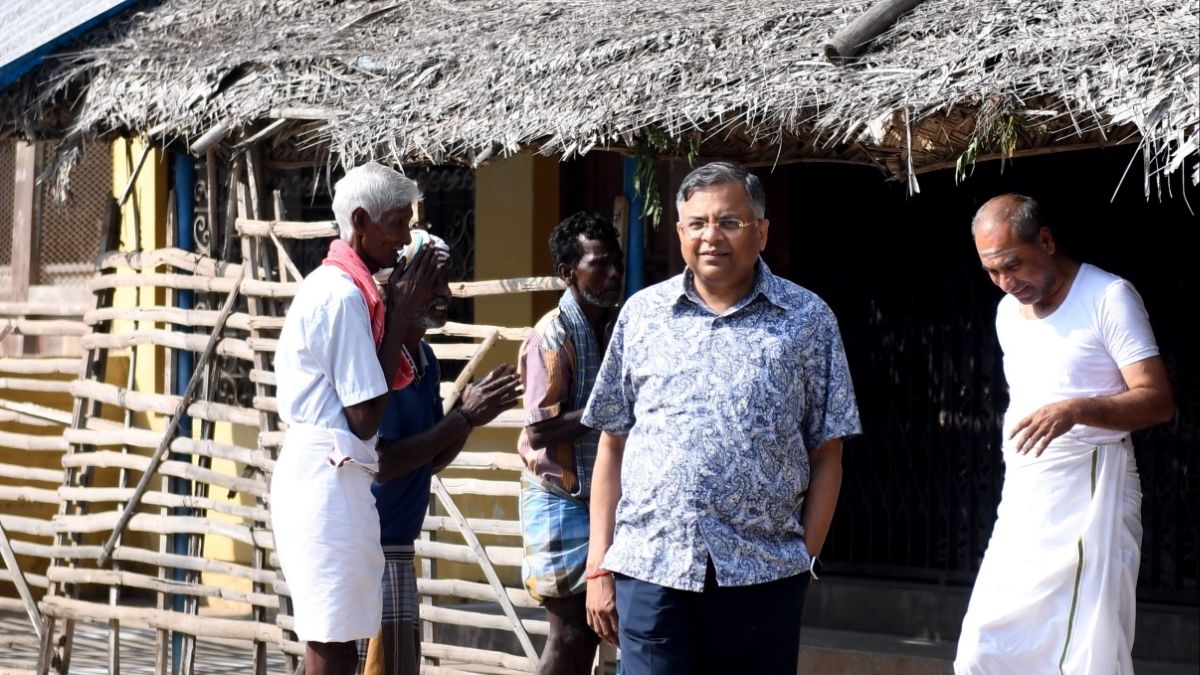
Natarajan Chandrasekaran’s decision to step down as chairman of Tata Sons, ahead of a crucial shareholder vote, closes a turbulent yet transformative chapter for India’s most storied business house. For a group that spans everything from salt and software to steel and semiconductors, his nine‑year stint fused the quiet discipline of a village marathon runner with the hard choices of a modern conglomerate boss.
The Week’s 2017 cover story captured a man shaped by Mohanur, a small village on the banks of the Cauvery in Tamil Nadu, where he grew up in a middle‑class family, walked kilometres to a government school and later took up computer science when farming seemed the safer option. Former classmates and relatives described a boy who avoided shortcuts, remembered people easily and stayed calm under pressure—traits that later defined “Chandra” the chief executive.
By the time he became chief executive of Tata Consultancy Services in 2009, he was an obsessive runner who would go on to complete major international marathons, a habit he has credited with building patience and stamina for long corporate days.
When he moved from TCS to Bombay House as Tata Sons chairman in February 2017, he inherited a group still nursing bruises from the Tata–Mistry boardroom battle and weighed down by legacy debt in telecom and European steel.
In a 2018 interview with The Week, Chandrasekaran outlined a two‑track agenda: simplify the group structure and repair stretched balance sheets while laying a digital layer across old‑economy businesses from steel to autos. Over the next few years, Tata Teleservices’ losses were stemmed via an exit deal with Bharti Airtel, Tata Steel’s European exposure was reduced through restructuring, and capital allocation to weaker verticals became visibly tighter.
The more visible markers of his tenure came later. Under his watch, Tata Sons triumphed in the government’s long‑drawn privatisation of Air India, agreeing in 2021 to pay an enterprise value of ₹18,000 crore and assume a chunk of the airline’s debt through its Talace subsidiary. The group then set about consolidating its aviation bets, announcing plans in 2022 to merge Vistara with Air India and create a larger full‑service carrier alongside the low‑cost Air India Express–AIX Connect platform. Parallel bets followed in electric vehicles, batteries, electronics manufacturing and semiconductors, positioning Tata as a key domestic champion in sectors New Delhi sees as strategic.
The numbers suggest the strategy paid off. The aggregate revenue for major Tata companies nearly doubled from around ₹7.9 lakh crore in FY20 to a little over ₹16.2 lakh crore in FY26, with profit after tax rising more than fivefold over the same period.
The combined market capitalisation of listed Tata firms climbed from ₹9.3 lakh crore to about ₹24.4 lakh crore, even after a pullback from FY25 highs. Yet this record has not insulated Chandrasekaran from the complex governance politics of Tata Sons: Tata Trusts has pushed for a shorter third term, tensions over board representation have surfaced, and his reappointment as director—essential for continuing as chairman—faced enough uncertainty for him to choose to resign before the August annual general meeting.
For many within the group, the man who once described his mission as “simplifying Tata” leaves behind a more focused, financially stronger conglomerate, but also unresolved questions about succession and the balance of power between Tata Sons and Tata Trusts.
From Mohanur’s agraharam lanes to the corner office at Bombay House, Chandrasekaran’s journey has been about running long distances—on the road and in business—and his exit is almost poetic... for, even marathon men must sometimes pause mid‑race and reassess, especially when the track ahead becomes contested.
