



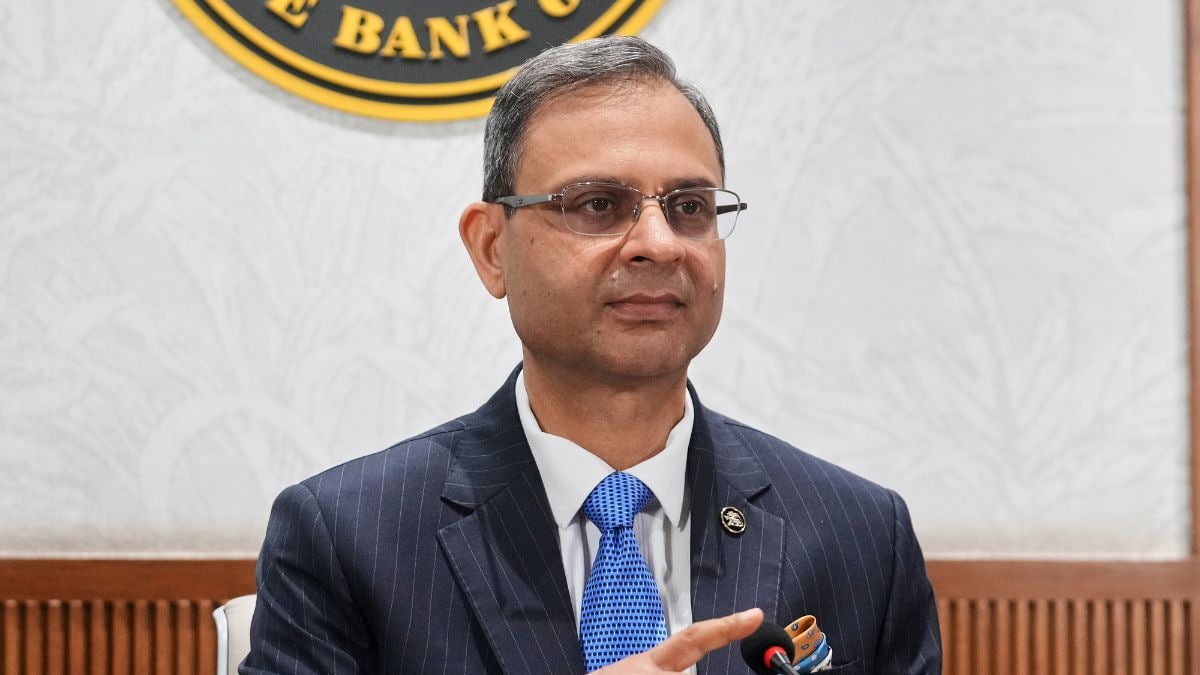
The Reserve Bank of India left its policy repo rate unchanged at 5.25 per cent on Wednesday. Marking the fourth consecutive pause, it retained a neutral stance in a unanimous decision by the Monetary Policy Committee.
Governor Sanjay Malhotra noted that headline inflation had risen as expected, core pressures remained contained, and elevated crude prices linked to the West Asia conflict continued to cloud the outlook. The standing deposit facility stays at 5 per cent; the marginal standing facility and bank rate remain at 5.5 per cent.
The decision arrives against a backdrop of constrained fiscal space, sticky food and energy inflation, resilient but uneven growth, and a global monetary environment shaped by a divided US Federal Reserve. Only days earlier, the Federal Reserve System held its federal funds rate in a 3.50 to 3.75 per cent range by a 9 to 3 vote, with three members preferring an immediate quarter-point increase. Both central banks are responding to the same underlying shock - sustained disruption risk in the Strait of Hormuz, the world’s most critical energy chokepoint.
Hormuz: the binding external constraint
In normal conditions, the Strait of Hormuz carries roughly 20 million barrels per day of crude and petroleum products, about 20–25 per cent of global seaborne oil trade and one-fifth of world oil consumption. Around 80 per cent of those volumes head to Asia. It is also a major corridor for LNG and LPG.
However, the 2026 West Asia conflict has produced the largest oil supply disruption in modern history. Commercial traffic has repeatedly collapsed by 70 to 90 per cent or more from pre-conflict levels of 125 to 135 vessels a day.
For India, the exposure is material. A substantial share of crude imports, the large majority of LPG, and a significant portion of LNG typically depend on or transit the Strait. Higher oil prices raise the import bill, pressure the current account and rupee, and feed directly into domestic fuel, transport and fertiliser costs. These channels have already shown up in the fiscal numbers.
Fiscal arithmetic tightens the bind, with deficit at 18 per cent marker.
Controller General of Accounts data show the Centre’s fiscal deficit reached ₹3.1 trillion in the first quarter of FY27, or 18.2 per cent of the full-year target. That compares with 17.9 per cent of the target used in the same quarter a year earlier. The absolute deficit rose 9.6 per cent. Expenditure on major subsidies jumped 37.4 per cent to ₹1.15 trillion, driven by a nearly 58 per cent surge in fertiliser subsidies as petroleum and feedstock prices rose with the conflict. By the end of June, the Centre had already met nearly 28 per cent of its annual major-subsidy allocation.
Capital expenditure remained robust, rising almost 24 per cent to ₹3.40 trillion, yet the overall fiscal impulse in the early months remains expansionary.
Independent estimates peg the direct fiscal cost of the West Asia conflict at around 0.2 per cent of GDP, under an $80 to 85 oil-price assumption.
Higher subsidy outlays to cushion energy shocks enlarge the deficit; the same shocks keep inflation elevated; and elevated inflation limits the scope for rate cuts. The RBI’s status quo is the logical response to this interlocking constraint.
Inflation, growth and the Fed’s hold
The central bank trimmed its FY27 retail inflation projection from 5.1 per cent to 5.0 per cent while lifting the real GDP growth forecast from 6.6 per cent to 6.7 per cent. Growth is described as resilient yet expected to be lower than last year; the outlook remains hazy because of global trade-policy uncertainty and the need for clearer evidence on inflation’s path and composition. Food-price volatility continues to keep headline readings sticky even as core inflation stays relatively benign. Energy costs amplify the problem through second-round effects on transport, power and agricultural inputs.
The Fed’s hold, accompanied by three dissents in favour of tightening, signals that global financial conditions are unlikely to ease quickly. Markets still price a meaningful probability of a US rate increase later this year if energy and core inflation do not improve. For an emerging-market central bank, this implies that interest-rate differentials, currency stability and capital flows remain sensitive to any shift in Fed expectations. The RBI has reiterated that it does not target a specific rupee level but will act to curb excessive volatility.
Policy of measured vigilance
The MPC’s decision sits at the intersection of domestic fiscal reality, food and energy inflation, growth resilience, and an external environment dominated by Hormuz risk and a cautious, divided Fed. Holding the repo rate at 5.25 per cent preserves positive real rates and protects the credibility of the inflation-targeting framework. It avoids adding demand pressure while public capital spending remains one of the few reliable growth engines. Premature easing would leave the economy more exposed to a renewed energy-price spike; aggressive tightening would risk damping domestic demand unnecessarily.
In these circumstances, the status quo is neither inertia nor excessive caution. It is a deliberate choice to keep policy optionality intact while supply-side responses address food-price pressures, fiscal consolidation gathers pace in later quarters, and clearer signals emerge from both domestic data and the geopolitical landscape.
When the fiscal deficit is already 18 per cent spent, with food and energy prices still climbing, and the Strait of Hormuz remaining a continued threat and the Fed policy uncertainty, the RBI’s hold is less a pause than necessary macroeconomic self-confidence. El Niño and the efficacy of monsoon deficit cannot be ignored either.
The author is a professor at the National Institute of Public Finance and Policy and serves as the Chair of the NIPFP NET-Website Committee.
