



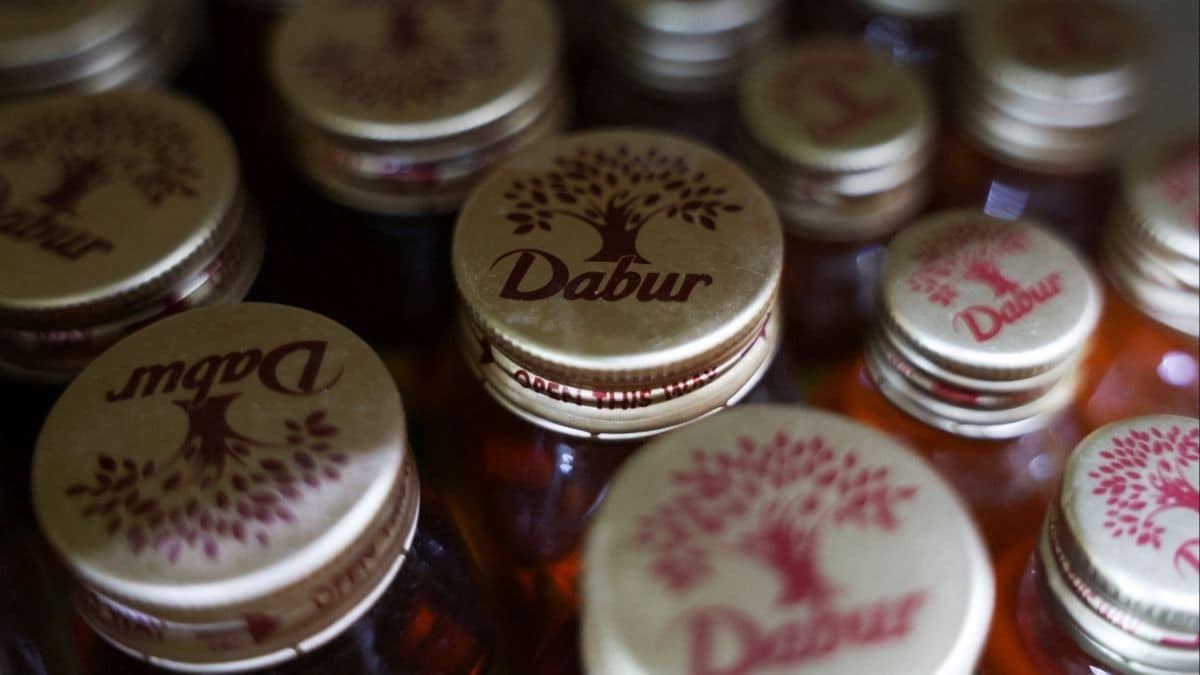
India's food safety regulator has barred Dabur India from selling several everyday products, including honey, ghee and coconut oil, after finding that the company continued to use misleading "100 per cent" claims on its website despite an earlier warning. On Tuesday mornign, Dabur's stock tanked by at least 3 per cent.
The Food Safety and Standards Authority of India (FSSAI) on Monday issued a prohibition order against Dabur India, stopping the sale of food products carrying unverifiable "100 per cent" labels such as "100% Natural," "100% Pure," "100% Purity Guaranteed," "100% Organic" and "100% Tender Coconut Water."
The regulator flagged this in a social media post, naming products including honey, apple cider vinegar, virgin coconut oil, sesame oil, cow ghee, coconut water, and coconut milk that were allegedly sold on Dabur's website with these claims.
FSSAI said such labelling breaches the FSS (Advertising & Claims) Regulations, 2018, since absolute claims of this kind are ambiguous and cannot be objectively verified, making them likely to mislead consumers. The regulator also found that two products, Dabur Himalayan Organic Apple Cider Vinegar and Dabur Organic Honey, displayed the "Jaivik Bharat" organic certification logo without valid FSSAI endorsement. Separately, Dabur Hommade Coconut Milk was marketed as "100 per cent Purity," a claim the regulator said is not permissible for compound food products under the same 2018 rules.
According to FSSAI, this is not the first time it has raised the issue with Dabur; an earlier notice had already directed the company to discontinue such claims, but no satisfactory corrective action followed, prompting Monday's stricter prohibition order. The regulator has now asked Dabur to submit an "Action Taken Report" within fifteen days, detailing the steps taken to comply.
Responding to the development, Dabur India said it had received the FSSAI notice and was in the process of reviewing the content flagged on its website. The company did not contest the regulator's findings in its initial statement, signalling a compliance-focused response rather than a legal challenge at this stage.
The order lands close on the heels of Dabur's healthy June-quarter results, where its honey portfolio, including premium variants like Organic Honey, had posted strong high single-digit growth and a market share gain of around 150 basis points, according to the company's own earnings call held on July 29.
The regulatory action does not currently link financial performance to labelling compliance, but it does place fresh scrutiny on the health and wellness claims that have underpinned some of Dabur's fastest-growing categories this year.
