



July 7 is World Chocolate Day. No, not that teeny-bopper ‘chocolate day’ celebrated before Valentine’s Day, nor some bored-in-class school kid’s ultimate day dream. Chocolate is serious adult business, and India is taking baby, but steady, steps into this nascent market.
According to IMARC, a global consultancy, India’s chocolate market has exceeded 25,000 crore rupees, while some other estimates are more conservative, ranging anywhere from 11,000 crore to 19,000 crore rupees. However, it is not the size, but the prospects of growth that are exciting—India’s per capita consumption of chocolate is a meagre 200 grams, while an average Briton slurps down 12 kilos of it in a year.
“That gap is the entire opportunity,” said Chaitanya Muppala, founder of the desi craft chocolate brand Manam.
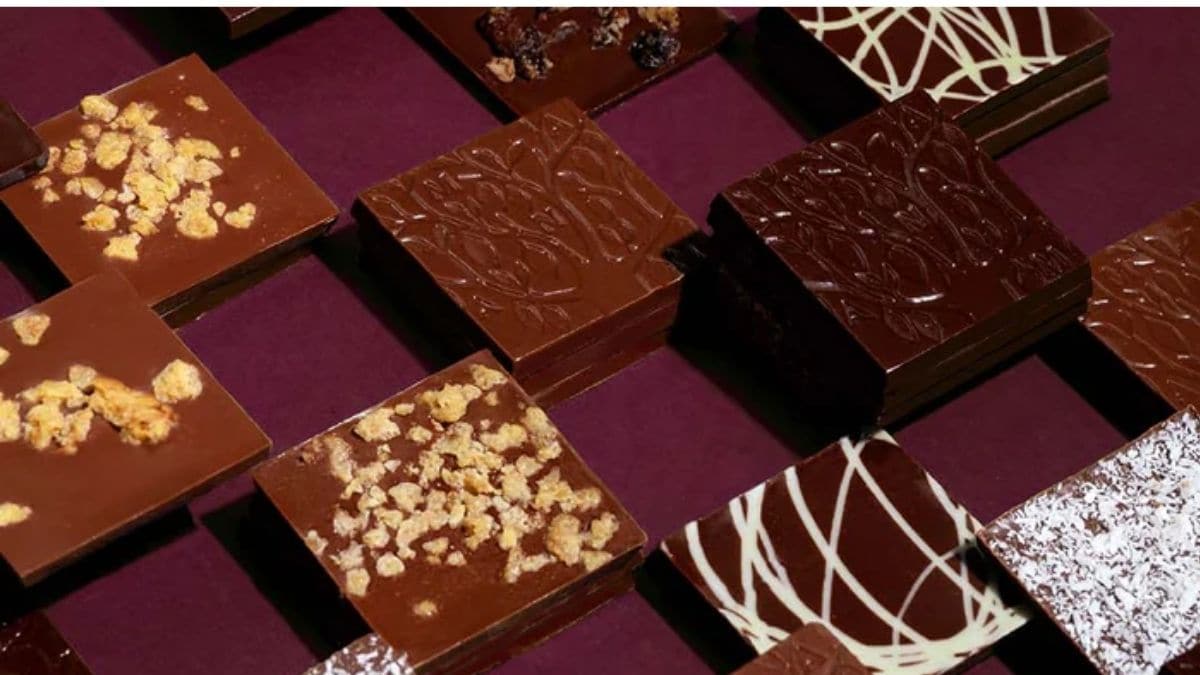
An even bigger market could well be the small but growing market for artisanal or craft chocolates, speciality dark chocolates and even fusion varietals being whipped up by an increasing number of Indian chocolatiers. About two-thirds of the market being made up by the mass market chocolate brands, the likes of Cadbury’s Dairy Milk and Nestle KitKat, means the opportunity to grow is big.
“There has been a significant shift on that front over the past ten years,” argued chef Ruby Islam, head of product & innovation at Manam Chocolates, “India has made its way into several specialised categories, gin manufacturing, Indian single malts, and very fine, award-winning cheeses.
So the idea that the Indian palate is inexpensive and mass-driven is something that's completely changed over the last decade. And today, even though the country may be prudent in its spending, even though incomes span diverse tiers, there is absolutely space for craft chocolate that goes through the depth of what they do to deliver a high-quality ingredient and a high-quality experience for the people in India.”
Recent successes, like Cadbury’s premium dark chocolate offering Bournville, even if it may be considered in the (premium) mass market category, as well as those of Indian artisanal brands like Mason & Co, Bon Fiction, Anuttam, etc, do show the way. By no means are these priced affordably, yet have found takers.
Couple of things have helped. One is that international travel and exposure have opened the eyes of Indians to the scope and depth of chocolate, and how it is so much more than just a milk-laden mass market variety most have been familiar with in their childhood. Secondly, the very acceptance that chocolate is not a mere child’s indulgence, but very much equally for the adult.
Another unique Indian factor has also been in play—chocolate permeating into Indian occasions, be it festivals or weddings. Originally the preserve of traditional desserts, festivals like Diwali now see a humongous amount of chocolates in all forms, shapes and sizes being distributed.
“Chocolate has made its way into nearly every form of gifting in our country today,” pointed out Islam, “So while big festivals like Rakhi and Diwali remain the moments where, as a culture, people want to heavily invest in gifting and celebration, chocolate finds its way into various other use cases too: employee engagement, housewarming gifts, baby shower celebrations. As a category, chocolate makes its way into every kind of personal, self, and community gifting.”
To make the case stronger, brands have tried fusion chocolate items, too, much like Lindt experimenting with its dark chocolate line with combinations like sea salt, orange peel, etc (Cadbury’s Bournville has a Cranberry variant). Locally, chocolate combos with curry leaf, for example, or with Guntur Chili are now available, expanding the repertoire of the molten indulgence.
