



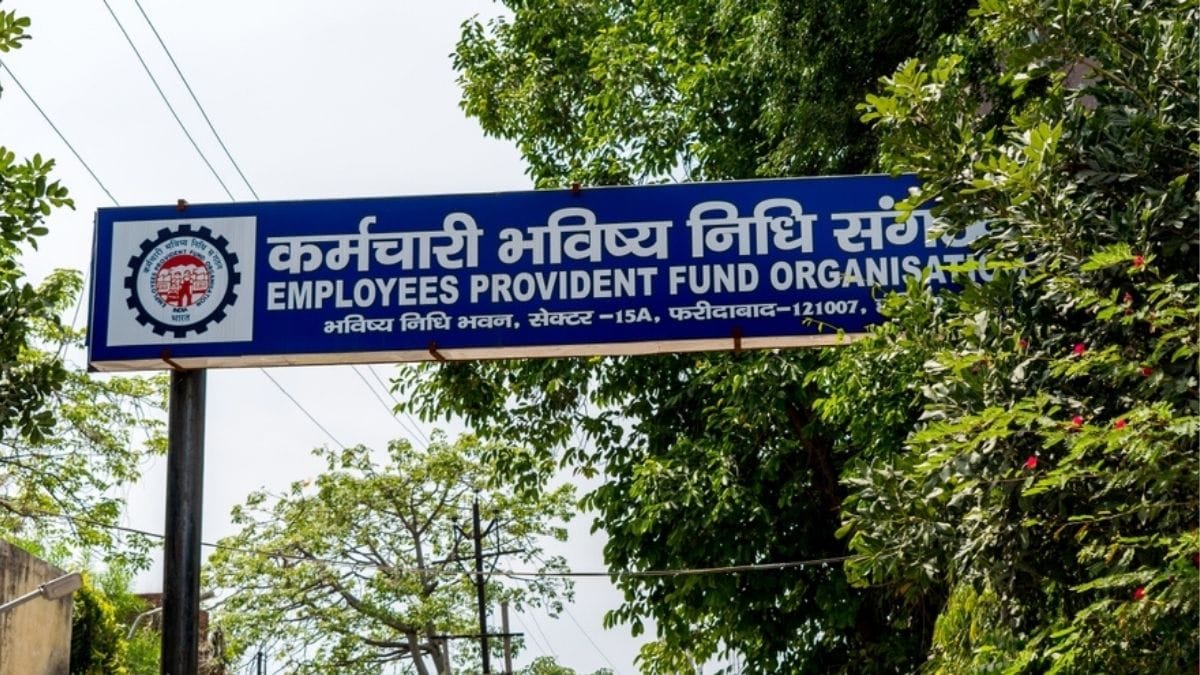
The Employees' Provident Fund Organisation (EPFO) recently notified a sweeping overhaul of its rules through the Employees' Provident Funds Scheme, 2026, published in the Gazette of India on 29 June 2026, bringing relief and clarity to nearly eight crore active subscribers.
The major item on many a citizen's mind was that the mandatory monthly provident fund contributions remain capped at ₹1,800, calculated on the statutory wage ceiling of ₹15,000, regardless of how much an employee actually earns.
So whether one draws a basic salary of ₹20,000 or ₹1 lakh a month, only ₹1,800 need be set aside compulsorily towards retirement savings, with employers matching this amount as before.
What changes meaningfully is the treatment of anything beyond this ceiling. The gazette notification explicitly allows employees to opt, on a voluntary basis, to contribute additional sums on wages exceeding the statutory ceiling, at the statutory rate or any higher rate they choose. Employers may, but are not obligated to, match such voluntary top-ups, and either party can scale back or halt these extra contributions at any time. This effectively hands salaried Indians greater control over how much of their cost-to-company package flows into long-term savings versus immediate take-home pay.
Existing EPFO members need not worry about losing coverage; the new scheme explicitly preserves membership continuity for all those enrolled under the earlier 1952 scheme.
On the compliance side, employers now face a tighter timeline, required to file a consolidated return in Form V within fifteen days of the scheme taking effect, capturing employee Aadhaar, PAN, Universal Account Number and wage details.
Separately, withdrawal rules have also been simplified, cutting advance-withdrawal categories from thirteen to three—essential needs, housing needs and special circumstances—while permitting up to 100 per cent withdrawal of eligible balance, subject to retaining at least 25 per cent of total contributions.
For many working Indians, the reform promises simpler paperwork and more flexibility, even as the core retirement safety net stays anchored at ₹1,800 a month.
