



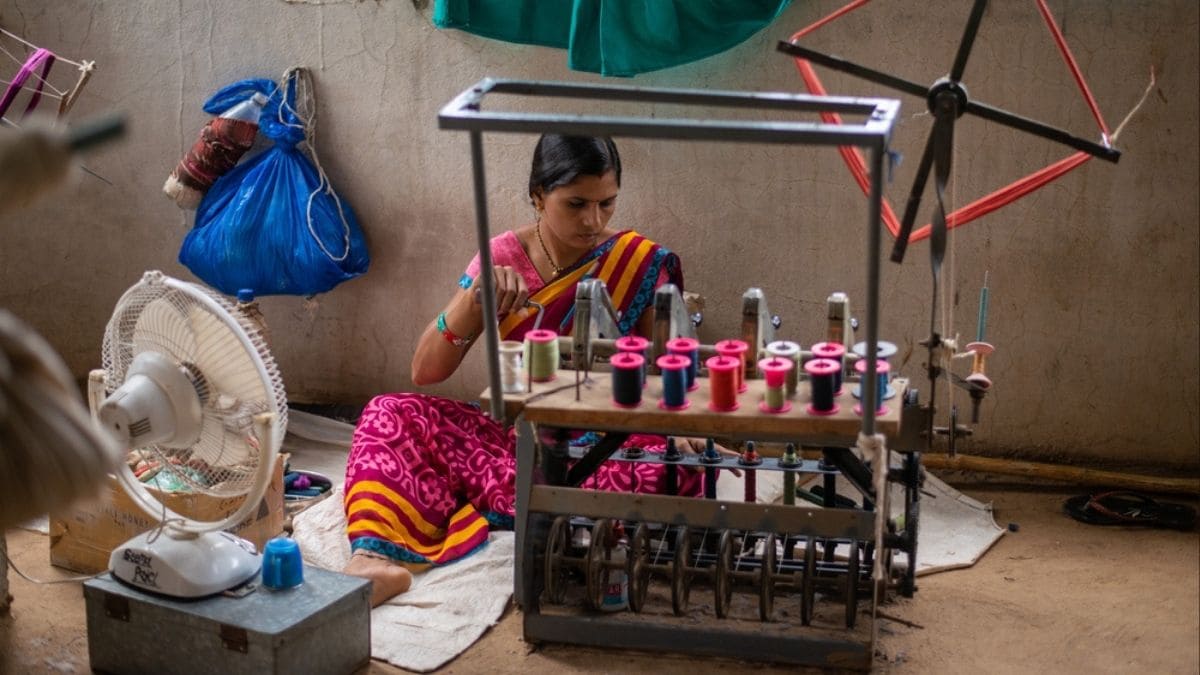
Walk into almost any lane in a town in our country, and you might spot a woman selling handmade pickles from a makeshift shack in front of her home, the tailor operating a single sewing machine, or a set of youngsters making incense sticks in the evening. Officially, all of them are "micro enterprises." So is a full-fledged manufacturing unit with ₹2.5 crore in machinery. But a new Parliamentary committee report has proposed a way to fix this disparity.
The Department-Related Parliamentary Standing Committee on Industry (Rajya Sabha), chaired by Tamil Nadu MP Tiruchi Siva, presented its 333rd Report on the Demands for Grants 2026-27 of the Ministry of Micro, Small and Medium Enterprises to Parliament on March 11, 2026. The committee's most pointed structural recommendation was to introduce a separate "nano enterprise" category with an investment threshold of around ₹10 lakh, a category that currently does not exist in India's MSME classification framework.
Why the existing MSME categories fall short
Of the 7.61 crore enterprises registered on the government's Udyam portal as of January 31, 2026, a staggering 7.56 crore, or 99.3 per cent, fall under the micro category. Only 4.88 lakh are classified as small, and a mere 36,816 as medium.
India's current MSME framework lumps together a home enterprise with ₹30,000 worth of tools and a factory with ₹2.5 crore in plant and machinery, and treats them identically for the purpose of credit, subsidies and scheme eligibility, the report revealed.
The problem worsened in April 2025 when the government revised classification limits, pushing the micro investment ceiling from ₹1 crore to ₹2.5 crore and turnover from ₹5 crore to ₹10 crore.
While intended to help enterprises scale, the committee found this had an "unintended consequence". Now, comparatively larger businesses fall within the micro segment, crowding out the most vulnerable household-level enterprises from benefits.
The nano enterprise and Kerala's proof of concept
The committee has been pushing for the "nano enterprise" reform since its 327th Report. This time, it cited a powerful precedent.
The Government of Kerala has already operationalised a Nano Enterprise category, defining it as units with investment up to ₹10 lakh, and has introduced targeted schemes including interest subvention, margin money assistance and household enterprise promotion specifically for this segment.
"This State-level experience demonstrates both the administrative feasibility and developmental necessity of such differentiation," the committee stated.
Broader fiscal concerns
The committee was equally blunt on fiscal management. Of the MSME ministry's total budget estimate of Rs 24,566.27 crore for FY2026-27, ₹9,000 crore, or 36.6 per cent, is allocated to the Guaranteed Emergency Credit Line (GECL), a scheme that operationally closed in March 2023 and recorded zero actual expenditure in FY2024-25 and FY2025-26.
The committee called this a "phantom allocation" that inflates headline numbers and masks the real developmental outlay of approximately ₹15,566 crore.
The report also noted that six of eight Budget 2025-26 announcements for MSMEs remain unimplemented, including credit cards for 10 lakh micro enterprises and term loans for women and SC/ST first-time entrepreneurs, both stalled for nearly twelve months. The committee called for the operationalisation within six months of Budget announcement as a standing rule going forward.
The report also flagged a ₹8.1 lakh crore delayed payment crisis facing MSMEs, and that the Online Dispute Resolution portal, launched in October 2025 specifically to address it, had disposed of just 17 cases in eight months.
