



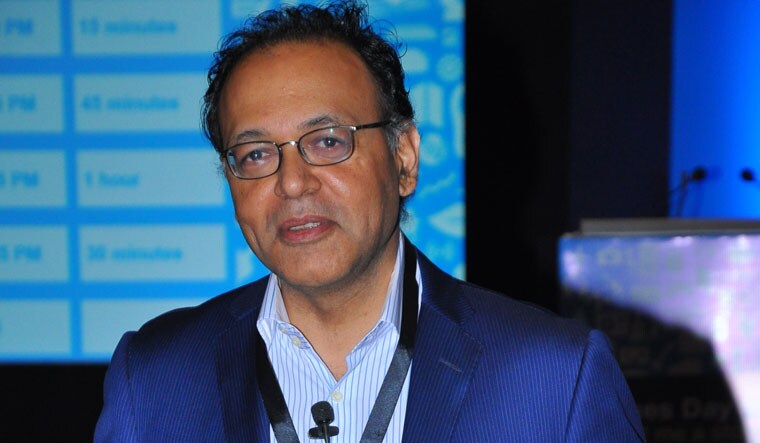
Gautam Kumra has spent over 27 years in McKinsey & Company, a US-based management consulting firm with a presence in 65 countries. He is a founding board member of the Public Health Foundation of India and the IIT Delhi Endowment Board. Kumra also serves on the board of IIM Bodh Gaya and is a member of the Global Advisory Council of the Lincoln Center for Performing Arts, New York. He spoke to THE WEEK about the challenges the Indian economy faces because of Covid-19 and the need for urgent reforms. Edited excerpts:
What are the uncertainties caused by Covid-19 and how long would it remain? What kind of GDP growth can we expect this year and what can be done to improve it?
The economic impact of Covid-19 is highly uncertain and can be judged only in terms of potential scenarios. According to our scenarios, India’s GDP could contract between 9 and 12 per cent in the current year, depending on the effectiveness of virus containment and economic policy responses. There is very high uncertainty on both the depth and duration of the health and economic crisis. Whatever the extent of the crisis, it could mark the most severe decline in India’s GDP in four decades.
The government has responded with liquidity and fiscal measures, but what reforms are still required?
Beyond immediate crisis response measures, the government has also announced some structural reforms that could have positive effects on medium-term growth.
Facilitating cash in hand for the people could stimulate and revive demand in the economy. To enable this, the government has announced several direct benefit measures for the farm sector and vulnerable households. However, given the depth of the crisis, incremental stimulus is likely warranted to stimulate demand (for example, direct income support for informal non-agriculture workers and the urban poor) along with support to stressed sectors, which will struggle to recover, in addition to accelerating spending in infrastructure and expediting pending payments of government and PSU (public sector undertaking) dues.
Many sectors, especially MSMEs, may not be able to improve before the end of the current fiscal. What according to you are the sectors that may take more time to revive and sectors that may revive sooner?
Sectors such as non-discretionary retail and agriculture have seen rapid growth with limited impact because of Covid-19. Then there are sectors like pharma, IT, chemicals, freight and logistics that had a dip in Q1 but had a fast-paced pick up later. Sectors such as auto, construction, textiles, metals, and oil and gas exuded slow recovery and then there are sectors such as airline, hotels and tourism
[which will take time].
Particularly on MSMEs, there could be a growing gap between ‘winners’ and ‘losers’. This trend is being seen globally. The gap between the top and bottom quintiles of companies by economic profit was widening before the Covid-19 crisis and has been further amplified as a result of it. MSMEs, therefore, might be hit worse than large corporates.
What is your perception of the public sector enterprises in India? What kind of reforms are needed in them?
While some PSEs are high performers, as a group they face challenges leading to strained public finances because of the need to support them. The overall labour productivity of private sector companies is at least twice as high as that of PSEs in the same sector. This is particularly stark in sectors such as mining (where private sector productivity is 3.5 times higher), steel (5.1 times higher), and telecom and media (about 12 times higher).
Over the past eight years, public sector banks for instance have needed considerable capital infusion. To address these challenges, the government, as part of the Aatma Nirbhar Bharat scheme, declared its intention to limit the presence of PSEs in strategic sectors. In nonstrategic sectors, it plans to privatise or merge or bring under holding companies all PSEs, and allow private sector participation.
It may be critical to move on the privatisation agenda. Privatisation of 400 SOEs (state owned enterprises) where the government’s share of the book value was $140 billion in 2018, could yield up to Rs40 trillion ($540 billion) over the next decade. Just 40 or so PSEs could yield 80 per cent of the overall potential privatisation proceeds across sectors like oil and gas, financial services, power, manufacturing, telecom, and mining.
